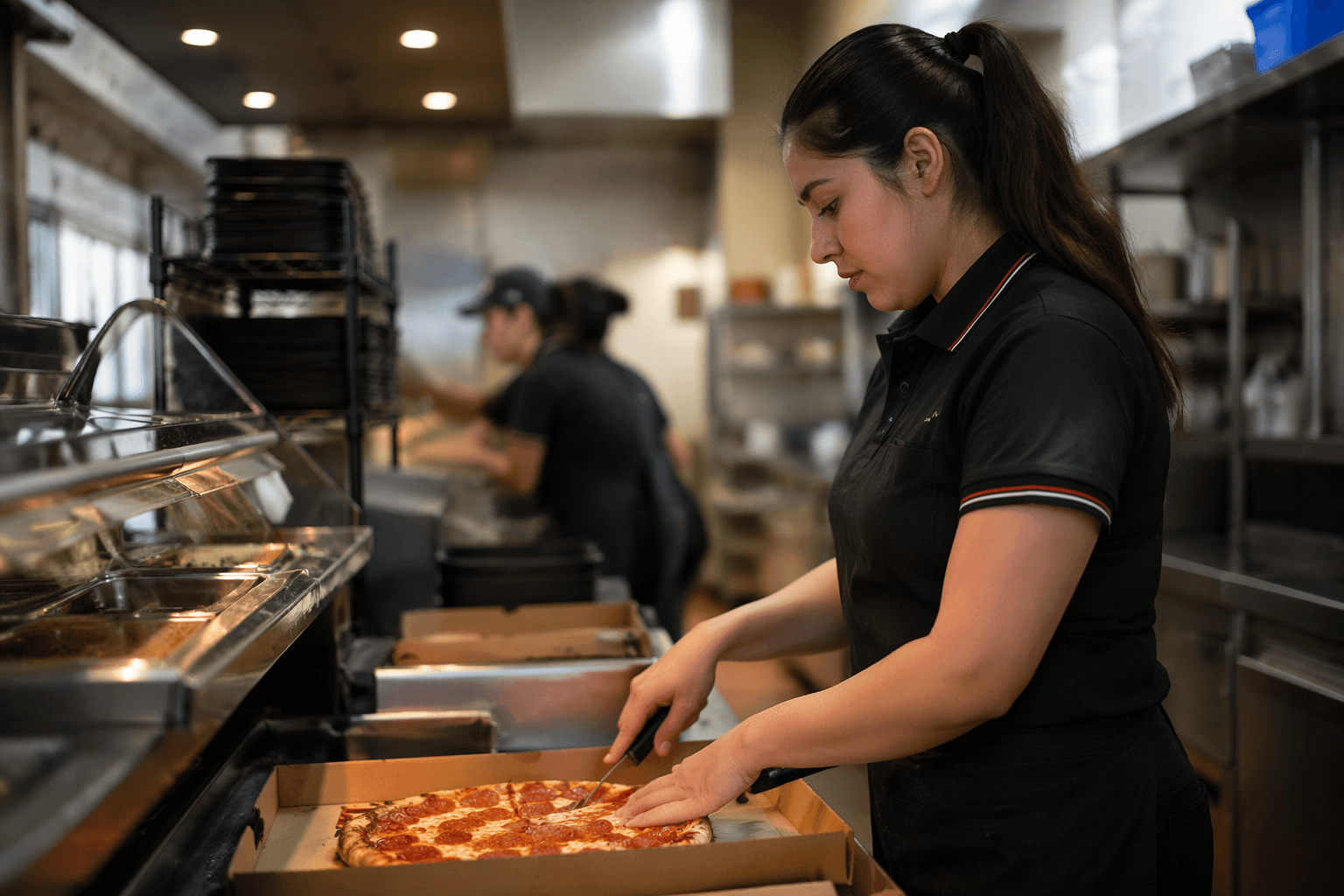
Pizza Hut managers urged to treat AI as a tool, not a fix
Pizza Hut stores can use AI for forecasting and routing, but managers still own staffing, recovery and execution. The costly mistakes start when tech is treated like a fix.

The fastest way a Pizza Hut store gets into trouble
The fastest way a Pizza Hut store gets into trouble is by buying AI that looks impressive in a demo but adds work in the rush. The real question for managers and franchisees is not whether a new system sounds modern. It is whether it helps a crew handle a Friday night with a full lobby, a ringing phone line, delivery deadlines and no room for confusion.

That is the lesson hanging over Pizza Hut after two very different examples of restaurant AI. On one side, Yum! Brands is pushing deeper into automation with NVIDIA. On the other, a Pizza Hut franchisee is in court claiming an AI delivery system created chaos, and Starbucks has already pulled back an inventory tool that did not hold up in real stores. Put those together and the message is plain: AI can help, but it does not replace operating discipline.
What AI can actually improve right now
The useful jobs are the ones that reduce friction without taking the manager out of the loop. For Pizza Hut, that means forecasting demand, improving customer messaging, helping route orders and, in some cases, speeding up phone-based order taking through AI voice agents. These tools can shave minutes, smooth spikes and help a store anticipate what is coming before the dinner rush turns messy.
Yum! Brands said on March 18, 2025, that it was partnering with NVIDIA to accelerate AI technologies across its restaurants. Yum! called itself NVIDIA’s first AI restaurant partner and said it planned to deploy AI solutions in 500 restaurants in 2025, including select Pizza Hut locations. The company said the goal was to streamline order taking, optimize operations and enhance service across a system that already spans more than 61,000 locations globally.
That scale matters because Pizza Hut is not testing AI in a vacuum. A franchise operator may see a vendor pitch about labor savings or faster dispatch, but the real test is whether the tool works inside the brand’s actual traffic pattern, store layout and staffing mix. If it does not reduce pressure on the shift lead and the line, it is just another screen.
Where humans still have to carry the load
AI cannot solve weak staffing, poor food execution or bad store discipline. It cannot decide when a manager should call in help, pull someone off make line duty, slow down a promotion, or step in with a customer who is already irritated about a late pie. It cannot train a new crew member to box orders correctly, explain speed standards, or build judgment about when a phone call needs a human voice instead of a scripted response.
That is especially true in Pizza Hut stores, where the day can swing from quiet to overloaded fast. Drivers still need dispatchers who understand routes, local traffic and tip dynamics. Crew members still have to make sure the food is right before it leaves the oven. And when DoorDash, Uber Eats and the brand’s own delivery model are all competing for the same customer, a bad handoff or a slow order can cost more than one ticket. It can hurt repeat business, driver earnings and store reputation at the same time.
For operators, that means AI should be judged by whether it makes the team faster and clearer, not by whether it looks futuristic. A system that creates extra clicks, bad data or false confidence is worse than useless. It gives managers another thing to babysit during the exact moments when they need fewer distractions.
Why the Pizza Hut lawsuit is the warning label
The clearest warning comes from Chaac Pizza Northeast, which sued Pizza Hut in Texas Business Court over the Dragontail AI delivery system. The franchisee alleges the system caused “cascading operational breakdowns,” slowed order times and disrupted integrations with third-party delivery services. Chaac says those problems led to about $100 million in losses.
Chaac Pizza Northeast says it operates about 111 Pizza Hut locations across New York, New Jersey, Maryland, Washington, D.C. and parts of Pennsylvania. It also says the Dragontail rollout in its New York market was completed in 2024. Before Dragontail, Chaac said more than 90% of its pizza orders were delivered within 30 minutes.
That is the kind of number operators should pay attention to. If a technology rollout damages speed, complicates third-party delivery and knocks a store off its rhythm, it is not an upgrade. It is a liability. And because Pizza Hut runs through local franchise and management structures, the pain lands where the shift is actually being run, not in the slide deck that sold the system.
The Starbucks rollback shows how fast a shiny tool can become a problem
Starbucks offers a second cautionary tale. In May 2026, the company retired its “Automated Counting” AI inventory tool just nine months after deploying it across North American stores. Reuters reported that the system frequently miscounted or mislabeled items, including confusing similar milk types. Starbucks said it is now standardizing inventory counting and focusing on consistency and execution at scale.
That is exactly the kind of failure Pizza Hut operators should watch for. Inventory tools are supposed to reduce waste and tighten control. But if they mislabel product, create manual rework or make the numbers less trustworthy, managers end up spending more time fixing the system than using it. At that point, the technology is not supporting execution. It is competing with it.
The Starbucks example also matters because it shows how quickly a high-profile AI rollout can be reconsidered when store-level reality does not match the promise. In other words, a big brand and a big vendor do not guarantee that the tool fits the job.
What Pizza Hut managers should ask before saying yes
The right response is not to reject AI outright. It is to test it like an operator, not admire it like a marketer. Before approving a rollout, managers should ask:
- Does this tool make the dinner rush smoother, or does it just move work around?
- Does it improve order accuracy, speed and routing in the real store, not just in a demo?
- Will it reduce mistakes for drivers, crew and shift leads, or create another system that needs constant cleanup?
- Can the team still recover well when a customer complains, a delivery goes wrong or the store gets slammed?
- Does it help the manager make better staffing and labor calls, or does it blur the picture?
That is the core lesson for Pizza Hut. AI can support forecasting, customer messaging and routing. It can help a store move faster if the basics are already solid. But it cannot fix a weak team, a sloppy handoff or a broken line of communication. The best AI at Pizza Hut will be the kind nobody talks about much because it simply makes the store run cleaner. The worst will be the kind that looks smart on paper and leaves the crew with more work, more confusion and less trust in the numbers.
This article was produced by Prism’s automated news system from verified source data, official records, and press releases, then run through automated quality and moderation checks before publishing. The system is built and supervised by the people who set the standards it runs under. Read our full AI policy.
Did this article answer your question?