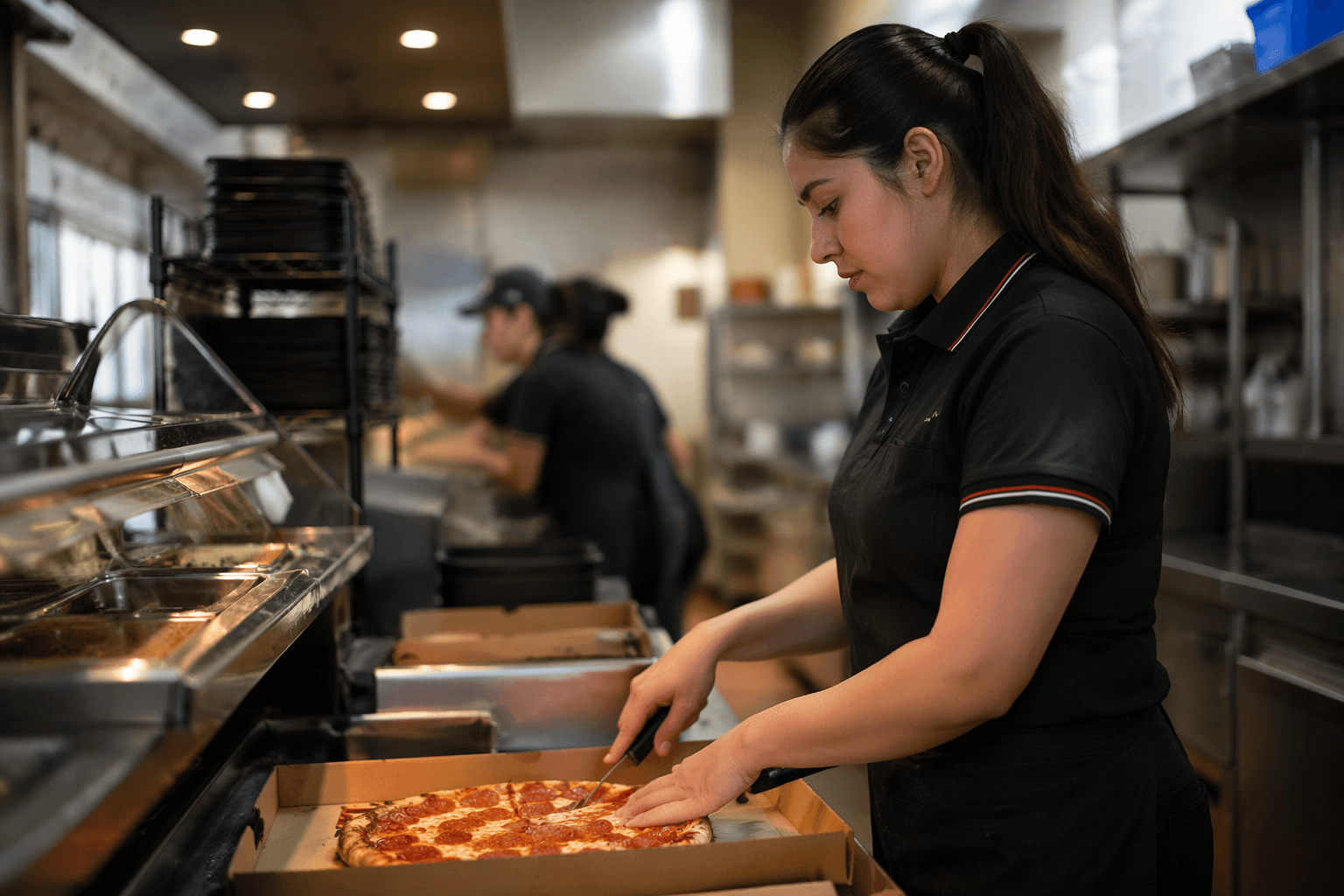
Pizza Hut managers warned on teen worker scheduling, safety rules
The fastest way a Pizza Hut store gets in trouble is a teen doing one forbidden task on a rush shift. A clean role matrix now can prevent child-labor, overtime, and delivery violations later.

The fastest way a Pizza Hut store gets in trouble is to treat a high school hire like an all-purpose extra hand. One teen sent to clean a mixer, close up late, or jump into a delivery run can turn a normal night into a child-labor problem, a wage dispute, or a safety incident that regulators remember.
The U.S. Department of Labor’s restaurant rules are built around workers under 18, and the agency says they are meant to protect health, well-being, and educational opportunities. That matters at Pizza Hut because the pressure points are ordinary store tasks: prep, closing, counter work, carryout, and delivery coverage when a shift gets busy. The mistake is assuming a teenager can be scheduled wherever the hole is, when the law draws hard lines around hazardous work and driving.
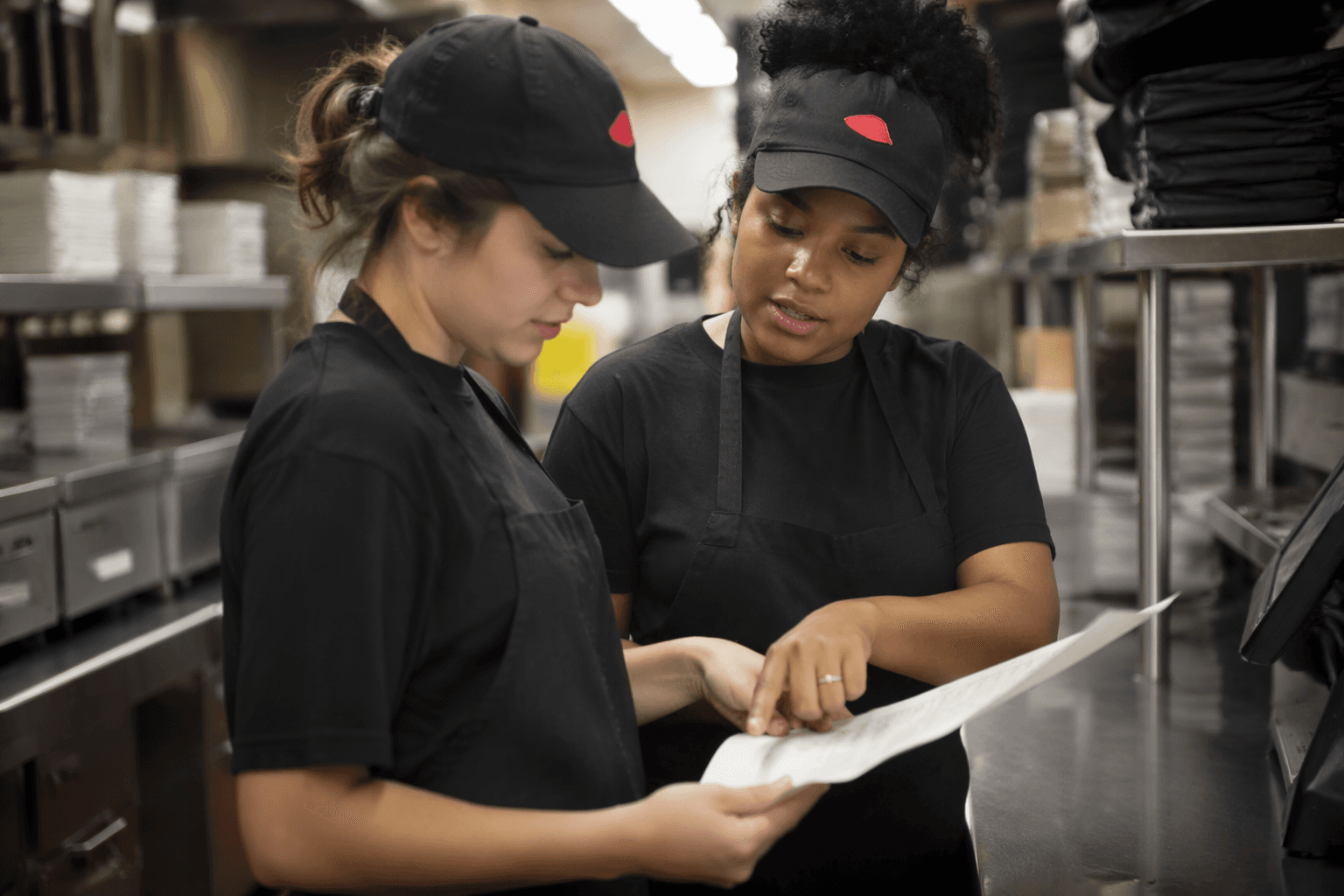
Know the two big legal traps: hazards and driving
Federal law generally allows youth of any age to work for businesses owned entirely by their parents, but that narrow family-business rule does not cover a typical Pizza Hut franchise or corporate store. For everyone else, the age of the worker matters, and the restrictions get tighter as the employee gets younger. Workers under 18 cannot be employed in occupations the Secretary of Labor has declared hazardous, and the Department of Labor says they are generally owed the same minimum wage and overtime protections as older adults.
For 16- and 17-year-olds, the schedule itself is not the main problem if the work is nonhazardous. The problem starts when a manager assumes “high school student” means “fully flexible.” A teen can answer phones, build boxes, fold carryout bags, or work the counter, but that same employee may be legally barred from certain equipment and driving duties. In a busy Pizza Hut, especially one with dine-in and carryout flowing at the same time, that line can disappear fast unless the shift lead is paying attention.
The machine rules are blunt. Workers under 18 may not operate, feed, set up, adjust, repair, or clean prohibited power-driven food-processing and bakery machines, including slicers, saws, patty formers, grinders, choppers, commercial mixers, and certain power-driven bakery machines. That means a teen who starts a shift on register duty cannot simply be pulled into prep to keep the line moving if the task crosses into restricted equipment.
Late shifts are not the only problem, but they are where managers get sloppy
Restaurant compliance problems often start as scheduling shortcuts. A young worker gets asked to stay a little longer, help with one more task, or cover one more station after the dinner rush. The Department of Labor’s restaurant self-assessment tool specifically flags common failures such as minors working too late or too long, operating a motor vehicle, and working near dangerous equipment.
That makes a strong role matrix more than paperwork. Every Pizza Hut location that hires minors should spell out, in plain language, what those workers can do, what they cannot do, and who is responsible for stopping a bad assignment before it starts. A well-run store does not wait until a district manager or investigator asks why a teen was on a machine or behind the wheel.
The practical test is simple: if a task can expose a minor to a prohibited machine, a dangerous piece of equipment, or a driving assignment, it should not be treated as interchangeable labor. A teenager who is perfect for front counter support is not automatically available for closing prep, delivery help, or cleanup around machinery. The busiest nights are exactly when the boundaries have to be clearest.
Delivery is where a Pizza Hut store can cross the line fast
The driving rules are especially strict. As a general rule, employees under 18 may not drive on the job or serve as outside helpers on a public road. Some 17-year-olds can drive, but only if they meet every federal condition, including daylight-only driving, a valid license, approved driver education, no moving violations at hire, a vehicle under 6,000 pounds gross vehicle weight, and seat-belt requirements for the driver and passengers.
For Pizza Hut managers, that means teen delivery work is not a casual staffing fix. A store that relies on the pressure of the dinner rush, stacked orders, and delivery competition from DoorDash or Uber Eats may be tempted to stretch a minor into a vehicle role. That is exactly the kind of shortcut that can trigger a violation, especially in locations where carryout, dine-in, and delivery all collide during peak hours.
The March 2021 penalty against a Virginia pizza restaurant showed how real that risk is: investigators said a minor had been used to make food deliveries, and the business paid an $11,052 penalty. That case should sit in every Pizza Hut manager’s playbook as a warning that delivery decisions are not just operational choices. They are compliance decisions.
Enforcement is not theoretical
The Wage and Hour Division says it finds child labor violations at fast-food locations nationwide. Its enforcement numbers show the scale of the issue: in February 2023, the department said it had identified child-labor violations in more than 4,000 cases from fiscal years 2017 through 2021, affecting more than 13,000 minors. In fiscal year 2024, the department reported 736 child-labor investigations involving over 4,000 minors. Its fiscal year 2025 data show 976 child-labor cases and 5,272 minors employed in violation.
Those numbers explain why Pizza Hut managers should treat a teen schedule like a compliance file, not a convenience. Regulators have also tied enforcement to fast-food franchises in recent cases. In February 2024, a Popeyes franchisee paid more than $212,000 after a Labor Department investigation found child-labor and overtime violations. The message for pizza operators is clear: the agency is looking at fast-food stores, and pizza restaurants are not outside that pattern.
What a safer store looks like
The most effective habits are also the least glamorous. A store that hires minors should build a role matrix for each one, train shift leads on the prohibited-task list, and make sure nobody improvises when the lobby fills up or the driver board backs up. If a teen is on the floor, the manager should know exactly which stations are off-limits before the rush starts.
Practical habits that reduce risk include:
- Assign minors to clearly allowed jobs such as phones, box folding, carryout bags, and counter work
- Keep them away from prohibited machines and from cleanup or adjustment tasks involving those machines
- Never assume a delivery need can override the driving rules
- Recheck schedules when a shift stretches late or a minor is asked to cover a different station
- Train every shift lead to treat teen assignments as a legal boundary, not a staffing preference
Pizza Hut stores run on speed, but youth labor compliance punishes speed without control. The stores that stay out of trouble are the ones that make the rules part of daily operations, so a busy night does not become a wage claim, a safety incident, or a child-labor case.
This article was produced by Prism’s automated news system from verified source data, official records, and press releases, then run through automated quality and moderation checks before publishing. The system is built and supervised by the people who set the standards it runs under. Read our full AI policy.
Did this article answer your question?