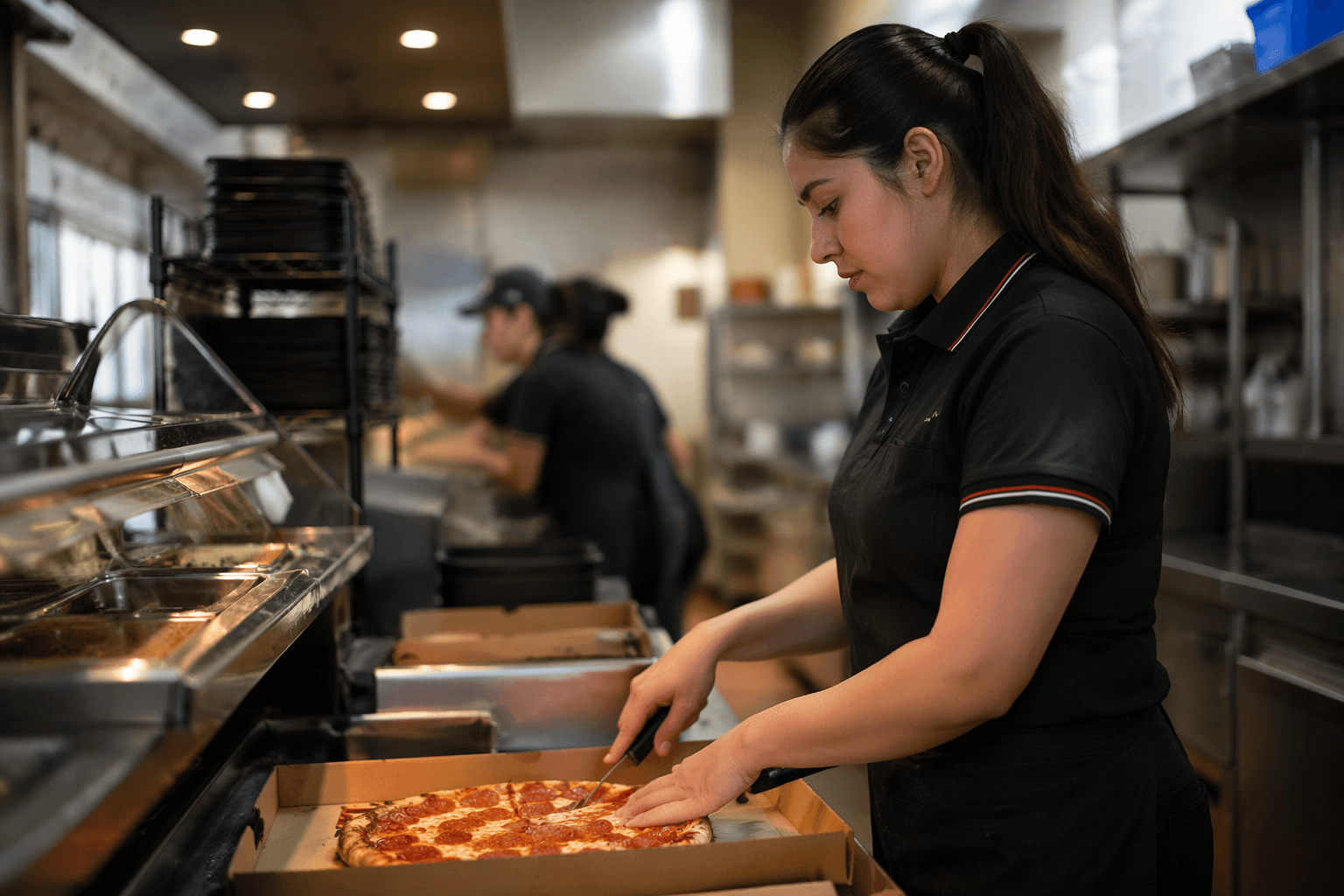
Pizza Hut menu page explains local pricing, offers and order rules
Pizza Hut's menu page is a cheat sheet for why prices, coupons, delivery limits and pickup options change by store, and workers need it to defuse complaints fast.
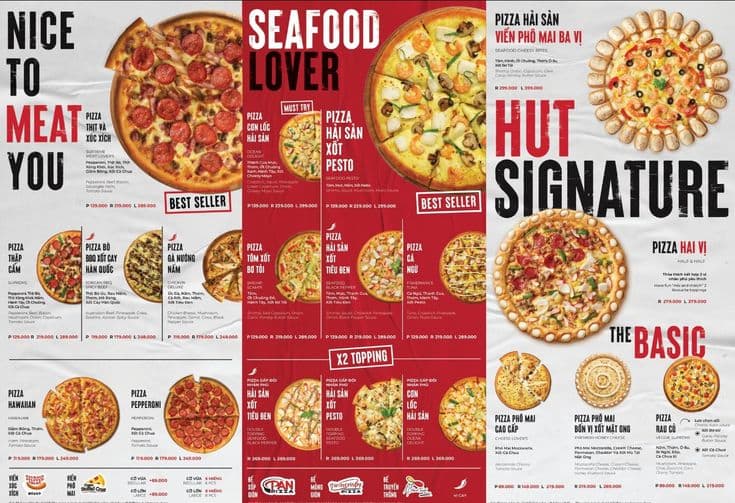
Pizza Hut’s menu page does more than list what is for sale. It explains why one customer’s total, coupon, or delivery option can look different from the next store down the road, and that is exactly the kind of friction crew members and managers face every day. In a franchise system built on local ownership and local execution, the page functions like a front-line decoder for the rules guests most often challenge.
Why the menu page matters on the floor
For staff, the most useful part of the page is not the product photos. It is the reminder that product availability, discount combinations, prices, participation, delivery areas and charges, and the minimum purchase required for delivery may all vary by location. That means a customer comparing two nearby Pizza Hut stores may be seeing two valid answers, not a mistake, because the brand itself allows local variation.
The page also makes clear that discounts do not apply to tax, delivery charge, or driver tip. That detail matters when a guest expects a coupon to wipe out the whole bill or tries to apply a promotion to fees that sit outside the discount. For delivery drivers, that separation is part of the everyday reality of explaining why the final check-out total does not match the ad on the coupon.
What can change from one store to the next
Pizza Hut says local differences can show up in several ways at once. A store may carry a different mix of products, use different pricing, limit delivery to a smaller area, or set a different minimum purchase for delivery. Even WingStreet fried products and flavors can vary by location, which helps explain why one unit may have an item another unit cannot ring up.
The same rule applies to pickup service. Contactless and curbside pickup availability may vary and is not guaranteed, so a guest who used one store’s curbside lane last week may not be able to assume the same setup exists at another location today. That gives managers a simple but important message to repeat: the website is not promising one universal experience, it is pointing customers to the local store’s actual rules.
This is why complaints about a coupon, a delivery charge, or a discontinued item can turn into a policy conversation instead of a service recovery issue. The menu page is effectively telling workers to treat the local store as the unit of truth, not the national brand image.
How the brand is organized for customers and new hires
The menu page also works as a quick orientation tool for new hires. It organizes the brand around pizza, melts, wings, sides, pasta, desserts, drinks, and dipping sauces, which is useful when someone is still learning where a product lives in the system and how to explain it to a customer. For a kitchen crew member, that structure also reflects how tickets are built, paced, and delivered.
That matters in stores where the guest experience is shaped before the food ever reaches the oven. Local pricing, limited-time offers, and minimums affect what lands on the ticket and what the kitchen has to produce. In practical terms, the page helps set expectations before the order is keyed in, which can save time when a guest later disputes the total at the counter or on the phone.
Why franchise structure creates the variation
Pizza Hut’s franchise model explains why these differences are built into the system. Traditional locations offer delivery, carryout, and dine-in, but non-traditional units can be inside gas and convenience stores, stadiums, colleges, and mass transit locations. A restaurant inside a travel hub or campus setting is not likely to operate exactly like a full-size neighborhood unit, and the company’s own franchise materials make that clear.
That variety also helps explain why one store may handle a request that another cannot. A traditional restaurant can be set up for delivery within a defined area, while a non-traditional site may be built around a smaller footprint or a different service mix. For drivers and managers, the key lesson is that local setup drives local rules, from delivery-radius decisions to how much flexibility a crew has on pickup or service recovery.
Pizza Hut’s own store locator repeats the same warning about variation, which shows this is not a fine-print footnote. It is a core operating rule, one that underpins how the chain presents pricing and participation across its locations.
The scale behind the rules
The size of the system helps explain why the company leans so hard on local execution. Pizza Hut says its store locator includes 6,000-plus locations. It also says there are more than 16,000 independently owned and operated restaurants worldwide, backed by 100-plus franchise partners employing 350,000 team members in over 100 countries.
That scale means a single national ad can land in thousands of stores with different ownership structures, labor patterns, delivery zones, and product mixes. For employees, that is the day-to-day reality of working in a brand that looks uniform to customers but runs through a wide range of local operators.
The origin story still shapes the system
Pizza Hut’s history helps explain why the brand grew this way. The company says Frank Carney and Dan Carney founded it in 1958 in Wichita, Kansas, after borrowing $600 from their mother to open the first restaurant. The name fit because the original sign had room for only eight letters.
That start, from a single local shop to a massive franchise network, is the reason the local-variation rules matter so much now. A business that began with one storefront and one sign has turned into a system where the menu may be national, but the execution is local.
What franchise candidates learn from the same model
Even the path to opening a store shows how much variation is baked into the business. Pizza Hut says initial qualification for a traditional franchise location generally takes 10 to 12 weeks. After that, identifying and securing a restaurant can take another 3 to 9 months depending on the opportunity.
That timeline is a reminder that store-level differences are not accidental. They are part of a structure built around local sites, local operators, and local service decisions. For the team on the floor, the menu page is less a marketing tool than a practical guide to the rules that shape every shift, every order, and every customer complaint.
This article was produced by Prism’s automated news system from verified source data, official records, and press releases, then run through automated quality and moderation checks before publishing. The system is built and supervised by the people who set the standards it runs under. Read our full AI policy.
Did this article answer your question?