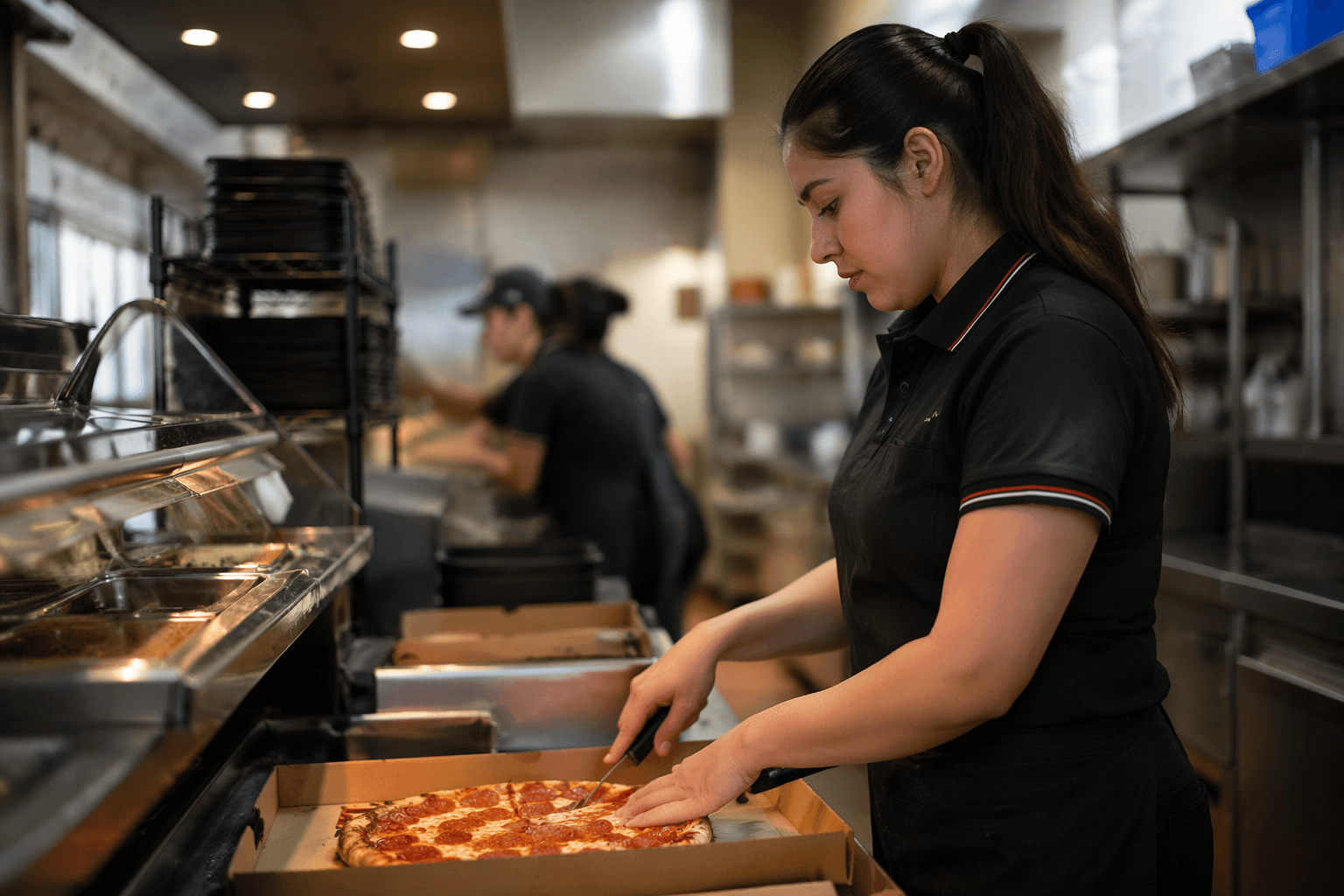
Pizza Hut operators weigh voice AI and robots for real throughput gains
Pizza Hut’s next tech winners are the tools that shave labor minutes or save orders, not the ones that just impress a crowd.

The best Pizza Hut tech pitch right now is not the robot that stops traffic on a show floor. It is the system that keeps a Friday rush from backing up at the make line, cuts missed calls, and helps a store get more orders out the door without adding overtime.
That is the clearest lesson from the National Restaurant Association Show, which ran May 16-19 at McCormick Place in Chicago. The floor was packed with more than 2,200 exhibitors across more than 700,000 square feet, but the real pressure came from the business climate around it: nearly 90 percent of operators expect food and labor costs to keep rising, while 80 percent of consumers say value is their top dining priority. In that setting, Pizza Hut managers are not shopping for novelty. They are looking for anything that protects throughput.

Tools that cut labor minutes
Voice AI is the most obvious labor-saver in a Pizza Hut store, but only if it handles the moments that bog the team down. The show floor trend toward rotary phones was a reminder that vendors know operators want familiar workflows, not science fiction. A phone that answers itself and takes a clean order can help when counter staff are juggling walk-ins, delivery calls, and carryout orders at the same time.
That matters because a single missed call or a long hold time can turn into lost carryout sales, extra stress for the shift lead, and more interrupt-driven work for the crew. The best pilot stores are the ones where the phone keeps ringing during peak dinner or late-night hours. If voice AI can reduce answer time, catch routine questions, and keep the line moving while staff focus on food quality and recovery, it earns its keep fast.
Robots belong in this same bucket only when they eliminate repetitive work, not when they simply look impressive. Bear Robotics used the show to push a broader hospitality ecosystem, including its Servi Plus robot with an 88-pound payload capacity, plus cleaning robots and automated cooking demonstrations. That kind of gear can make sense for hauling, bussing, cleaning, or other repeat tasks, but a pizza operation should still ask the same hard question: does it actually save crew minutes in the back of house, or is it just another moving object in the restaurant?
Pizza Hut stores run on rhythm. If a robot can reduce trips, free up a manager, or take a tedious task off the line during a rush, that is real labor relief. If it cannot, a well-trained crew member who knows the menu and the flow is still the better investment.
Tools that protect sales
The bigger Pizza Hut story is not just labor reduction. It is sales protection. Yum! Brands launched Byte by Yum! on Feb. 6, 2025 as an AI-driven restaurant technology platform for Pizza Hut and the company’s other brands, and that stack goes well beyond ordering. It includes online and mobile ordering, point of sale, kitchen and delivery optimization, menu management, inventory and labor management, and team-member tools.
For Pizza Hut U.S. stores, the kitchen system is meant to do something every manager understands immediately: improve delivery times, reduce the time pizzas sit in the restaurant, and give guests real-time visibility into where their order stands. That is not just a back-office upgrade. It is a conversion play. Faster, clearer orders mean fewer complaints, fewer status calls, and less leakage when a guest is deciding whether to wait, reorder, or cancel.
Yum! said 25,000 of its restaurants worldwide were already using at least one Byte product, and its U.S. brands were processing more than 300 million digital transactions a year using Byte elements. That scale matters because Pizza Hut is not experimenting from scratch. The chain is already inside a larger digital system that is designed to touch ordering, kitchen flow, labor planning, and the customer experience at once.
The next layer is voice AI. On March 18, 2025, Yum! announced a partnership with NVIDIA to deploy multiple AI solutions in 500 restaurants in 2025, including AI-powered agents at select Pizza Hut and Taco Bell locations. Yum! said the voice AI is built to understand natural speech, process complex menu orders, suggest add-ons, and reduce bottlenecks in high-volume locations. That makes it more than a call-answering tool. It becomes a sales tool, especially when it nudges add-ons without slowing the order down.
That is where store-level operators should focus. The question is not whether AI sounds advanced. The question is whether it improves digital conversion, order completeness, average check, and delivery speed. A March 2026 report said Pizza Hut’s Byte migration produced a 7 percent increase in consumer satisfaction and cut delivery times by up to five minutes. Those are the numbers that matter in a pizza business, because speed and reliability are what keep digital orders coming back.
What is still trade-show theater
The show also made one thing obvious: not every automation trend is ready for the labor budget. Rotary phones make voice AI feel approachable. Robots draw crowds. But a good display does not equal a good store fit.
That is especially true when the business case is fuzzy. A robot that looks sleek in Chicago may do little for a store that actually loses time at the cut table, in dispatch, or in the handoff to drivers. Pizza Hut managers should treat anything that does not reduce a real bottleneck as decoration, no matter how many attendees gather around it. The industry’s appetite for practical ROI is rising because the cost of the wrong buy is real.
Why franchisees are skeptical
Pizza Hut’s tech push is also running into franchise resistance. On May 12, 2026, Restaurant Business reported that Chaac Pizza Northeast, which operates 111 locations, sued Pizza Hut over mandatory technology tied to Yum!’s AI-based kitchen software Dragontail. The company alleged operational disruptions and financial losses exceeding $100 million.
That lawsuit is a warning for anyone reading the tech roadmap from headquarters and assuming every rollout will land smoothly at store level. In a franchise system, local operators live with the consequences of every software change, every workflow adjustment, and every new dashboard that adds friction before it saves time. Mandatory technology only works when it proves, in the store, that it makes the shift easier and the numbers better.
For Pizza Hut teams, the practical playbook is simple. Pilot the tools that cut labor minutes where the phone is busiest. Use the systems that protect sales by speeding delivery and reducing order errors. Be skeptical of anything that cannot show a clear drop in missed orders, a faster handoff, or a better digital conversion rate. The stores that win will not be the ones with the flashiest demos. They will be the ones that use technology to buy back time for the crew, keep the line moving, and get the pizza into the customer’s hands before the competition does.
This article was produced by Prism’s automated news system from verified source data, official records, and press releases, then run through automated quality and moderation checks before publishing. The system is built and supervised by the people who set the standards it runs under. Read our full AI policy.
Did this article answer your question?