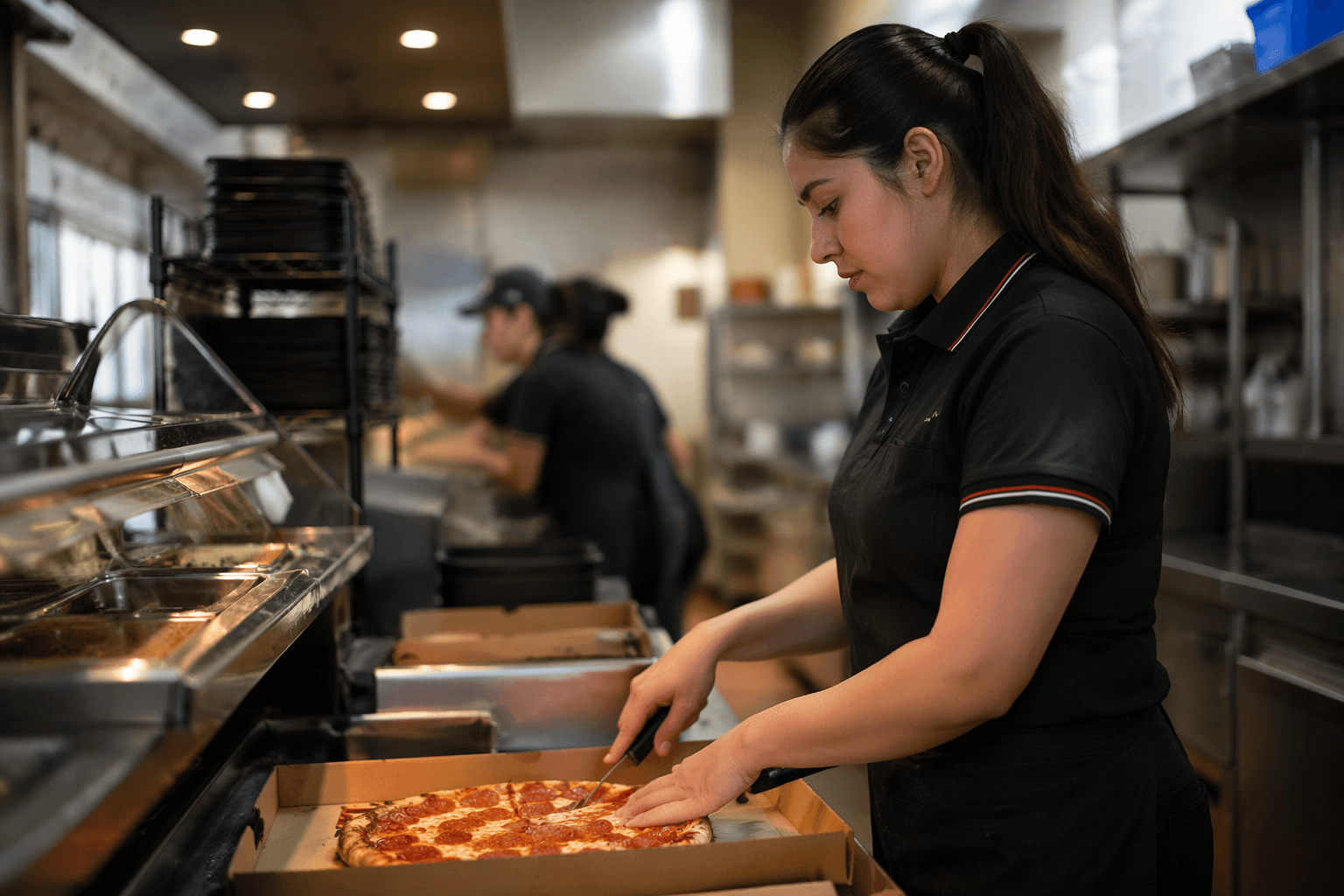
Pizza Hut teams use harassment training to build respectful workplaces
Harassment training at Pizza Hut is more than compliance: it gives managers and crews the habits to stop conflict, protect service, and keep good workers.
A Pizza Hut driver reaches the door, cooks are packed into a hot line, and a manager has to stop a crude comment before it turns into a walkout, a complaint, or a bad night of service. The strongest harassment-prevention programs treat those moments as daily operating skills.
Why harassment training belongs in the shift playbook
The U.S. Equal Employment Opportunity Commission frames sexual harassment or sexual assault at work as a form of sex discrimination under Title VII of the Civil Rights Act of 1964. That legal point matters on the floor because front-line restaurant work is fast, public, and often tense. A driver dealing with a customer at the door, or a kitchen crew member working in tight quarters, needs more than a posted policy to feel protected.
The EEOC’s Sexual Harassment in Our Nation’s Workplaces data highlight tracks charges filed from fiscal year 2018 through fiscal year 2021. A respectful workplace is part of risk management and retention. Workers stay longer when they trust that complaints will be handled quickly and that disrespect will not be treated as a normal part of the shift.
What the EEOC training is designed to do
The EEOC launched its respectful-workplaces training program in 2017 as an alternative to traditional compliance-only training. It includes two separate courses, Leading for Respect for supervisors and Respect in the Workplace for all employees, because a shift leader needs a different set of tools than a crew member who is trying to get through a rush without becoming the target of harassment.
The training is interactive and skills-based. It reviews acceptable conduct, teaches how to create respectful workplaces, gives workers tools for responding to harassing conduct, and shows bystanders when and how to intervene. The program is customizable for different workplaces and includes a review of an employer’s own harassment-prevention policies and procedures, which is important in a restaurant where the details of reporting and escalation need to match the way the store actually runs.
For Pizza Hut managers, that means training cannot stop at a slide deck. It has to translate into the habits people use on the floor: how a shift begins, how expectations are stated, how a complaint is documented, and how quickly the response reaches the person affected.
Where restaurant-specific training fills the gaps
ServSafe Workplace adds a restaurant and hospitality lens that standard compliance modules often miss. Its training is rooted in the cultural and social issues affecting restaurant and hospitality work environments, and it is designed to help strengthen an establishment’s stance against harassment. That framing fits Pizza Hut’s pace, where a conflict can start with a late order, a rough comment at the counter, or a pattern of disrespect that builds over several shifts.
ServSafe Workplace also offers a separate sexual harassment prevention program for the restaurant industry and a de-escalation and active-threat response course. Restaurant teams need to know how to recognize unacceptable behavior, but they also need a practical way to calm a tense exchange before it spills into a full disruption, especially when one person is juggling tickets, phones, and customers at the same time.
For a Pizza Hut crew, that kind of training is not just about avoiding obvious misconduct. It also helps create a workplace where a team member can ask for help without being mocked, ignored, or punished for speaking up.
What Yum! Brands and Pizza Hut put in writing
Yum! Brands’ Global Code of Conduct applies to all employees and subsidiaries, and its human-rights approach uses the United Nations Guiding Principles on Business and Human Rights’ Protect, Respect and Remedy framework. Employees and suppliers are required to confirm compliance with its human-rights commitments on an annual basis.
Pizza Hut’s supplier code of conduct goes further on the conduct side, saying threats of violence, physical punishment, confinement, or physical, sexual, psychological, or verbal harassment or abuse must not be used as discipline or control.
In a franchised business, local management is the difference between a document and a daily standard. If a store manager explains the rules, enforces them consistently, and documents problems when they happen, the code becomes part of operations instead of corporate language that never changes what happens on a Friday night.
What managers need to do on the floor
A respectful workplace is built in small, repeatable actions. The most effective managers do not wait for a formal complaint to start paying attention, and they do not treat harassment as a personality clash that the crew should just work through.
- Explain expectations early, especially in orientation and at pre-shift meetings.
- Respond quickly when a worker raises a concern, even if the issue seems small at first.
- Keep documentation of what was said, who was involved, and what action followed.
- Make sure every worker knows where to go if something feels wrong, including when the concern involves a supervisor.
- Intervene when a bystander sees behavior crossing the line, instead of assuming someone else will handle it.
When a driver knows a manager will back them up, the interaction at the door is less likely to turn into a confrontation. When cooks trust that insults will be addressed, they spend less energy protecting themselves and more energy on the order board. When people believe the store will respond fairly, turnover slows and morale stops leaking out of the kitchen.
This article was produced by Prism’s automated news system from verified source data, official records, and press releases, then run through automated quality and moderation checks before publishing. The system is built and supervised by the people who set the standards it runs under. Read our full AI policy.
Did this article answer your question?