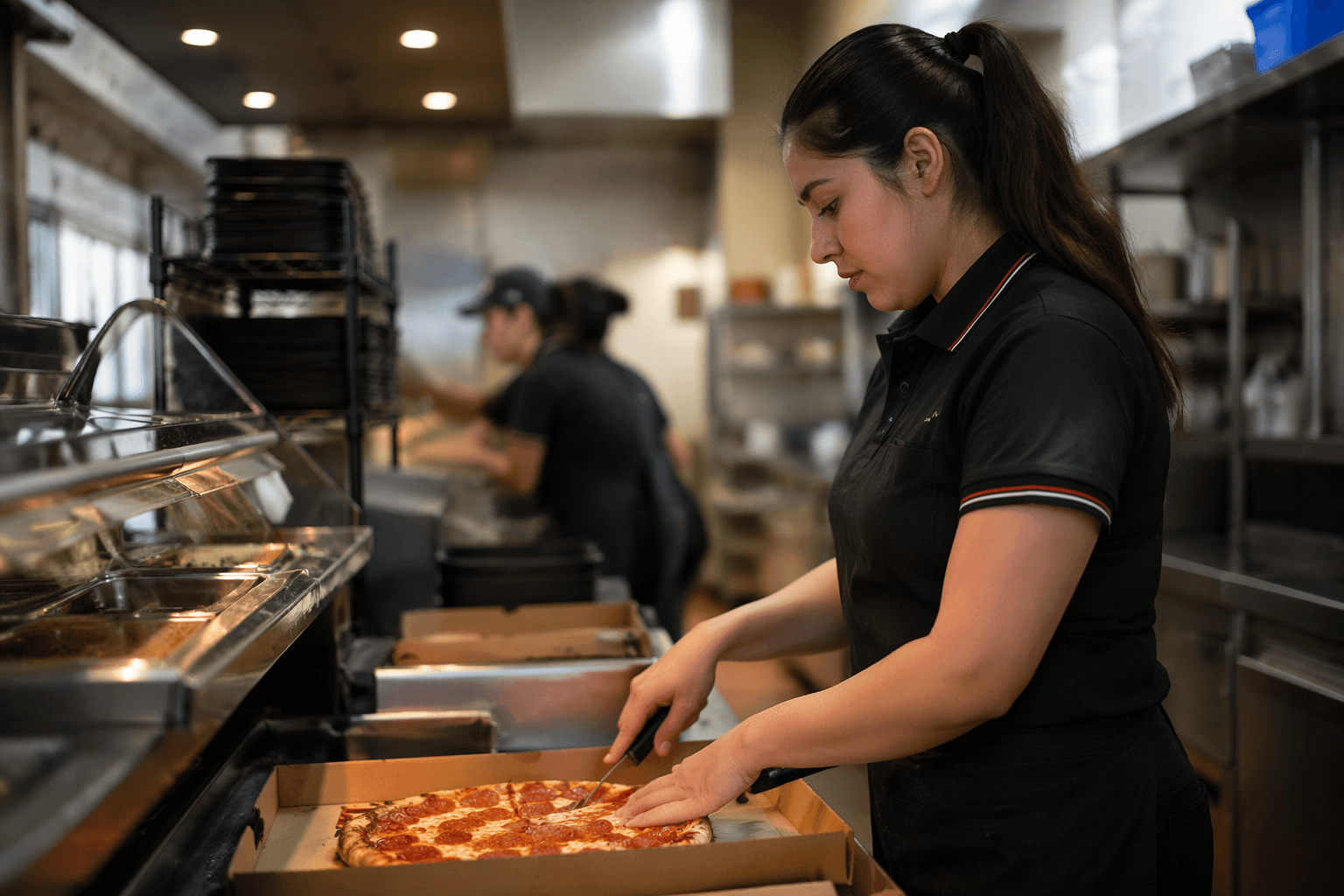
Pizza Hut Workers Can Report Injuries, Demand Safety Protections
A burn, slip, cut, or lifting injury can turn costly fast. Pizza Hut workers have rights, but the first report, the first note, and the first doctor visit often matter most.
What to do first after an injury
A burn at the make table, a slip on a wet floor, a cut from a blade, or a back strain from lifting dough or boxes can seem minor in the moment. At Pizza Hut, that is exactly when workers can make the most expensive mistakes: waiting too long to report, failing to get checked out, or leaving the shift without a paper trail.
The safest sequence is simple. Tell a supervisor right away. Ask whether your store uses an incident report, and make sure one is completed. Write down the date, time, exact location, what happened, and who saw it. If you were treated by a doctor, urgent care, or the ER, save every note, discharge instruction, and bill. If the injury happened while you were driving, save photos, any vehicle damage information, and insurance details you can get before the scene changes.
That record matters because the details fade fast in restaurant work. A wet floor gets mopped. A fryer is cleaned. A delivery route changes. The more you preserve early, the easier it is to connect the injury to the job later.
The rights Pizza Hut workers already have
The U.S. Department of Labor says workers have the right to report a work-related injury or illness, review injury and illness logs, request an OSHA inspection, and get safety training in a language they understand. Workers also have the right to ask to speak to the inspector and file a confidential safety complaint.
Those rights matter in every corner of a Pizza Hut operation: the kitchen, the make line, the dish area, the walk-in, the parking lot, and the delivery car. A worker does not need to prove a severe injury before speaking up. OSHA says it is illegal for an employer to fire, demote, transfer, or otherwise retaliate against a worker for complaining to OSHA.
There is a deadline that can matter if a complaint turns into retaliation. A whistleblower complaint generally must be filed within 30 days of the retaliation. That window is short enough that workers should not wait to see whether management “fixes it later.”
Why a small injury can become a pay problem
In restaurant work, the injury itself is only part of the damage. Missed shifts can reduce tips, hurt schedule reliability, and create a paycheck problem before the claim even gets sorted out. That is especially true for delivery drivers, who often carry the extra cost of using a personal vehicle and cellphone on top of the physical risk of the route.
Restaurant Business reported that AmTrust Financial Services reviewed 130,000 workers’ compensation claims filed by restaurant workers between 2018 and 2023 and found back injuries were rising at an accelerated rate. Those back-injury claims were less than 1 percent of the total, but they typically paid far more than simple cuts and scrapes, usually between $60,000 and $85,000, compared with $1,798 for cuts, punctures, or scrapes. For Pizza Hut workers, that is a reminder that a pain in the back from a lift, twist, or delivery run can end up being one of the costliest injuries in the industry.
Delivery work adds another layer of pressure. When a worker is hurt on the road, the injury can collide with car wear, gas, mileage, and reduced earning power at the same time. If the crash or incident involves another driver, preserve photos, note plate numbers if possible, and keep any exchange of insurance information. The claim is cleaner when the facts are pinned down immediately.
What OSHA says employers must not do
OSHA says employer injury-reporting procedures must be reasonable and must not deter or discourage workers from reporting workplace injuries. That detail matters because some store-level rules can quietly punish people for speaking up. Immediate-reporting rules can be unreasonable when injuries develop over time or do not seem serious at first.
That is important for the kind of pain Pizza Hut workers actually live with. A back twinge from lifting dough, a wrist strain from repetitive prep, or a burn that starts looking worse after the rush may not feel dramatic while the tickets are flying. OSHA’s position is that workers should not be discouraged from reporting just because the problem was not obvious in the moment.
OSHA also says incident investigations help identify hazards and corrective actions to prevent future incidents. For workers, that means an injury report should do more than assign blame. It should force the store to look at the wet floor, the broken glove supply, the chemical labeling, the broken step stool, the unsafe delivery path, or the training gap that created the risk in the first place.
Pizza Hut has seen the worst-case version of this job
The danger is not theoretical. OSHA records show a Pizza Hut of Southeast Kansas delivery driver was shot and killed while making two deliveries in Wichita, Kansas, on November 26, 2017. OSHA opened that fatality case two days later and closed it on April 2, 2018. The case is a grim reminder that delivery work can expose drivers to risks far beyond kitchen burns or sprains.
That history should shape how workers think about safety demands today. If a store sends drivers out, the store should treat route safety, late-night exposure, and incident reporting as part of the job, not as side issues. A delivery driver can be dealing with tips, mileage, customer contact, and time pressure all at once, which makes a clean paper trail even more important after any incident.
Chemical and training hazards reach beyond the obvious
Pizza work also brings chemical and machine risks that are easy to overlook when the focus stays on pizzas and tickets. OSHA issued a 2024 citation involving a Pizza Hut establishment in Wichita, Kansas, for a hazard communication violation tied to facility chemicals, including warewashing detergent, fryer cleaner, and sanitizer chemicals.
That is a reminder that kitchen injuries are not only burns and cuts. Improper labeling, poor training, and sloppy chemical handling can create eye injuries, skin burns, and respiratory problems. Workers should expect training they can understand and should not be left guessing about what a bottle means or what protective steps are required.
The broader pizza industry has seen even more severe consequences when training and guarding fail. OSHA said in a 2023 news release that an Illinois pizza manufacturer faced $2.8 million in penalties after a 29-year-old sanitation worker died and investigators found training and machine-guarding failures. The lesson for Pizza Hut crews is straightforward: food-service work can become dangerous fast when procedures are weak and production pressure outruns safety.
When reimbursement problems become injury problems
For delivery workers, safety and pay can collide in one dispute. Restaurant Business reported that Comes Investments, an Iowa Pizza Hut franchisee, was sued by a delivery driver who said she was not properly reimbursed for the use of her personal vehicle and cellphone. The article said the unreimbursed vehicle costs allegedly reduced her pay.
That matters because a driver who is already dealing with a crash, a strain, or a claim may also be absorbing out-of-pocket costs for the job itself. If a store’s reimbursement system is unclear, drivers can end up losing money even before a workers’ compensation issue is resolved. Keep mileage records, preserve phone expense records if they are job-related, and write down when you were asked to use your own car or phone for Pizza Hut business.
The best protection is a fast, clean report
The workers who protect themselves best are usually the ones who do not let the shift erase the facts. Report the injury, get checked, document the scene, save the paperwork, and use the rights OSHA says are already yours. That is the difference between a small workplace injury and a claim that gets buried under missing details, missed deadlines, or preventable retaliation.
This article was produced by Prism’s automated news system from verified source data, official records, and press releases, then run through automated quality and moderation checks before publishing. The system is built and supervised by the people who set the standards it runs under. Read our full AI policy.
Did this article answer your question?