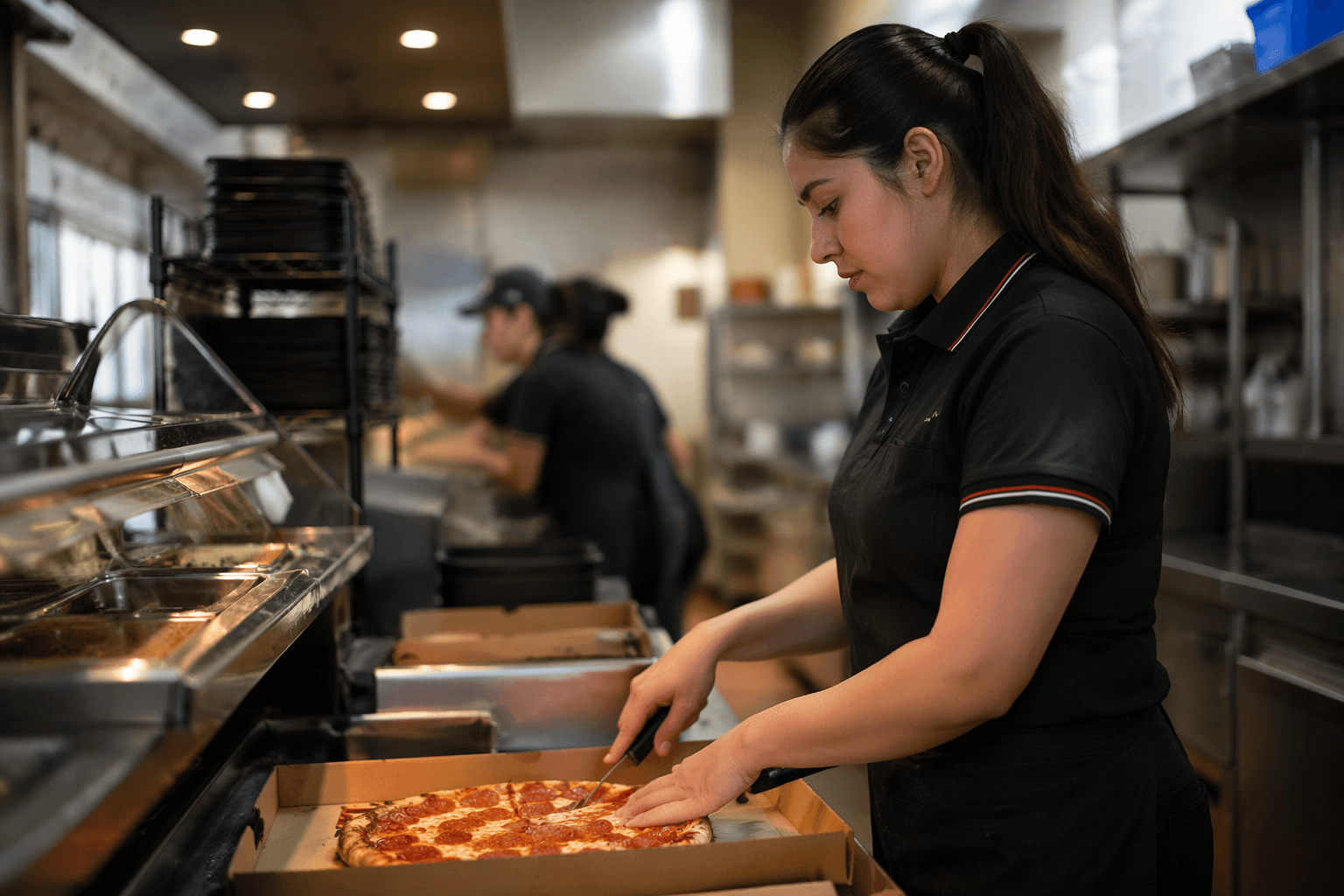
Pizza Hut workers face shifting roles as automation becomes standard
Pizza Hut is testing kiosks, pickup cabinets and AI tools as Yum! closes 250 U.S. stores and sells the chain for $2.7 billion.

Yum! Brands' $2.7 billion agreement to sell Pizza Hut in June 2026 capped a stretch that also included closing about 250 underperforming U.S. locations in the first half of 2026 and 375 more in fiscal 2025. The chain's answer to tighter margins has been more automation, not less, with a Plano, Texas prototype built around pickup cabinets, self-service kiosks and Pizza Hut's first U.S. Hut 'N Go drive-thru menu.
The restaurant industry discussion around Tord Olav Dønnum's June 19 analysis landed on a simple point: robotics, automation and artificial intelligence are becoming standard operating tools, especially when operators are trying to protect profitability, keep food fresh around the clock and avoid losing the human side of hospitality. For Pizza Hut workers, that points to a shift in what gets automated first. Ordering, prep forecasting, labor planning and repetitive back-of-house work are the likeliest early targets, while crew members still stretch dough, top pies, handle phones, run the oven and close the store.
Yum has already started wiring that future into its system. On March 18, 2025, it said it was partnering with NVIDIA to accelerate AI technologies across its restaurants and that AI-powered agents would be introduced at select Pizza Hut and Taco Bell locations to assist and enhance the team member experience. In its 2025 annual report, Yum said Byte Coach was already used in more than 80% of restaurants outside China to analyze consumer sentiment, performance data and guest readiness across a system of more than 61,000 locations worldwide.
For managers, that changes the job as much as it changes the menu line. The most useful shift lead may be the one who can read a labor forecast, spot a prep problem before the dinner rush and keep pickup orders moving without losing the personal touch that still matters to guests. For front-line staff, the pressure will be to learn the digital workflow fast enough that automation cuts friction instead of adding it.
Pizza Hut has been testing those ideas for years. In January 2018, it announced a partnership with Toyota to explore fully autonomous delivery vehicles, a sign that the brand had already been looking past the kitchen door toward the last mile. The newer effort is more immediate: less science fiction, more store-floor execution, with technology aimed at making legacy locations leaner, faster and easier to run.
This article was produced by Prism’s automated news system from verified source data, official records, and press releases, then run through automated quality and moderation checks before publishing. The system is built and supervised by the people who set the standards it runs under. Read our full AI policy.
Did this article answer your question?