Pizza Hut workers need overtime pay after 40 hours, DOL says
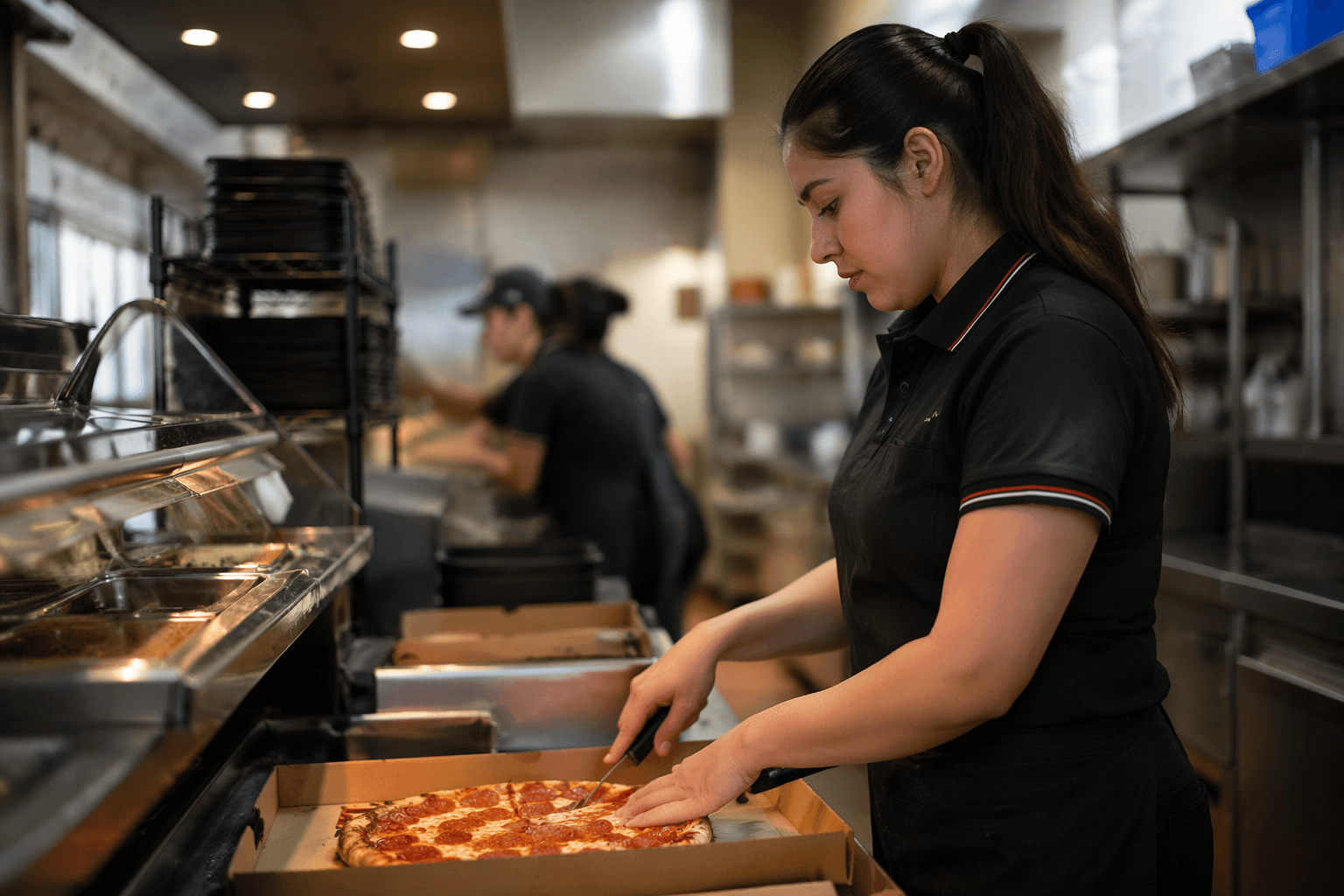
Pizza Hut crews can cross the overtime line in closing shifts, split schedules, and call-ins, and federal law says nonexempt hours over 40 in a workweek are overtime.

Long closings and split schedules can quietly push Pizza Hut crews over the federal overtime line. Covered, nonexempt employees earn time and one-half after 40 hours in a workweek, and that week is measured by the clock, not by whether the shift fell on a Sunday, a holiday, or your regular day off.
What counts as overtime at Pizza Hut
The key number is 40. The Fair Labor Standards Act requires overtime pay of at least time and one-half for hours worked over 40 in a workweek, and a workweek is a fixed, regularly recurring 168-hour period made up of seven consecutive 24-hour days. A brutal Friday and Saturday can trigger overtime even if the next week is lighter.
Just as important, hours cannot be averaged across two or more weeks to erase overtime. A manager cannot use one long week to cancel out a shorter one later. If your timecard shows 43 hours in one week and 37 in the next, the 43-hour week still carries overtime unless you are exempt.
The federal rule is also clear about what does not automatically trigger extra pay. There is no overtime premium just because you worked on Saturday, Sunday, a holiday, or a scheduled day off. The question is not which day you worked. The question is how many compensable hours landed in that workweek.
For workers 16 and older, the Fair Labor Standards Act places no limit on how many hours you may work in a week at the federal level. That means the law is focused on pay, not a weekly cap. In a Pizza Hut store, a long week is legal only if it is paid correctly.
The timekeeping details that get missed
Pizza Hut payroll problems usually start in the gray areas around the clock. Off-the-clock prep time counts if you are working, even if nobody formally wrote it into the schedule. Post-close cleaning counts too, whether you are wiping down make tables, finishing dishes, or helping lock up after the last delivery leaves.
Split schedules can also hide overtime. If you work a lunch rush, go home, then come back for dinner or a late closing shift, all of those hours still belong in the same workweek. The same is true if you are sent from one Pizza Hut location to another under the same employer and the total hours cross 40 before the week ends.
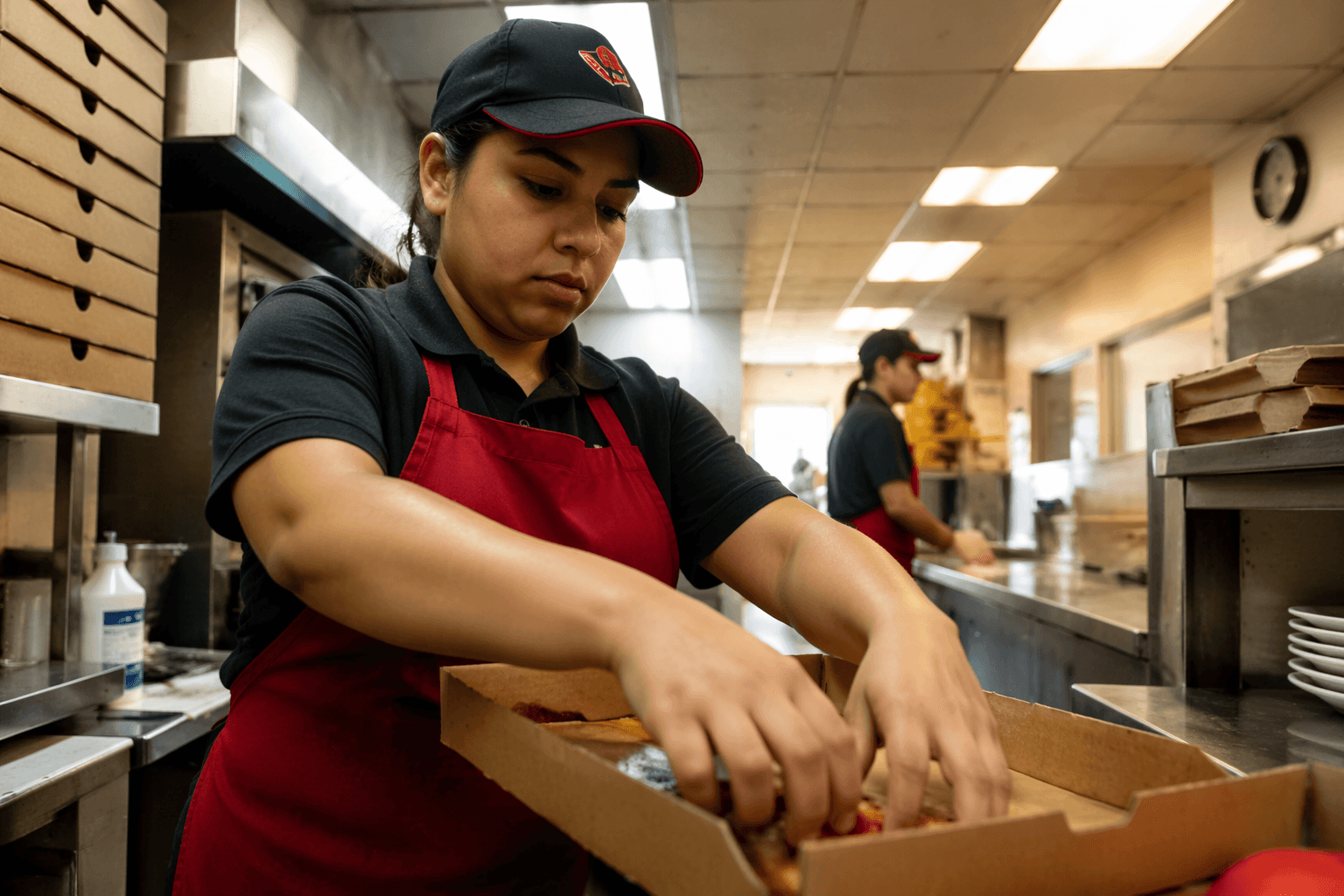
Last-minute call-ins are another common trap. A manager who asks you to come in for a rush or stay late to cover a no-show cannot treat those hours like they do not count just because the schedule changed on the fly. If the extra time pushes the total above 40, overtime is due on those covered hours.
For drivers and kitchen crew, the practical step is to compare the posted schedule with actual punches and actual work. If you stayed after close, worked prep before clock-in, or got pulled into an extra location, those minutes matter. Small gaps add up fast in a business where a dinner rush can stretch late and closing work often runs past the posted end time.
When the paycheck should arrive
Overtime is not just about whether it gets paid. It is also about when it gets paid. Overtime earned in a particular workweek normally must be paid on the regular payday for the pay period in which it was earned.
If overtime is pushed to a later paycheck or folded into a vague adjustment, it can create a real cash crunch.
A good timekeeping system should match reality: the hours you actually worked, the store you worked in, and the week in which the work happened. If the payroll record says one thing and the closing manager’s memory says another, the safest course is usually to fix the punch before the pay period closes.
Why drivers and tipped workers need to pay close attention
Pizza Hut’s tipped employees sit in a separate pressure zone. Under the Fair Labor Standards Act, a tipped employee customarily and regularly receives more than $30 a month in tips. That definition matters for delivery drivers and some front-of-house workers, because tips can affect how pay is structured while overtime rules still apply to the hours worked.
Drivers also operate in a harder competitive market than a decade ago. App-based delivery through DoorDash and Uber Eats has changed what customers expect, how fast they want food, and how much work can be bunched into a shift. At Pizza Hut, that can mean more late-night runs, more split schedules, and more chances for a punch to be missed or shaved.
The bigger payroll risk is that drivers often do more than drive. They may help in the store, fold boxes, answer phones, or jump onto prep and closing tasks when the oven side gets slammed. Every one of those hours belongs in the same week for overtime purposes.
Franchise pressure makes mistakes more likely
Pizza Hut’s franchise model can turn a simple overtime rule into a local headache. In 2021, Flynn Restaurant Group completed the purchase of 937 Pizza Hut locations from NPC International, a deal that was the largest franchisee-to-franchisee acquisition in U.S. history. The transaction left Flynn with 2,355 restaurants and about $3.5 billion in annual sales.
That kind of scale means payroll practices can vary widely from one market to another, depending on local management, staffing levels, and how tightly a franchisee tracks punches. A store in Florida may handle closing work differently from one in Texas or Wisconsin, but the federal overtime baseline does not change from state to state.
The brand itself has also been under pressure. Yum! Brands said in 2025 that Pizza Hut was under strategic review, and in June 2026 Yum planned to sell Pizza Hut for $2.7 billion. Around the same time, Pizza Hut ranked No. 19 in the 2026 Technomic Top 500, with estimated 2025 U.S. sales of $5.094 billion across 6,307 units. Yum also said 250 U.S. Pizza Hut restaurants would be closed in the first half of 2026 after a 7 percent decline in U.S. system sales last year.
The legal risk is already real
In October 2024, a Pizza Hut franchisee agreed to pay $4.75 million to settle delivery-driver claims that unreimbursed gas and vehicle costs pushed actual pay below legal minimums. That case sits next to other federal disputes, including Fugatt v. Southeastern Pizza Group, LLC, filed in Florida on Sept. 2, 2025, and Smith v. Tall Timbers Pizza Hut, Inc., filed in Texas on May 29, 2024.
This article was produced by Prism’s automated news system from verified source data, official records, and press releases, then run through automated quality and moderation checks before publishing. The system is built and supervised by the people who set the standards it runs under. Read our full AI policy.
Did this article answer your question?