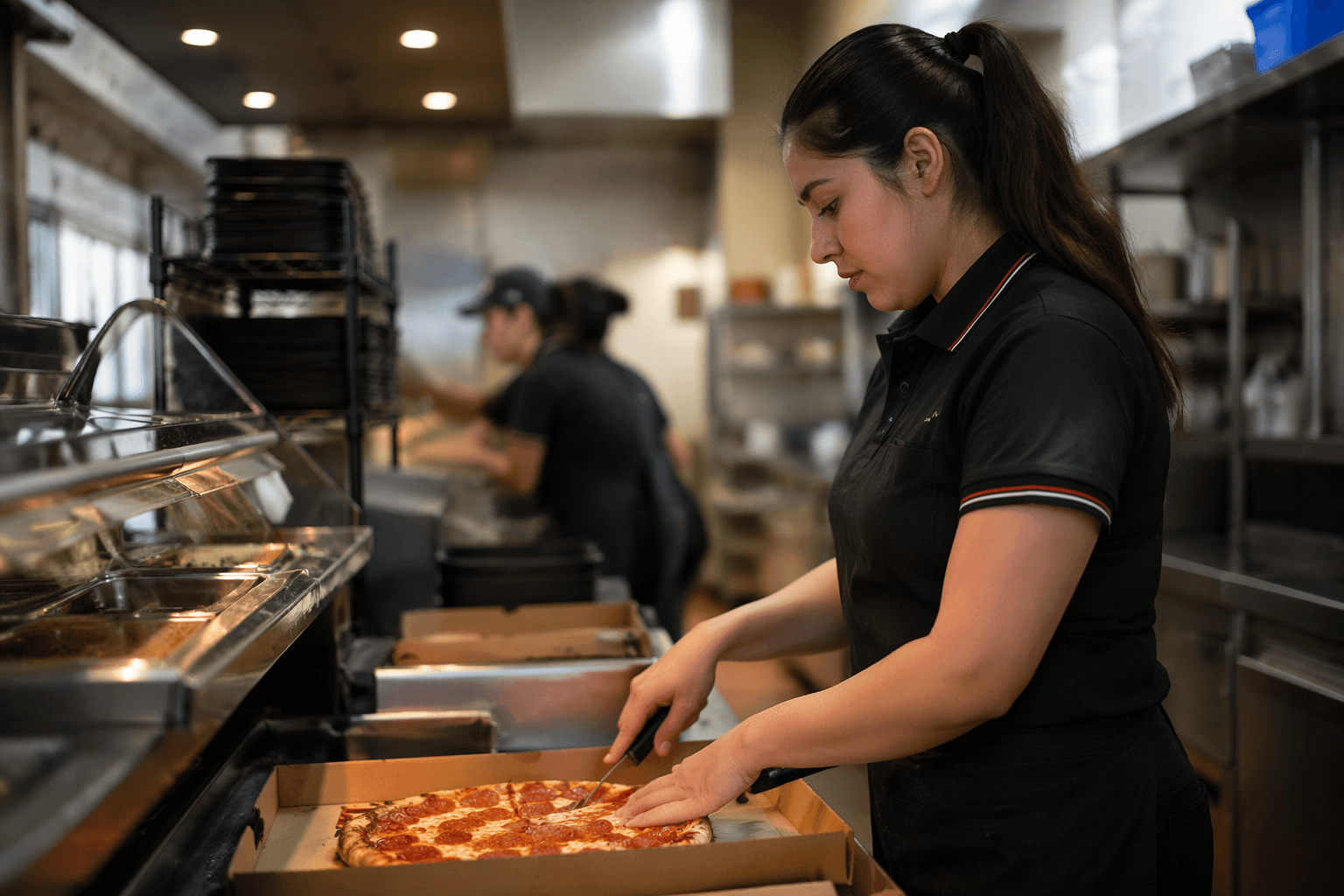
Pizza Hut workers should note how delivery cash freezes can choke payroll
When delivery payouts freeze, a Pizza Hut store can feel it in payroll first. The warning signs are tighter labor, delayed repairs, and vendor stress.

The fastest way a delivery-heavy Pizza Hut store gets into trouble is when sales look healthy on paper but the money does not clear in time to cover payroll. That is when the warning signs start showing up in the building: tighter schedules, deferred repairs, anxious vendors, and managers cutting every discretionary dollar they can find.
Lena Brands’ Chapter 11 filing is a blunt reminder of how fast that spiral can begin. The owner of Coco’s and Shari’s said it needed access to $650,000 that Stripe had frozen, money tied to DoorDash and Grubhub orders, and that the cash was needed for payroll and other expenses. A court later let the company use the funds as long as it stayed on budget. The filing also showed the business was already under severe strain, with only 11 locations left, assets listed at $1 million to $10 million, liabilities of $10 million to $50 million, and more than $5 million owed to merchant cash advance lenders.

When delivery revenue becomes a treasury problem
For Pizza Hut workers, the lesson is not just that delivery matters. It is that delivery money has to arrive on time, in the right amount, and without surprise holds if the store is going to make it through a week of labor, rent, food, and repairs. A restaurant can post sales, but if a processor or lender freezes funds, the store can suddenly be forced to choose between paying crew members and paying everyone else.
That is why cash timing is a workplace issue, not just a finance issue. In a low-margin operation, a frozen payment stream can show up quickly as shorter shifts, fewer hours for part-timers, slower ordering, and managers asking the team to stretch equipment and inventory longer than they should. The pressure is especially visible in off-premise-heavy concepts, where the money depends on third-party delivery systems and the settlement rules attached to them.
Why Pizza Hut is unusually exposed
Pizza Hut has spent years leaning into off-premise business. QSR Magazine reported that around the time of its modernization push, about 90 percent of Pizza Hut’s business flowed off-premises, and close to 90 percent of new Pizza Huts being built were delco stores built for delivery and carryout. That makes the brand especially sensitive to any break in the path between an order and the bank account.
In a traditional dine-in model, more of the revenue is tied directly to the store and its in-house flow of cash. Pizza Hut’s model is different. A large share of the business depends on whether delivery and carryout orders settle cleanly, whether fees are manageable, and whether the store can still cover the day-to-day costs of running a franchise kitchen and a driver operation. When that system slows down, the pain lands in the store, not in an abstract spreadsheet.
That is why operators should watch the same kinds of signals that showed up in Lena Brands’ filing. If payment timing starts slipping, if a processor tightens terms, or if merchant financing gets too expensive, the effect can move straight from the back office to the line cooks, drivers, and managers on the floor.
What workers usually feel first
Employees often notice the strain before anyone says the word bankruptcy. Hours get trimmed. Openings get delayed because repairs are pushed back. Managers become more aggressive about ordering only what is needed for the next few days. Delivery drivers may see more pressure to keep cars moving, fewer backup shifts, and more scrutiny over every labor dollar.
That is because the cash problem is really an operating problem. If the store cannot count on delivery money to land in time, then payroll becomes the first bill that feels tight, followed quickly by vendors and rent. For a Pizza Hut crew, that can mean a week that feels normal on the surface but is being run under constant cost pressure behind the scenes.
The franchise warning already exists
Pizza Hut operators have seen this kind of strain before. Restaurant Business reported in 2019 that NPC International, then Pizza Hut’s largest franchisee with about 1,200 locations, or roughly 16 percent of the system, was under pressure as wage costs rose and sales struggled. Greg Creed said some franchisees’ economics were pressured, particularly in higher-wage markets.
That warning did not stay theoretical. NPC later filed for bankruptcy and agreed in 2021 to sell its Pizza Hut restaurants to Flynn Restaurant Group as part of the process. For workers, that history matters because it shows how quickly a systemwide squeeze can move from declining sales to franchise distress to ownership change. When one of the largest operators stumbles, the impact can spread through staffing, remodel plans, local management decisions, and the pace of reinvestment in stores.
The broader delivery market got tougher too
Pizza Hut is not facing these pressures in isolation. Industry reporting showed that Pizza Hut, Domino’s, and Papa Johns all saw weaker sales in 2022 as the delivery environment became more difficult after the pandemic boom. Consumer habits shifted, and competition around meal delivery intensified.
That matters because the off-premise model works best when delivery growth is strong enough to offset fees, labor costs, and the expense of running a high-throughput kitchen. Once the market softens, the same model that once looked efficient can become brittle. Stores still have to staff the make line, dispatch drivers, manage third-party platforms, and keep product moving, but there is less margin for error if volume slows or fees rise.
For Pizza Hut managers, the practical takeaway is simple: watch the settlement cycle, not just the sales screen. A busy Friday does not help much if the cash is held back long enough to complicate Monday payroll. A delivery-heavy store can look healthy right up until the moment its working capital starts to slip.
That is the real lesson in Lena Brands’ filing. Delivery is not just a sales channel for a restaurant chain built around carryout and off-premise orders. It is a cash pipeline, and when that pipeline freezes, the first thing to break is often the ability to run the store at full strength.
This article was produced by Prism’s automated news system from verified source data, official records, and press releases, then run through automated quality and moderation checks before publishing. The system is built and supervised by the people who set the standards it runs under. Read our full AI policy.
Did this article answer your question?