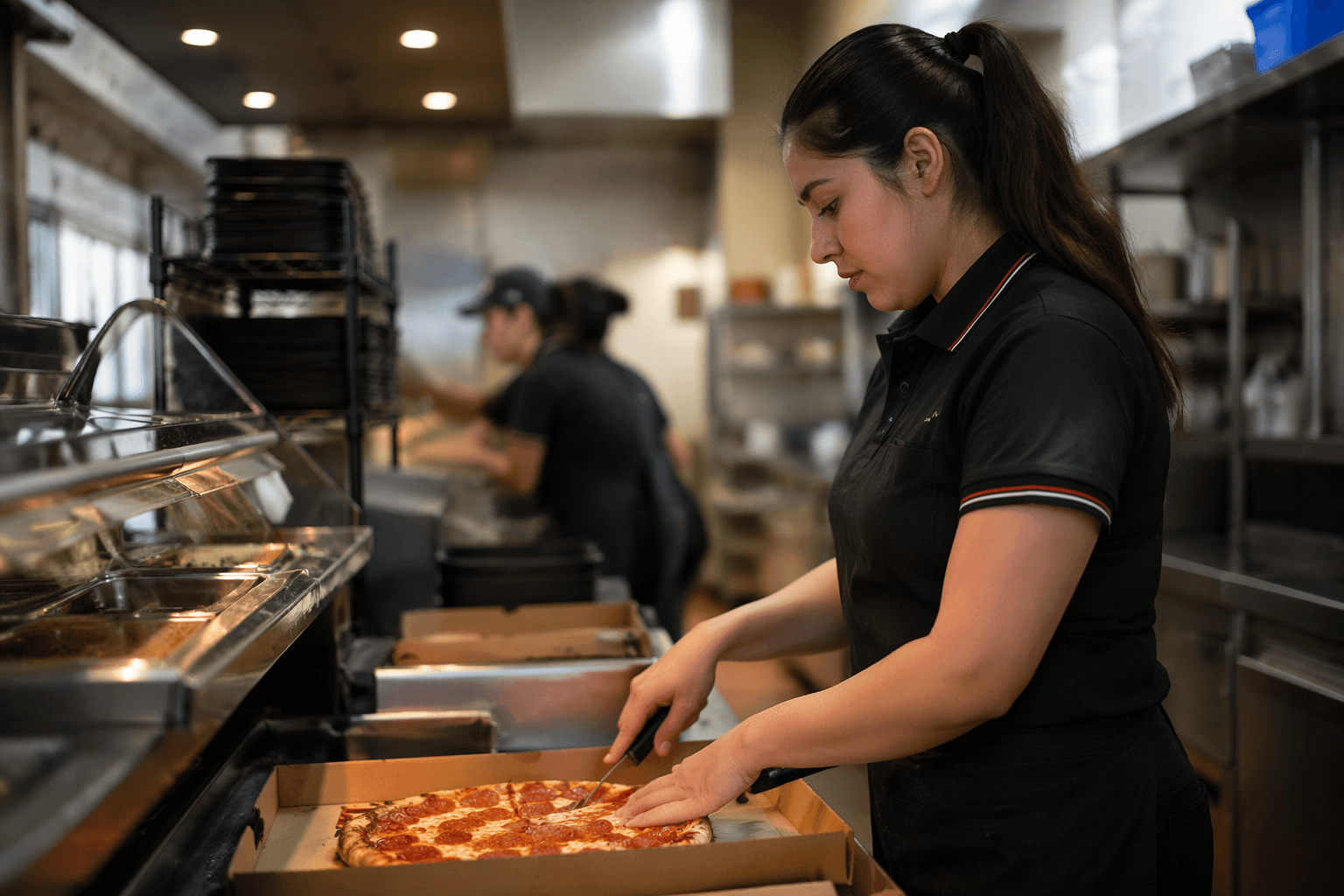
Restaurant operators demand proof as AI hype hits a reality check
Pizza Hut operators are turning AI into a math test: if it cannot cut labor waste, speed orders, or lift sales, it is getting rejected.

Operators are done buying AI on vibes
The loudest signal coming off the restaurant-tech floor is not excitement, it is skepticism. AI is still everywhere in restaurant marketing, with phone systems, drive-thrus, cashiers, inventory tools, and marketing bots all fighting for attention, but operators are no longer treating a new label as a reason to buy. One attendee even mocked an AI-powered hood-degreasing service as marketing that had gone too far, which tells you how sharp the mood has become.
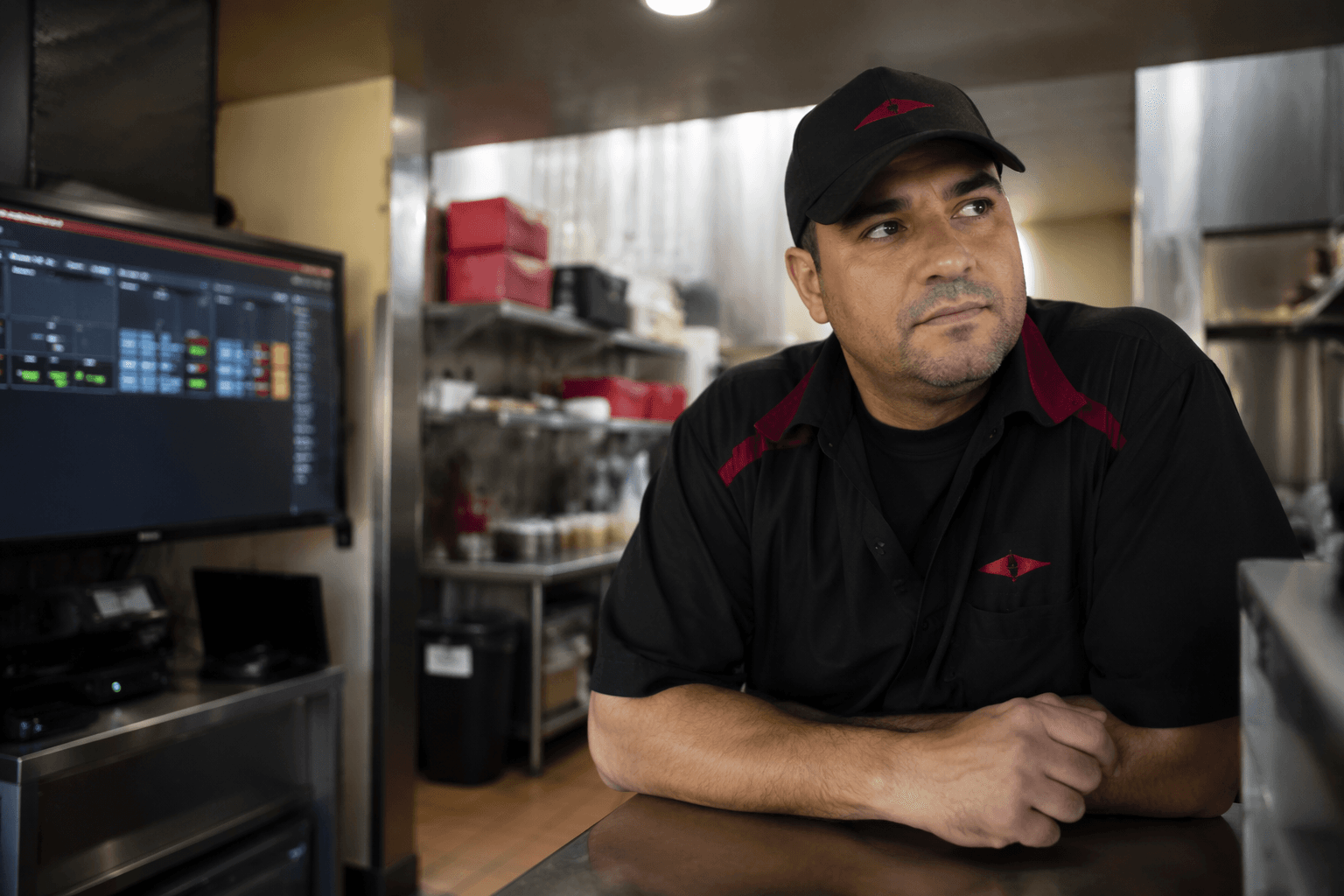
For Pizza Hut managers, that is the real story. The question is no longer whether a vendor can say “AI.” The question is whether the software saves manager time, reduces labor waste, improves order flow, or helps the store make more money this quarter. If it cannot show that in a busy restaurant, it is getting treated like another shiny pitch deck that will never survive the lunch rush.
What Pizza Hut operators are now demanding
The new standard is simple: prove the store-level impact. A tool has to show where it cuts manual work, where it reduces errors, or where it improves throughput enough to justify the cost. That matters at Pizza Hut because the chain depends on tightly choreographed handoffs, from call handling and order routing to menu setup, kitchen timing, and delivery dispatch.
That skepticism is especially useful for managers who have seen enough software create extra clicks instead of fewer. A tool that looks smart in a demo can still waste time if shift leads have to clean up bad data, kitchen crew have to re-enter orders, or drivers get stuck waiting because the system did not match labor to demand. The operators winning the argument are the ones asking for hard numbers, not promises.
- Does it shorten the time from order to make?
- Does it reduce rework for shift leads and kitchen crew?
- Does it cut call volume or speed up digital ordering?
- Does it lift conversion, ticket size, or delivery throughput?
- Does it show labor savings that can be measured in the store, not just in a vendor slide?
For Pizza Hut teams, the most useful test is practical:
If the answer is no, the skepticism is not resistance. It is discipline.
Yum’s AI strategy is already deeper than the hype cycle
This is not happening in a vacuum for Pizza Hut. Yum! Brands has already been pushing AI as an operating strategy across its brands, and Pizza Hut has been one of the test beds. In March 2025, Yum announced a partnership with NVIDIA to accelerate AI technologies across its restaurants and said NVIDIA was its first AI restaurant partner. Yum said the effort would support voice ordering, restaurant operations, and service improvements across roughly 500 restaurants that year, starting with voice AI for the drive-thru at Taco Bell and Pizza Hut.
The scale matters. Yum says it has more than 61,000 locations worldwide across KFC, Taco Bell, Pizza Hut, and Habit Burger & Grill, so even a small improvement in one workflow can add up fast. That is why the company has tried to frame AI as an operations tool rather than a marketing gimmick: if a system can shave seconds off ordering, reduce mistakes in prep, or help a store manage staffing better, it can matter across thousands of restaurants.
Joe Park has been central to that push. In January 2024, Yum promoted him to chief digital and technology officer after he had overseen Pizza Hut’s rollout of Dragontail, an AI-based platform for optimizing and managing food preparation from order through delivery, and HutBot, a manager app described as a “coach-in-your-pocket” tool. Yum said those Pizza Hut tools had already been deployed in thousands of restaurants across multiple markets, which makes Pizza Hut less of an experiment and more of a proving ground.
The numbers Pizza Hut operators should care about
The clearest case for AI at Pizza Hut is still operational, not promotional. Restaurant Business reported that Park said a “dash of AI” in Pizza Hut’s United Kingdom operations cut out-of-stock positions on supplies by 90%. That is the kind of number operators can understand immediately. Fewer out-of-stocks mean fewer missed items, fewer substitutions, less waste, and less time spent by managers scrambling to patch holes during a shift.
That is also where a tool like Byte by Yum fits into the picture. Yum has described Byte by Yum as an AI-driven platform that covers online and mobile ordering, point-of-sale, kitchen and delivery optimization, menu management, inventory management, labor management, and team-member tools. In other words, the company is not treating AI as one product. It is trying to layer it across the entire restaurant workflow.
For Pizza Hut, that broad stack can help only if the pieces actually talk to one another. A better forecast is useful only if the labor plan changes. A faster digital order flow matters only if the kitchen can keep up. Inventory intelligence matters only if it prevents a manager from discovering shortages after the rush starts. The store-level proof has to travel through the whole operation.
Why the backlash is sharpening now
The current skepticism is being sharpened by a more serious warning sign: a Pizza Hut franchisee has sued over a mandatory AI delivery system, alleging that it hurt business performance, created longer waits, and damaged consumer satisfaction. That kind of dispute hits at the heart of the Pizza Hut model, where delivery performance can affect repeat orders, labor strain, and driver throughput all at once.
That is why operator buy-in matters. If a system slows dispatch, creates extra rework for managers, or makes drivers wait longer for orders, the pain lands immediately in the store. For delivery drivers, longer waits can mean fewer runs and weaker earnings. For kitchen staff, bad routing can pile pressure onto the make line. For managers, the wrong tool can create labor waste instead of reducing it.
The bigger lesson for Pizza Hut is that AI is no longer being judged as a buzzword. It is being judged as an accountability problem. Vendors have to show that their software improves service, labor, or profit enough to matter inside a real restaurant, on a real shift, with real people using it. If it cannot do that, operators are increasingly willing to walk away.
This article was produced by Prism’s automated news system from verified source data, official records, and press releases, then run through automated quality and moderation checks before publishing. The system is built and supervised by the people who set the standards it runs under. Read our full AI policy.
Did this article answer your question?