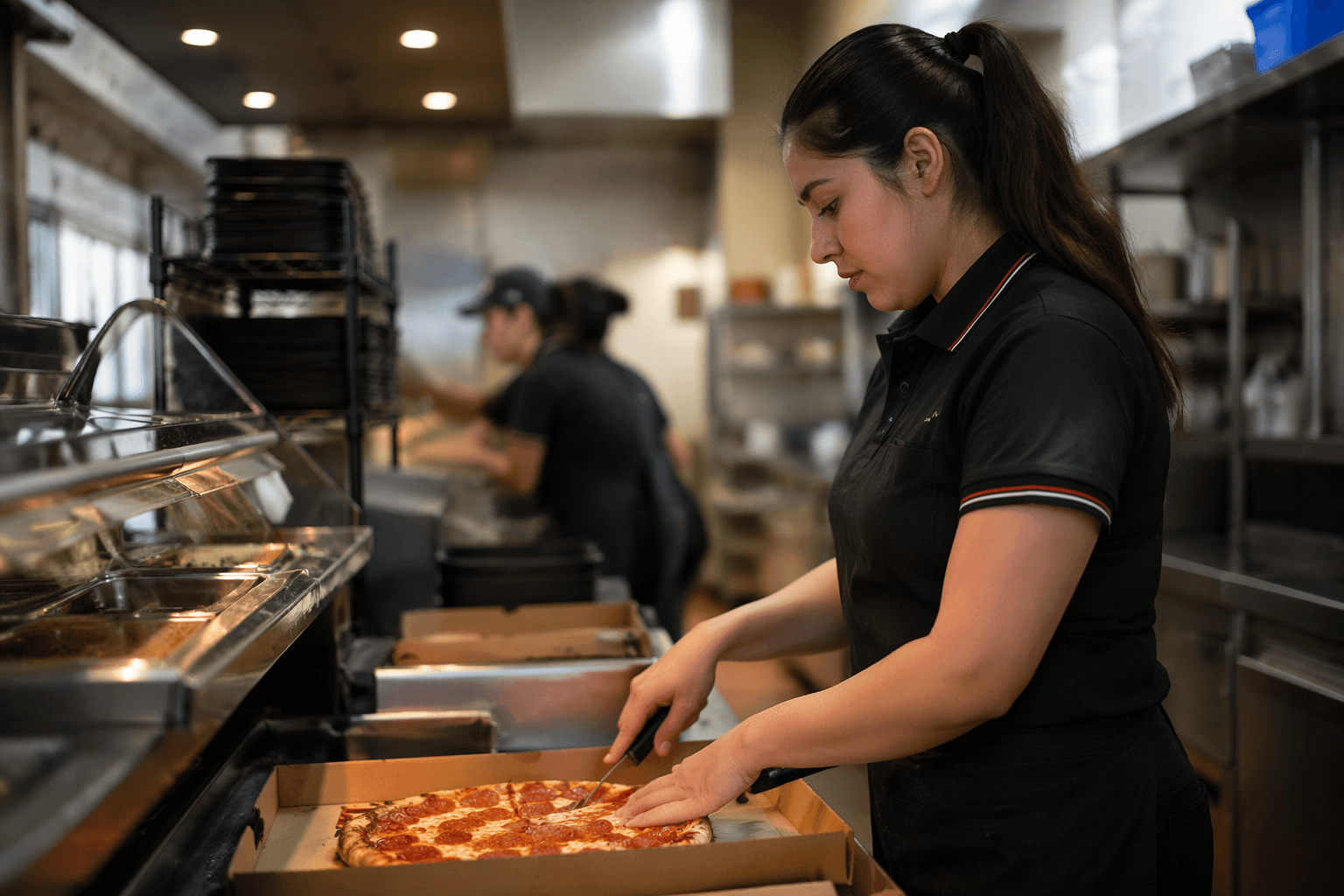
Restaurant software should save time, not add work for Pizza Hut teams
Pizza Hut software should be judged by one test: does it make Friday-night close faster, cleaner, and less chaotic? With a $2.7 billion sale pending, bad tech now has real stakes.

The right question for Pizza Hut software is not whether it looks smart on a dashboard. It is whether it helps a shift lead get through cash-out, inventory checks, labor handoff, cleaning logs, and order reconciliation without stretching the night into overtime.
That is the frontline test restaurant tech keeps failing. At Pizza Hut, where delivery, carryout, and dine-in all collide during the same rush, a tool only earns its place if it gives time back to the store instead of adding another set of fields to fill, another screen to check, or another manual fix before lockup.

Why the close is the real measure
A good system should disappear into the work. If it helps routes line up cleanly, keeps inventory counts accurate, and makes end-of-shift reporting less painful, crew can move faster and managers can close with fewer surprises.
The opposite is what has made so much restaurant software unpopular with the people using it. A cautionary example is Starbucks turning off its AI inventory system after nine months. The lesson is not simply that the technology missed the mark, but that it created another task for already stretched people to feed, check, and manage. For Pizza Hut teams, that is the distinction that matters: software that saves minutes during the rush is useful, but software that creates more reconciliation after the rush just moves the pain later.
That is especially important for the tasks that pile up at closing time:
- Cash-out should match the night without a second audit trail built by hand.
- Inventory checks should help crews spot what is missing, not force them to re-enter the same counts.
- Labor handoff should make it obvious who is still on the clock, who is leaving, and what the next crew needs to know.
- Cleaning logs should be simple enough that they are actually completed, not skipped when the store is slammed.
- Order reconciliation should catch mismatches before they become manager problems at midnight.
For delivery drivers, the close matters too. When order handoff is messy, dispatch slows, wait times rise, and the last run of the night can turn into dead time. In a market where DoorDash and Uber Eats keep pressure on pizza delivery, every extra minute between make line and doorstep makes the store look less reliable and the tips harder to depend on.
Pizza Hut’s scale makes the stakes bigger
Pizza Hut is not a small chain testing a new app in a few stores. Yum says it has more than 63,000 restaurants across its brands, and 97 percent are operated by franchisees. Pizza Hut’s own business model is built around traditional restaurants that support delivery, carryout, and dine-in, which means the software has to work across several operating modes at once.
That breadth is one reason the current moment matters so much. Yum has entered agreements to sell Pizza Hut for $2.7 billion, splitting the brand between LongRange Capital for Pizza Hut ex-China and Yum China Holdings for Pizza Hut China. Yum also said in its third-quarter 2025 earnings release that it launched a strategic review of Pizza Hut, so every operational choice is now being read through the lens of turnaround, discipline, and whether the brand can run cleaner at scale.
The numbers underline why this is more than a branding story. NRN reported that Pizza Hut’s system sales fell to $3.47 billion in 2025 from $3.61 billion in 2024, while global unit count dropped to 19,974 from 20,225. NRN also reported plans to close 250 U.S. restaurants early in 2026. When sales soften and units shrink, technology stops being a side issue. It becomes part of the chain’s proof of whether it can operate without wasting labor or creating extra friction at store level.
The Dragontail fight shows what can go wrong
Pizza Hut has already bet heavily on technology. Yum acquired Dragontail Systems in September 2021 for about A$93.5 million, describing it as kitchen order management and delivery technology meant to optimize the food-preparation process from order through delivery. The platform was supposed to make the kitchen flow cleaner and delivery more coordinated.
Instead, it has become the center of a franchisee lawsuit. Chaac Pizza Northeast, which operates 111 Pizza Hut locations across New York, New Jersey, Maryland, Washington, D.C., and Pennsylvania, has sued Pizza Hut over mandatory tech, alleging Dragontail caused operational disruptions and more than $100 million in losses. Restaurant Dive reported that the complaint alleges “cascading operational breakdowns,” slower order times, and disrupted integrations with third-party delivery.
That complaint matters because it turns a tech argument into an operating one. If software takes managers out of the loop, slows the rack, or makes delivery handoffs less predictable, the cost is not abstract. It lands on the people who have to salvage the shift, explain the delay to drivers, and keep the store moving while the platform insists everything is fine.
For franchise operators, the dispute is also a governance issue. Multi-state operators like Chaac are not just buying software, they are buying a workflow that can either fit local labor conditions or make them worse. If a system cannot adapt to a busy Friday night in one market, it is hard to believe it will magically scale across a chain this size.
What Pizza Hut software should actually do
The best restaurant tech is usually boring in the right ways. It should reduce clicks, shrink cleanup work, and give the store a cleaner handoff between dinner rush and close. At Pizza Hut, that means software should be judged against a few simple questions:
- Does it reduce the number of manual steps after the last order?
- Does it make inventory more accurate without forcing double entry?
- Does it help labor planning instead of making managers rebuild schedules by hand?
- Does it make third-party delivery easier to manage instead of breaking the handoff?
- Does it help the crew finish faster without leaving the store messier for tomorrow?
That is a better filter than vendor promises about innovation. A tool that impresses in a demo but slows a real store is not a solution, it is a new category of work. For Pizza Hut, especially now, the winning software will be the kind that makes a Friday-night close quieter, not more complicated.
This article was produced by Prism’s automated news system from verified source data, official records, and press releases, then run through automated quality and moderation checks before publishing. The system is built and supervised by the people who set the standards it runs under. Read our full AI policy.
Did this article answer your question?