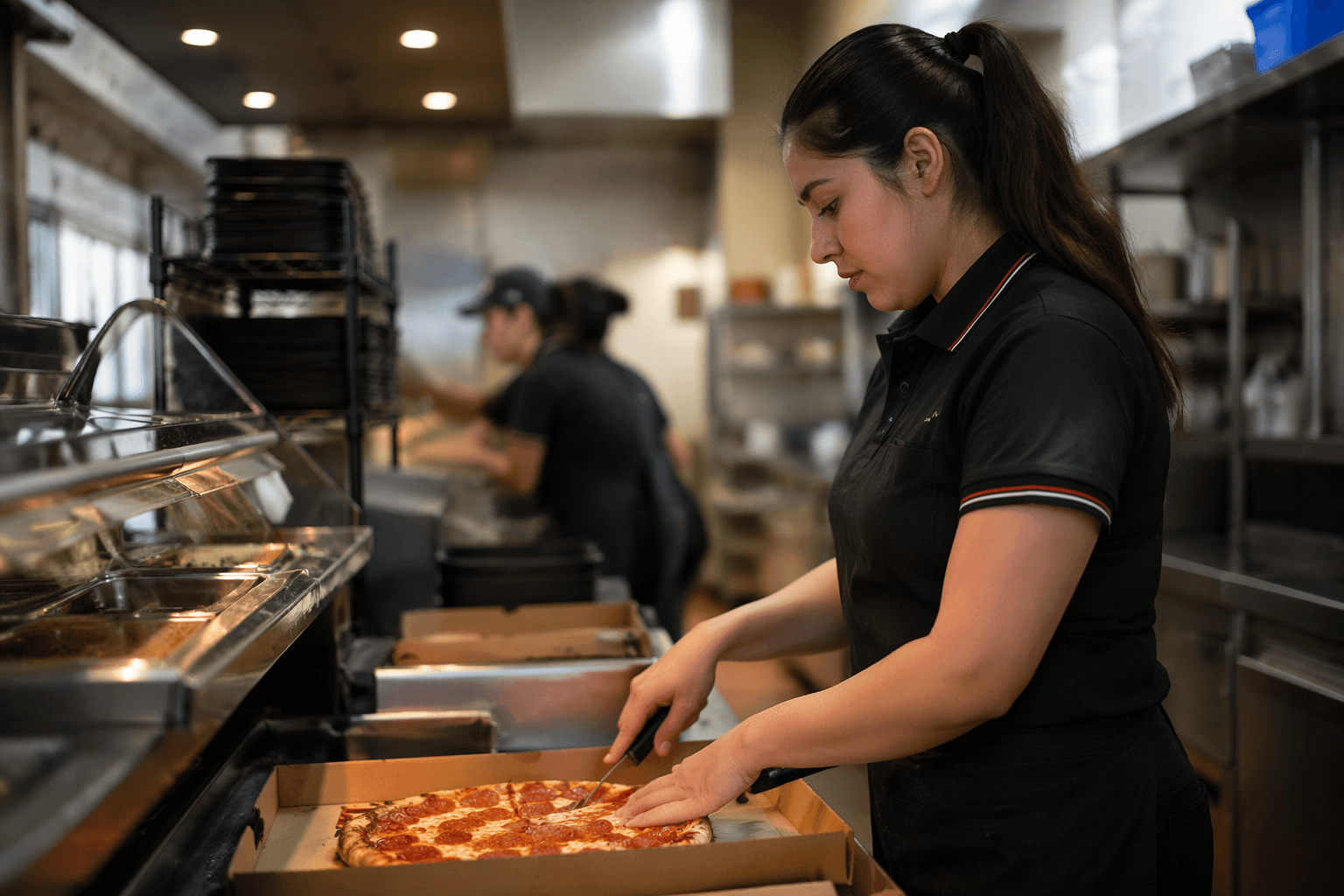
World Cup crowds drive early demand spikes for Pizza Hut workers
A Seattle World Cup match drove a 56% jump in nearby restaurant traffic, with 10 a.m. sales up 145%, showing why Pizza Hut crews need earlier prep.

Seattle restaurants felt the World Cup rush hours before kickoff, with Toast data showing transactions within five miles of Seattle Stadium jumping 56% during the June 19 United States-Australia match. At 10 a.m., nearby restaurant transactions were already up 145% from typical Friday levels, a sharp early warning for pizza crews that game-day demand can arrive in waves long before the dinner rush.
The crowd around Seattle Stadium made the pattern easy to see. The match drew 66,925 attendees, and the biggest lift went to quick game-day items: hot dogs rose 228% versus a typical Friday, while nachos climbed 87%, wings 64% and chicken tenders 63%. Beer and spirits also moved sharply, underscoring how a single international match can turn a normal lunch period into a full-service rush. For Pizza Hut workers, the same pressure hits in a different form: more calls, more online orders, more delivery runs and less room for delay when make times slip or drivers get stacked too tightly.

The wider tournament is built to create those kinds of spikes. FIFA’s 2026 Men’s World Cup runs from June 11 through July 19, with 48 teams, 104 matches and 16 host cities spread across the United States, Mexico and Canada. The scale matters for restaurant teams because big events do not just lift sales in host cities on match night. They can pull demand forward, especially when fans gather early, wear team gear or pair live viewing with food delivery at home.

Washington, D.C. has already pushed employers to prepare. The U.S. Department of Labor issued World Cup compliance assistance on May 29 for employers in 11 U.S. host cities, including restaurant-specific toolkits aimed at helping operators avoid wage-and-hour mistakes as schedules get tighter and staffing gets more complicated. That kind of guidance matters to franchise managers who have to balance kitchen labor, driver dispatch and last-minute coverage while demand surges in short bursts.
Pizza Hut has also leaned into the tournament with a global World Cup campaign built around soccer memories and family rituals at the table, a sign that the brand sees the event as both a traffic driver and a marketing platform. The company has reason to watch closely: Yum Brands said Pizza Hut U.S. recorded its highest sales per restaurant in its 67-year history during this year’s Big Game. For crews, that is the clear lesson from Seattle and the World Cup calendar now stretching to July 19: when the match starts, the work may already be peaking.
This article was produced by Prism’s automated news system from verified source data, official records, and press releases, then run through automated quality and moderation checks before publishing. The system is built and supervised by the people who set the standards it runs under. Read our full AI policy.
Did this article answer your question?