African Diaspora Chefs Reshape Paris Dining With Bold Culinary Fusion
Mory Sacko earned a Michelin star just months after opening in Paris; now a generation of African diaspora chefs is forcing French fine dining to reckon with what it excluded.
Let me write the full article now.
Paris has awarded Michelin stars to Japanese chefs and woven Italian flavors into its brasserie culture for decades. African cuisine followed a different path: historically confined to community restaurants and street-food formats in immigrant neighborhoods, it was rarely framed as a contender in the city's gastronomic elite. That calculus is shifting, driven by a generation of chefs who carry dual or triple culinary identities and aren't interested in choosing between them.
The Chef Who Made Paris Pay Attention
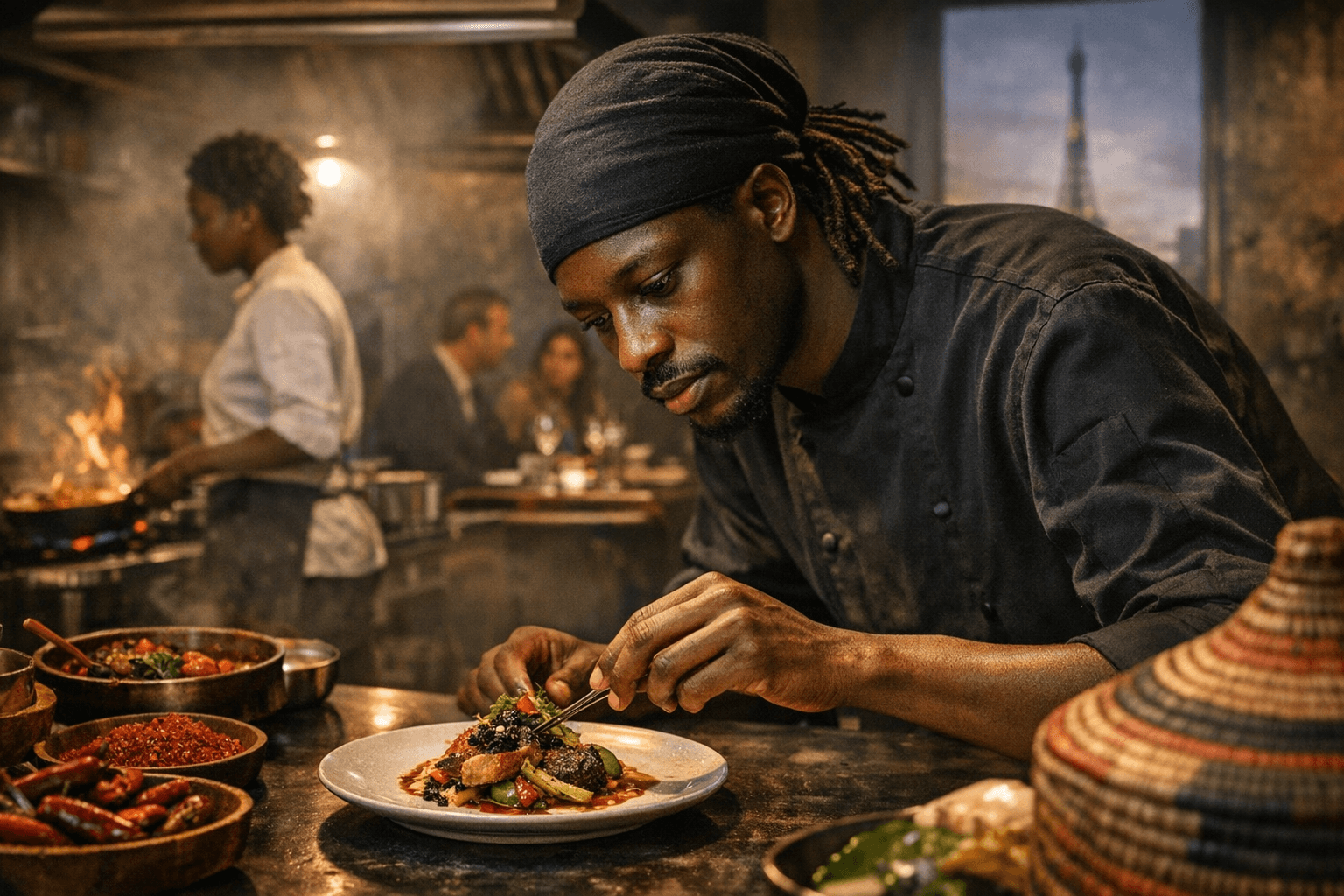
Mory Sacko opened his 35-seat Montparnasse restaurant MoSuke in September 2020 and received a Michelin star within months. The Michelin Guide also named him Young Chef of the Year, and La Liste recognized him as a Young Talent. He was 28 years old. Paris-born to Malian and Senegalese immigrant parents, Sacko had already become a breakout star on French television's Top Chef series before he cooked his first plate in his own kitchen. What followed was a meteoric rise that landed him on the cover of TIME magazine.
The restaurant's name encodes his entire culinary identity: "Mo" from his own name, "Suke" from Yasuke, the only African samurai in Japanese history. It's a precise symbol for what the menu delivers, which is African, French, and Japanese cuisine woven into a single tasting experience, influenced in part by anime Sacko watched growing up in France. The design mirrors the same layering: Japanese blinds and wooden tabletops set alongside West African warmth. In 2026, Air France tapped Sacko to become the first Michelin-starred chef to create menus for its La Première and Business class cabins on flights departing from Abidjan to Paris-Charles de Gaulle, extending his reach to the very air corridor that connects France to sub-Saharan Africa.
Georgiana Viou and the Milestone That Mattered
If Sacko broke through the ceiling at fine dining's upper tier, Georgiana Viou cracked it open for Black women in French gastronomy. In 2023, the self-taught chef from Benin became the first Black female chef in France to earn a Michelin star, awarded for her restaurant Rouge at the Margaret Hotel Chouleur in Nîmes. She had arrived in France at 22 with no formal culinary training. By 2010, she was a finalist on MasterChef France. By 2023, she had a star.
Her cuisine blends Mediterranean terrain with Beninese heritage, a pairing she describes as rooted in both the coastal markets of Cotonou and the landscapes of southern France where she built her career. Viou is also a MasterChef France judge and a cookbook author, and she runs a second restaurant in Cotonou at the Sofitel Hotel. A Marseille location is in development. Her footprint spans continents not as a franchise strategy but as a reflection of how she actually lives and cooks, moving between identities with intention.
Community Kitchens, Elevated
Not every shift in Paris dining happens at the Michelin level. BMK Paris-Bamako, with locations in the 10th arrondissement on rue de la Fidélité and in the 11th on rue Jean-Pierre Timbaud, represents a different but equally significant transformation: community-rooted African cooking repositioned as a culinary destination in its own right.
Chef Ousmane Coulibaly leads the kitchen at BMK Folie-Bamako, where everything is prepared in-house from fresh ingredients. The menu moves between Senegalese and West African staples like mafé, yassa, and thieboudienne alongside original creations including cassava flour desserts and Afro-inspired salads. Meats are French-sourced and halal, and nearly every dish has a vegan or vegetarian version. The restaurant carries the Ecotable sustainability label, a certification that signals the operation takes its supply chain as seriously as its spice blends.
For the kitchen workers at restaurants like BMK, this positioning matters. These are not just ethnically distinct kitchens running on thin margins and invisible labor. They're destinations that command the attention of serious gourmets, which over time builds the case for better pay structures and working conditions for the cooks and servers who make the experience possible.
The Diaspora Across the City
Bomaye, located on the Rue de Paradis in the 10th arrondissement, is among the restaurants serving as entry points for Parisians encountering African cuisine as fine dining rather than as something adjacent to it. Babylone Bis in the 2nd arrondissement takes an Afro-Caribbean fusion approach, pairing consistent food with a setting known for its Afro-centric decor and cocktail program, drawing both regulars and the social-media-fueled curious.
The American dimension of the African diaspora also has a foothold. Mashama Bailey, the celebrated chef behind The Grey in Savannah, Georgia, opened L'Arrêt in Paris's 7th arrondissement alongside partner Johno Morisano. The restaurant's name pays homage to the bus stops and lunch counters central to the American South's civil rights history. Bailey's cooking in Paris celebrates stories shaped by migration, exchange, and resilience across the African diaspora, threading American Southern food culture into the city's dining conversation.
What's Actually Changing for Workers
The broader shift that Sacko, Viou, and their contemporaries represent goes beyond menus. For years, the dominant assumption among second-generation Afro-French families was that Senegalese and Malian home cooking belonged in the home, not in the white tablecloth rooms where careers are made. That assumption is being dismantled plate by plate.
For the line cooks, prep staff, and servers working in these kitchens, the stakes are real. When a restaurant earns a Michelin star or pulls serious gourmets through its doors, it changes what that kitchen can demand and offer. It changes the press coverage, the reservation lists, the staffing opportunities, and eventually the wages. French fine dining has a long history of treating back-of-house staff in immigrant-heavy kitchens as interchangeable. Restaurants that carry cultural identity as their central identity tend to invest more deliberately in the people who hold that identity.
The generation of chefs now reshaping Paris dining didn't arrive asking for a seat at the table. They built their own tables, named them after African samurai and Malian home cities, and earned stars faster than the industry expected. The Michelin Guide, Air France, and the Parisian reservation-seeker are all catching up.
Know something we missed? Have a correction or additional information?
Submit a Tip