ASU Panda Express Workers Strike Over Unsafe Heat After Colleague Hospitalized
Vanessa Martinez, an ASU Panda Express cook, was hospitalized for severe dehydration before her coworkers walked off the job demanding functioning A/C in Phoenix's record March heat.

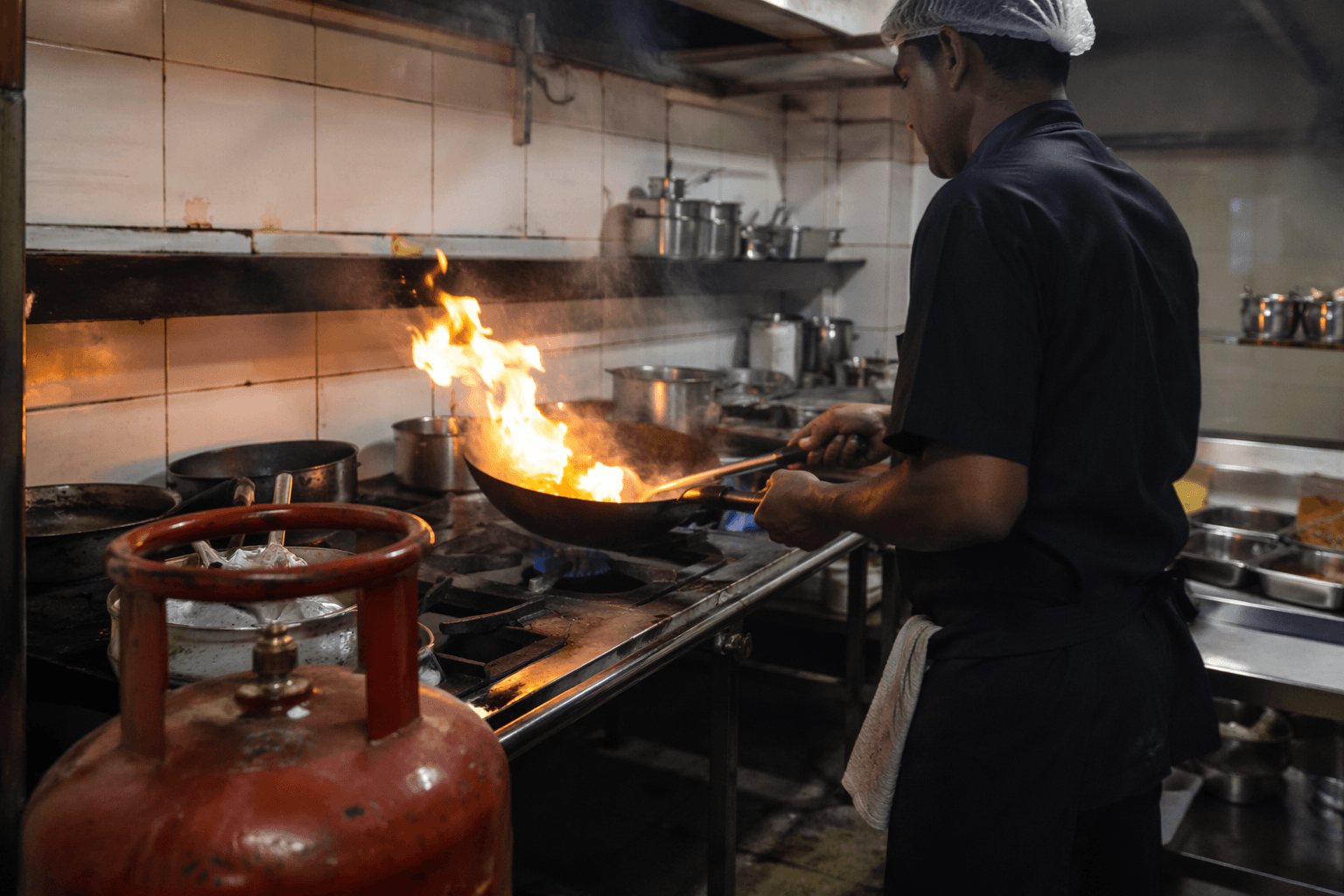
Vanessa Martinez spent multiple five-hour shifts cooking in what she described as a suffocating kitchen before she ended up in the hospital. One worker was recently hospitalized for severe dehydration after working multiple five-hour shifts, the union said. The day after she recovered, her colleagues walked out.
"It is suffocating," said Martinez, one of the Aramark workers on whose behalf the complaint was filed. "I dread going into work most days. I have asthma flare-ups, and they get worse while I'm cooking. I've broken out in hives, and I was hospitalized for dehydration; the heat is just unbearable." According to Martinez, the Panda Express A/C has been either non-functioning or ineffective since last year.
On March 26, workers at the Panda Express inside ASU's downtown Phoenix dining hall walked off the job and staged a short strike and picket outside the restaurant, chanting "What do we want? Heat safety! When do we want it? Now!" The action was organized by workers affiliated with UNITE HERE Local 11 and workers from the ASU campus participated, with protesters holding signs and marching in a picket line on Taylor Mall in downtown Phoenix. The March 26 walkout follows a strike in February during ongoing contract negotiations with Aramark, ASU's food service contractor. At least two workers stayed on the job during the strike; the Panda Express remained open.
A heat safety complaint was filed with the Arizona Division of Occupational Safety and Health, UNITE HERE Local 11 said. Employees are asking for an on-site inspection at the location. The complaint alleges both the company and the university failed to provide adequate cooling, potentially violating the state's General Duty Clause. About 11 Aramark employees work at the restaurant and could be exposed to the conditions.
The stakes are compounded by what's happening outside the kitchen doors. Workers described temperatures inside the kitchen as unbearable during what reporters and union officials characterized as unprecedented triple-digit temperatures in Phoenix this March. "For kitchen workers already exposed to heat from cooking equipment, working without A/C during a record-breaking heat wave is especially dangerous," said Katelyn Parady, associate director for the National Council for Occupational Safety and Health. "The fact that this can happen even at a flagship university like ASU is egregious." Parady added that Arizona urgently needs a workplace heat safety standard covering all indoor and outdoor workers.
Under Arizona's General Duty Clause, employers are required to provide workplaces free from recognized hazards that are causing or are likely to cause death or serious physical harm. State investigators have previously issued citations under the General Duty Clause in response to heat-related complaints, the union said, but worker advocates say more needs to be done.
Aramark said it is working with the university on the matter. No statement from Arizona State University was available. The Arizona Division of Occupational Safety and Health had not publicly confirmed receipt of the complaint or announced an inspection schedule as of publication.
For line cooks and prep workers everywhere, the detail that lands hardest is the simplest one: the air conditioning reportedly stopped working last year, and it took a hospitalization to get anyone to pay attention.
This article was produced by Prism’s automated news system from verified source data, official records, and press releases, then run through automated quality and moderation checks before publishing. The system is built and supervised by the people who set the standards it runs under. Read our full AI policy.
Did this article answer your question?