Burnt Chef Project Survey Examines Always-On Messaging and Hospitality Mental Health
84% of hospitality workers have faced mental health challenges, and The Burnt Chef Project is now investigating whether your group chat is making it worse.
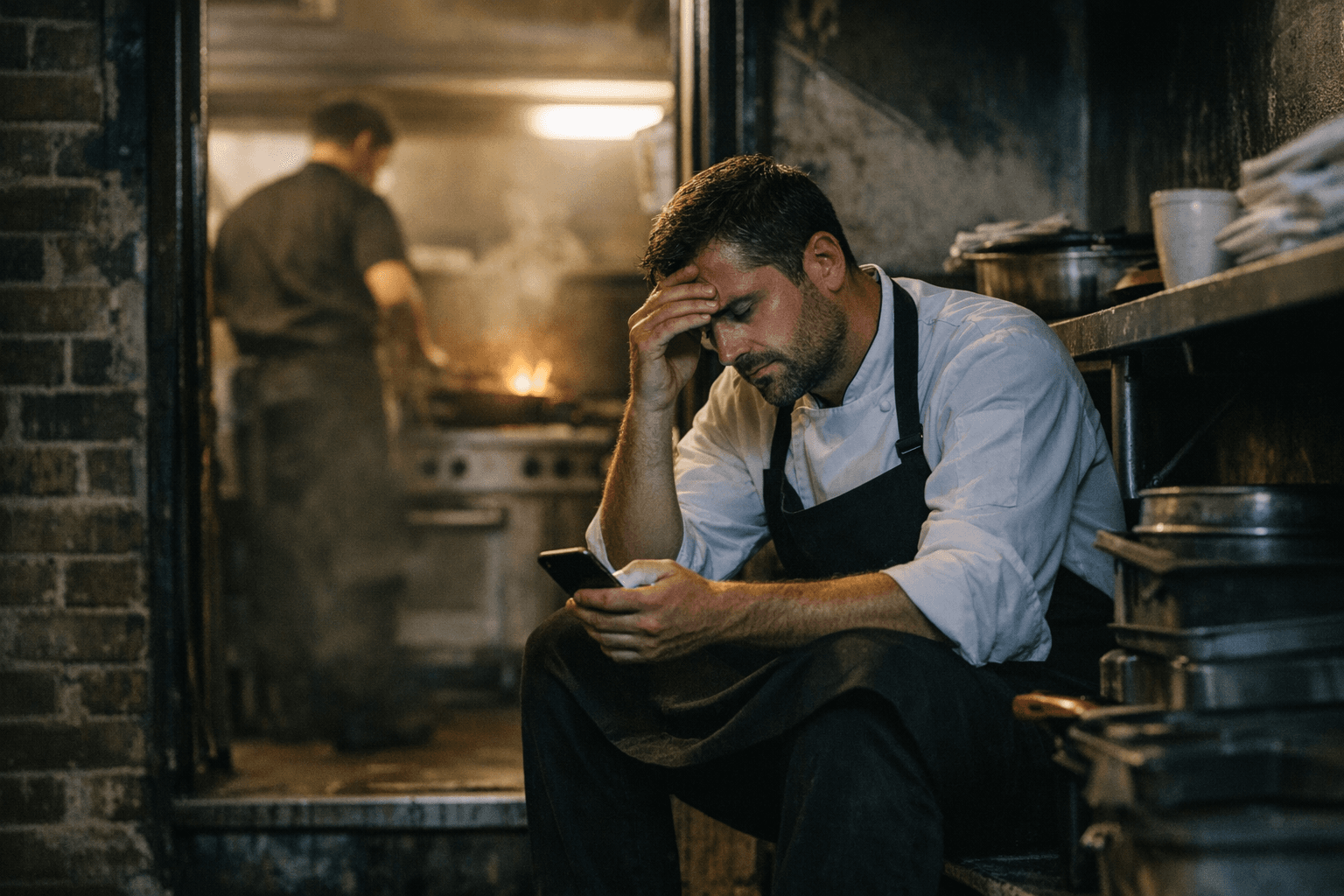
Your day off starts with a ping. A rota change, a manager's question, a WhatsApp thread that won't stop. The Burnt Chef Project, the industry nonprofit founded by Kris Hall, launched a global survey this week to find out exactly how much damage that dynamic is doing to hospitality workers' mental health.
The survey targets the "always-on" culture baked into modern restaurant operations: the WhatsApp groups, rota apps, and internal messaging platforms that have made it nearly impossible to fully clock out. Academic partners at Bournemouth University and the University of Lincoln are contributing to the research, which aims to produce findings grounded in both frontline experience and peer-reviewed rigor.
Hall didn't soften the concern. "We know hospitality is under pressure, but what we don't fully understand yet is how much of that pressure is being amplified by the way we communicate at work," he said. "But while these tools improve efficiency, there are growing concerns they may also be contributing to stress, burnout, and a lack of clear boundaries between work and personal life."
The survey will examine whether digital communication across kitchens, bars, and front-of-house teams feels supportive or controlling, how always-on messaging affects rest and recovery, and what healthier communication might actually look like in practice. The Burnt Chef Project is partnering with workplace communication platform Zenzap on a parallel initiative, framed bluntly on the nonprofit's website: "Late finishes. Early pings. No switch-off. Hospitality has normalised being 'always on' and it's costing people more than we admit."
The backdrop makes the survey urgent. The Burnt Chef Project's own prior research found that 84% of hospitality professionals have experienced mental health challenges during their careers. A separate Bournemouth University report published in January 2026, developed in collaboration with The Burnt Chef Project and led by corresponding author Dr. Charalampos (Babis) Giousmpasoglou, found that nearly seven in ten chefs (69%) often or always consider leaving their job, with a further 27% of the 460-chef global sample falling into an additional category the published excerpt does not fully detail. The report called the intention-to-leave figures "exceptionally high" and described its findings as "one of the clearest quantitative and qualitative accounts to date of the drivers of attrition in professional kitchens."
Earlier research has pointed to what sustains people when conditions are brutal. A 2022 study by BRITA Professional and The Burnt Chef Project found that workplace friendships drove measurable outcomes: 62% of respondents said close colleagues reduced their stress, 50% said they alleviated anxiety, and 46% reported improving customer service. The implicit argument: culture, relationships, and boundaries matter as much as pay.
No sample size or fieldwork timeline for the new "always-on" survey has been released. What the findings ultimately reveal could reshape how operators think about the group chats they treat as operational necessity and workers experience as a second shift that never ends.
This article was produced by Prism’s automated news system from verified source data, official records, and press releases, then run through automated quality and moderation checks before publishing. The system is built and supervised by the people who set the standards it runs under. Read our full AI policy.
Did this article answer your question?