Chicago delays tipped minimum wage phaseout by two more years
Chicago’s new compromise pushes the next tipped-wage hike to 2028 for big restaurants and 2030 for smaller ones, resetting payroll plans across the city.
For Chicago restaurant managers, the immediate question was whether the city’s latest compromise would ease payroll pressure now or only push a larger compensation reset down the road.
The Chicago City Council’s Workforce Development Committee unanimously advanced a measure on May 12 that would delay the end of the tipped minimum wage by two more years. The full council was scheduled to vote on the deal on May 20. Mayor Brandon Johnson’s office backed the compromise even though it slowed one of his signature labor policies, after Johnson vetoed an earlier move to pause the scheduled increases and the council failed to override that veto on April 15.
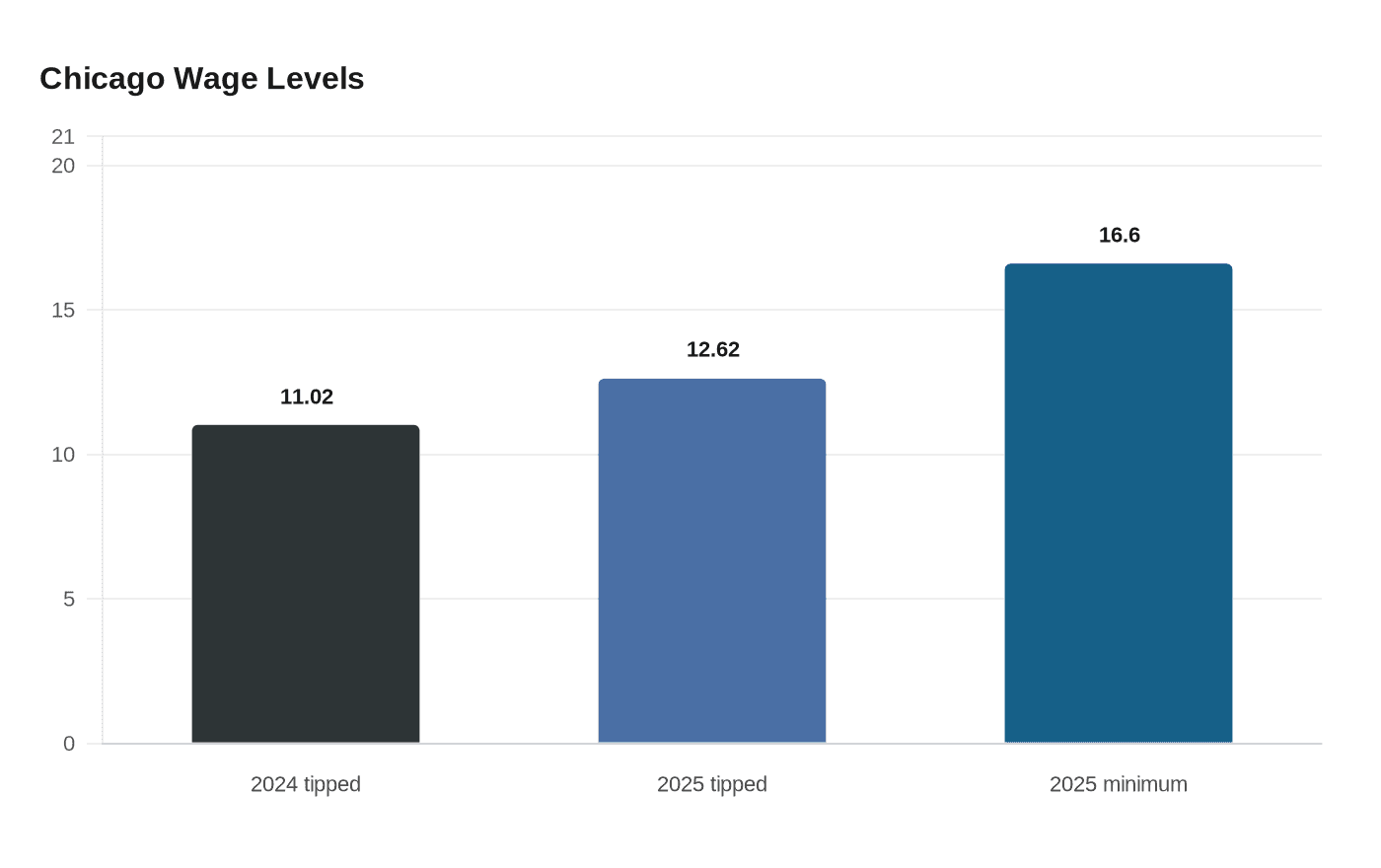
The proposal stretches out a transition that began when Chicago approved the One Fair Wage ordinance on October 6, 2023. Under that plan, the city set out to phase out its subminimum wage for tipped workers over five years, raising tipped pay by 8 percent a year until it reached parity with the city’s standard minimum wage on July 1, 2028. City materials said tipped workers such as servers, bartenders, bussers and runners were earning $11.02 an hour when the ordinance took effect in 2024, and that figure had risen to $12.62 as of July 1, 2025. Chicago’s general minimum wage for employers with four or more workers stood at $16.60 an hour on that same date.
The compromise changes the timing sharply, and the split depends on restaurant size. Larger restaurants and bars would see the next scheduled tipped-wage increase pushed from July 1, 2026, to July 1, 2028. Smaller restaurants would get an even longer runway, with their next city-mandated pay raise delayed until July 1, 2030 and full parity not arriving until July 1, 2033. That means the city is still keeping the phaseout on the books, but it is also giving operators more time to work the increase into labor budgets, menu pricing and staffing plans.
That delay matters on the floor. For tipped workers, it means take-home pay stays tied to a subminimum wage for longer than originally promised, even as base wages keep inching upward. For operators, the fight has already been framed around whether higher labor costs can be absorbed without cutting hours, trimming staff or pushing more of the bill onto diners. A survey cited by Block Club Chicago found that nearly 90 percent of about 200 full-service restaurants had raised menu prices and 79 percent had cut labor in response to recent wage increases.
The politics behind the compromise show how unsettled the issue remains. The Illinois Restaurant Association spent the previous year pushing to stop the five-year phaseout and freeze the tip credit at 24 percent of Chicago’s minimum wage, while the One Fair Wage Coalition supported the original schedule. With the May 20 council vote still ahead, Chicago’s restaurant industry is left with a partial reprieve, not a final answer, and the next payroll reset is now further out but no less real.
This article was produced by Prism’s automated news system from verified source data, official records, and press releases, then run through automated quality and moderation checks before publishing. The system is built and supervised by the people who set the standards it runs under. Read our full AI policy.
Did this article answer your question?