Chicago's Tipped Wage Elimination Linked to 5,200 Restaurant Jobs Lost
Chicago's tip credit elimination cost 5,200 full-service restaurant jobs in five months, with December 2024 marking the lowest employment level since February 2023.
%2Fcdn.vox-cdn.com%2Fuploads%2Fchorus_image%2Fimage%2F72651791%2F1492417108.0.jpg&w=1920&q=75)
Five months into Chicago's phased elimination of the tipped minimum wage, the Illinois Restaurant Association reported 5,200 full-service restaurant jobs had vanished from the city between July 1 and December 1, 2024, citing U.S. Bureau of Labor Statistics data. More than 100 restaurants closed during the same period, and December 2024 marked the lowest level of full-service restaurant employment in the city since February 2023, according to Protect Illinois Hospitality, a coalition of tipped workers and business owners that also cited BLS figures.
The numbers land at the center of a bitter fight over the city's One Fair Wage ordinance, passed in 2023, which phases out the tipped subminimum wage in stages, raising the floor from $9.48 per hour to $11.02 per hour as a first step, with full parity with the regular minimum wage targeted by 2027.
"It is an incredibly difficult time for restaurants," said Sam Toia, CEO of the Illinois Restaurant Association. "Many are struggling to stay open. The policy is pushing independent restaurants to the brink, driving up prices for consumers and putting thousands of tipped employees out of jobs."
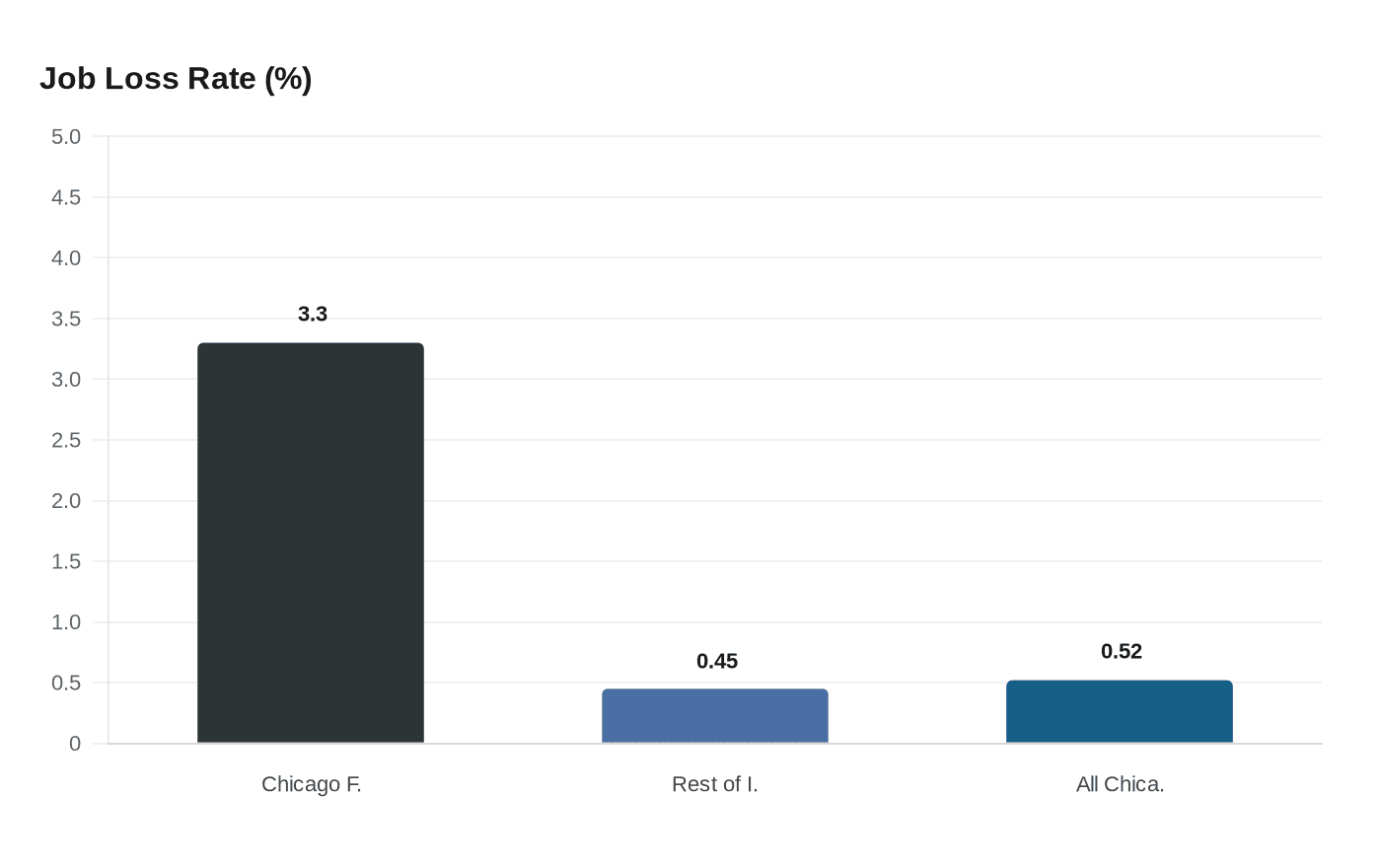
Federal data surveying 95% of employers through September 2024 found the Chicago metropolitan area had lost over 5,000 restaurant jobs in just three months after the policy took effect in July, a 3.3% decline in the full-service restaurant workforce. That rate was more than seven times the 0.45% job loss recorded for full-service restaurants in the rest of Illinois during the same period, and significantly outpaced the 0.52% employment loss across all industries in Chicago.

Restaurants have adapted in ways that reach customers directly. Local trackers have documented more than 150 Chicago restaurants adding automatic service charges since the ordinance began moving through City Council. The Gale Street Inn in Jefferson Park, a neighborhood institution that operated for 62 years, closed in late June 2024, days before the policy's first stage took effect, becoming a rallying symbol for critics of the ordinance.
In May, Ald. Bennett Lawson (44th) introduced an ordinance to halt the tipped minimum wage law. The proposal remains in committee. "We can no longer deny what the data is telling us," Lawson said. "This policy is hurting hard-working restaurant employees and further harming our neighborhood establishments."
Supporters of the ordinance dispute that framing sharply. Ald. Jessie Fuentes (26th), who sponsored the original legislation to eliminate the tip credit, pointed to 856 new retail food licenses issued in Chicago since July 2024 and noted that license cancellations in 2024 fell 50% compared to 2023, figures reported by One Fair Wage. "Workers deserve livable salaries, not wages that keep you in survival mode," Fuentes said. "The rhetoric that the law is killing the industry is not holding up."
Mayor Brandon Johnson's office has claimed that 10,000 jobs were created across the city since the ordinance took effect in July 2024, a figure that conflicts directly with the Illinois Restaurant Association's sector-specific tally and has not been independently verified against a named dataset.
One Fair Wage organizer James Rodriguez, who spent two years working as a host at a Lincoln Park Italian restaurant, argued that the existing system carried its own hidden costs for workers. Employers were required to top up tipped workers' wages when tips fell short of the minimum, but Rodriguez said compliance was inconsistent. "A lot of workers don't know they're supposed to be making that," he said. "There are so many cases of abuse of the law. The city doesn't have the manpower to go after those restaurants."
The debate is not limited to Chicago. Illinois lawmakers previously moved to extend tip credit elimination statewide through HB 5435, which was abandoned last year. Similar proposals have since resurfaced, with Chicago's first-year data now serving as the primary evidence for both sides of that argument.
This article was produced by Prism’s automated news system from verified source data, official records, and press releases, then run through automated quality and moderation checks before publishing. The system is built and supervised by the people who set the standards it runs under. Read our full AI policy.
Did this article answer your question?