Coalition of Immokalee Workers Launches Hunger Strike Outside Taco Bell Headquarters
Farmworkers with the Coalition of Immokalee Workers started a public hunger strike outside Taco Bell’s global HQ in Irvine on Feb. 24, 2026, joined by student, faith-based and labor allies.
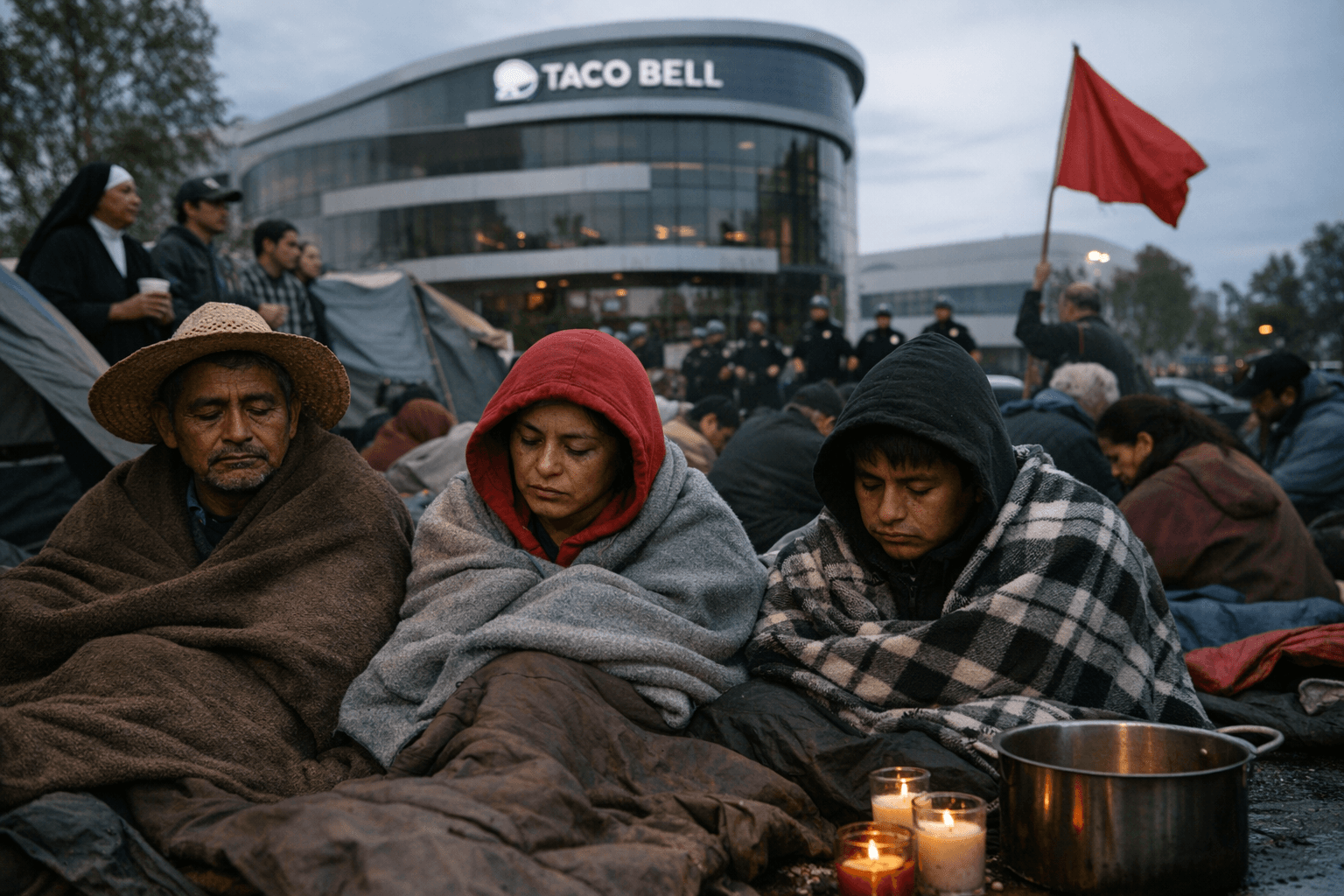
Farmworkers from the Coalition of Immokalee Workers began a public hunger strike outside Taco Bell’s global headquarters in Irvine, California, on Feb. 24, 2026, joined by student, faith-based and labor allies. An on-scene organizers’ statement published from the protest was cut off mid-sentence, reading: “Organizers said the action, a physically dema”.
The protest group did not release a complete list of demands with the initial report of the action, so the hunger strike’s immediate policy targets remain unconfirmed. Organizers and allied groups at the Irvine site said they would issue fuller statements and spokespeople, and reporters are seeking a formal CIW statement and any response from Taco Bell or parent company Yum Brands.
The hunger strike ties directly to CIW’s long history of hunger strikes, marches and boycotts that reshaped fast-food supply-chain politics. CIW began organizing in 1993 in Immokalee with weekly meetings in a room borrowed from a local church and escalated to high-profile direct actions through the late 1990s, including what CIW materials call an “unprecedented month-long hunger strike by six members” in 1998 and a long march from Ft. Myers to Orlando in 2000 described as 234 miles by CIW and as 240 miles in other accounts.
That early organizing fed into the Campaign for Fair Food and the first farmworker boycott of a fast-food company in 2001, when CIW declared a national boycott of Taco Bell. Sources vary on the exact launch day; one archive records April 1, 2001, while other metadata lists January 1, 2001, but all place the boycott squarely in 2001. During the campaign CIW ran a signature drive in Immokalee that produced more than 2,000 signed cards to Taco Bell CEO Emil Brolick by Christmas 2002 reading, “Our poverty is the basis of your company’s wealth, and we are saying ‘Enough is enough’!”
Pressure from the boycott culminated in a deal with Taco Bell and Yum Brands in March 2005. Labor accounts report the companies announced the agreement on March 8 and CIW chronologies place the settlement in March 2005. Reported terms included a one-cent-per-pound premium on Florida tomatoes that buyers would pay and a requirement that growers pass that premium directly to farmworkers. One archive says the penny-per-pound premium “could nearly double workers’ sub-poverty wages,” while another source claims the campaign raised wages by almost 75% by 2005. CIW leader Lucas Benitez framed that settlement as only a start, saying, “Human rights are universal, and if we as farmworkers are to one day indeed enjoy equal rights, the same rights all other workers in this country are guaranteed, this agreement must only be a beginning.”
After the Taco Bell victory CIW allies consolidated into the Student/Farmworker Alliance and Interfaith Action, and CIW later launched the Fair Food Program in 2011 to harness buyer power across more than a dozen retail food brands and expand into other states, Chile and additional crops. The Feb. 24, 2026 hunger strike at Taco Bell’s Irvine headquarters positions CIW’s current tactics squarely in that history of strikes, boycotts and buyer-focused bargaining; follow-up reporting is underway to confirm the protesters’ explicit demands and any corporate response from Taco Bell or Yum Brands.
Know something we missed? Have a correction or additional information?
Submit a Tip