D.C. Proposal to Raise Minimum Wage to $25 Puts Restaurants on Edge
A ballot push to raise D.C.'s minimum wage nearly 40% to $25 cleared its first hurdle, with tipped workers potentially reaching parity by 2031.
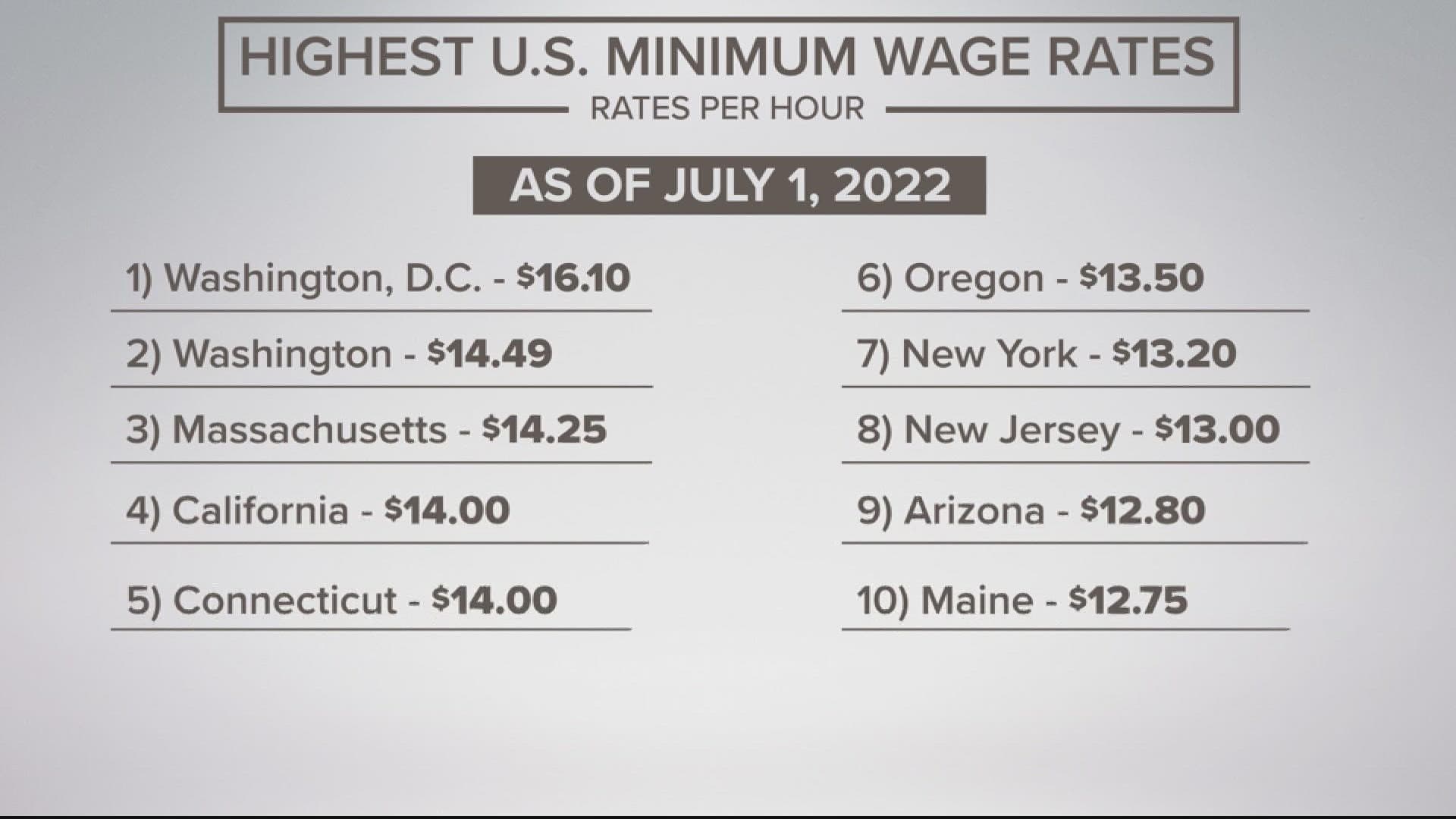
A ballot initiative to raise Washington, D.C.'s minimum wage from $17.95 to $25 an hour cleared an early procedural hurdle on March 11, representing a nearly 40% increase that would reshape the economics of every restaurant operating in the district.
The proposal, backed by One Fair Wage and a coalition that includes hospitality union Unite Here Local 25 under the banner D.C. Living Wage for All, targets the November 2026 general election ballot. To get there, supporters must collect 25,000 signatures. If voters approve it, non-tipped workers would reach $25 an hour by July 2029, with full minimum wage parity for tipped workers phased in by 2031.
D.C. already carries the highest general minimum wage in the country. Pushing that figure to $25 would put district hospitality workers 25% above California's fast-food minimum of $20, which was itself established by AB 1228 in 2023.
The campaign frames the initiative as a corrective measure. According to One Fair Wage, it is designed to "reverse the economic harm caused when the D.C. Council overturned the will of the voters and reinstated the subminimum wage after the passage of Initiative 82." The proposal comes months after the council voted to pause Initiative 82, a previous voter-approved wage measure.
For independent restaurant operators, the math is straightforward and sobering. Tony Tomelden, owner of The Pug in D.C., said he sees the proposal as a threat to the neighborhood restaurant model he has built. "It's just a doorway for us to put more people out of work," he said. His concern is not limited to payroll alone. "The cost of goods and payroll, if they all go up, eventually, places like this can't go. You'll go to counter service or national chains, and I don't want that for my city."
Tomelden's worry points to a structural tension that runs through the broader debate: as labor costs rise alongside food costs, independent operators with thin margins face a narrowing set of options. Automation, counter service formats, and reduced staffing levels are the adaptations most accessible to larger chains, not the neighborhood spots that characterize much of D.C.'s restaurant scene.
The $7.05-per-hour increase, applied across a full-time employee, amounts to roughly $14,664 in additional annual labor cost per worker before any payroll tax adjustments. For restaurants running on margins that typically fall between three and nine percent, that figure compounds quickly across a full kitchen and floor staff.
The D.C. initiative is not an isolated push. New York City has separately proposed raising its minimum wage to $30, which would represent the highest floor in the country if enacted. D.C.'s proposal, at $25, would still represent a significant national benchmark given the district's current status as the highest-wage jurisdiction in the U.S.
The signature collection effort now becomes the campaign's immediate test. Whether D.C. voters ultimately weigh in on the measure in November 2026 depends on whether One Fair Wage and its union partners can convert the procedural momentum from March 11 into 25,000 qualifying signatures before the ballot deadline.
This article was produced by Prism’s automated news system from verified source data, official records, and press releases, then run through automated quality and moderation checks before publishing. The system is built and supervised by the people who set the standards it runs under. Read our full AI policy.
Did this article answer your question?