Denver’s MAKfam shows how a restaurant can care for staff and profits
MAKfam shows that staff support can be part of the business model, not a drag on it. The Denver restaurant pairs acclaim with unusual employee benefits.
A restaurant built to work for both people and profit
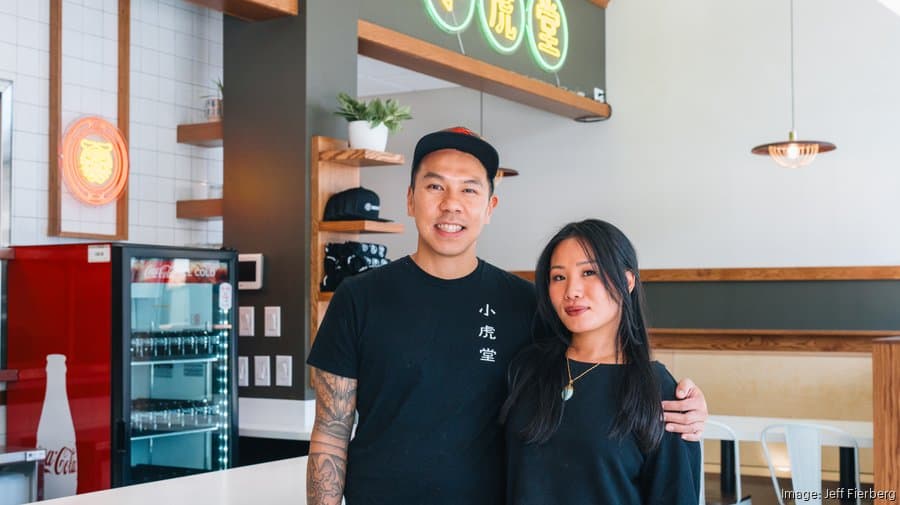
MAKfam’s clearest lesson is that a restaurant does not have to choose between caring for staff and running a disciplined operation. The Denver Chinese restaurant, opened by Doris Yuen and Kenneth Wan in November 2023, already carries a Michelin Bib Gourmand and a James Beard semifinalist nod for Wan, which is a strong signal that a people-first workplace can still produce serious food and draw attention.
That matters because restaurant workers hear the opposite message all the time: benefits are a luxury, culture is a slogan, and margins leave no room for anything beyond survival. MAKfam pushes back on that idea by showing a small independent can build staff support into the business model instead of treating it as an afterthought.
A business that grew in stages, not all at once
MAKfam did not appear fully formed. It started as a pop-up in New York City, became a stall in a Denver food hall, and only then grew into a full-service restaurant in Denver’s Baker neighborhood at 39 W. 1st Ave. Yuen and Wan moved to Denver in July 2019, after years of pop-ups and earlier work at Meta Asian Kitchen in Avanti Food & Beverage.
That path is worth copying because it lowers risk before it raises payroll. A restaurant that tests its concept in a pop-up or food hall can learn what sells, what the kitchen can actually handle, and how much labor the menu requires before signing a lease on a bigger room. For independent operators, that kind of staged growth can preserve cash and keep the team from getting crushed by a concept that is too big on day one.
What the staff-first choices look like on the floor
The reporting on MAKfam says the restaurant extends unusual benefits to employees, and that is the detail operators should pay attention to. The exact package is less important than the message behind it: this is a place where management is willing to spend on people, not just on the dining room or the marketing.
That choice can pay off in ways restaurant workers understand immediately. Better support tends to mean fewer last-minute callouts, smoother service handoffs, and a lower chance that a skilled line cook, server, host, or bartender walks out after one exhausting stretch of shifts. In an industry with high turnover and constant hiring costs, keeping a reliable crew is not soft-hearted charity. It is a margin strategy.
Why the menu and design matter to the labor model
Michelin describes MAKfam as serving good-quality, good-value Chinese food, and it says the restaurant’s compact menu and colorful space reflect the owners’ Chinese American roots and immigrant-family backgrounds. That combination is more than branding. A tight menu generally makes a kitchen easier to train, easier to execute, and less wasteful, which helps a restaurant stay steady without overextending the staff.
For workers, that can make a real difference on a busy night. Fewer menu sprawl problems mean fewer comped plates because a station got overloaded, fewer complicated prep lists, and fewer moments when the team has to improvise around an operation that promised too much. The room still has personality, but the workflow is designed to be survivable.
The recognition helps, but it is not the point
The Michelin Bib Gourmand, awarded in September 2024, signals good food at good value. Wan’s James Beard semifinalist recognition in 2026 adds another layer of prestige, but the useful part for restaurant workers is what that recognition sits on top of: a business with a clear identity, a manageable menu, and a management approach that appears willing to invest in the team.
That combination matters because it challenges a tired industry assumption that benefits, stability, and quality are reserved for chains or large hospitality groups. MAKfam suggests an independent can win attention, keep costs in line, and still make the workplace less punishing than the average restaurant shift.
What other independent restaurants can copy now
MAKfam is not a template for every concept, but it does offer a practical playbook for operators trying to stop bleeding staff while holding the line on costs.
- Build in stages. A pop-up, stall, or food hall setup can test demand before you commit to a full-service room and a larger payroll.
- Keep the menu compact. Fewer dishes usually means faster training, cleaner execution, and less waste, all of which help both service and margins.
- Treat benefits as retention spending. If the goal is to keep experienced workers, support has to be part of the budget, not a leftover when sales are good.
- Make the concept specific. MAKfam’s menu and room reflect Yuen and Wan’s Chinese American and immigrant-family backgrounds, which gives the restaurant a clear identity guests can remember and staff can stand behind.
- Measure success beyond sales. Turnover, morale, and service consistency are business metrics too, especially in restaurants where one weak shift can undo a week of momentum.
The strongest thing about MAKfam is not that it sounds nice. It is that it suggests a healthier restaurant is still possible when management makes deliberate choices about labor, menu size, and growth. In an industry that often treats burnout as the price of admission, that is not a feel-good footnote. It is an operating model.
This article was produced by Prism’s automated news system from verified source data, official records, and press releases, then run through automated quality and moderation checks before publishing. The system is built and supervised by the people who set the standards it runs under. Read our full AI policy.
Did this article answer your question?