Detroit Man Indicted for Shooting Outside Pizza Cat Restaurant on Camera
An ATF agent recognized Albert Egnis, 28, on surveillance video firing 25 rounds outside Detroit's Pizza Cat; he now faces federal indictment.
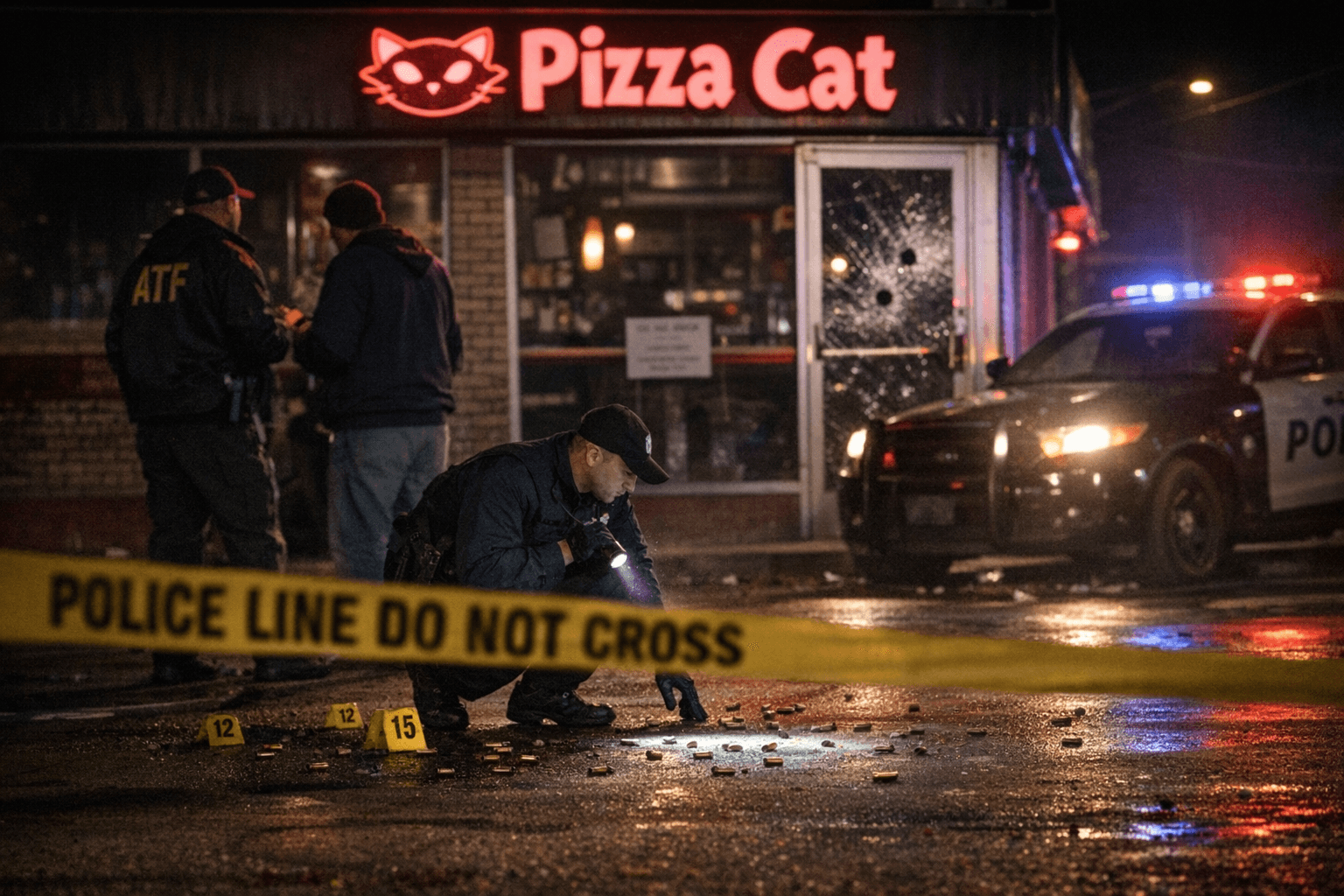
Twenty-five spent 9mm casings on the sidewalk outside Pizza Cat told part of the story. Surveillance footage told the rest.
A federal grand jury indicted Albert Egnis, 28, on April 1 on one count of felon in possession of ammunition, stemming from a January 31 shooting outside the Detroit restaurant. An ATF agent reviewing the footage recognized Egnis lifting his shirt to reveal a handgun, firing toward the sidewalk area, then retreating to a waiting vehicle, according to court filings.
The indictment connects more than one violent night. Federal investigators say the same firearm was ballistically linked to a January 10 shooting in Sterling Heights that left multiple people injured. Court documents show Egnis carried prior federal firearm-related convictions and was legally prohibited from possessing ammunition. He was arraigned in mid-March and faces pretrial dates in May.
For every cook, server, and bartender closing down a late-night spot, the case maps the real danger zones: not behind the line, but at the entry points, the parking lot, the sidewalk where smoke breaks happen and delivery handoffs go down. Violent incidents outside restaurants rarely stay outside. Staff working late shifts face crossfire risk, may find themselves at an active crime scene when police arrive, and often lose shifts during the investigation period that follows.
Exterior lighting and camera positioning are not abstract security line items after a case like this. The ATF identified Egnis because cameras covered the sidewalk and captured his face clearly. That detail matters when owners and managers are deciding where to mount equipment. Cameras aimed only at the register miss the 25 feet of parking lot where the actual exposure lives.
Cash handling procedures should route employees away from exterior handoffs after dark. Staffing patterns at close carry real risk calculus: one person sent out alone to lock up or haul trash is one person without backup at the highest-vulnerability moment of the night. A two-person close policy is not bureaucracy; it is the difference between a witness and a victim.
When violence does occur, shelter-in-place protocols need to be rehearsed before the crisis, not read off a laminated card during one. Workers who witness shootings need access to employee assistance programs and, where applicable, union representatives who can help secure paid leave and crisis counseling. Incident logs and witness statements documented immediately protect employees and employers alike in the legal process that follows.
The cameras outside Pizza Cat caught what happened on January 31. A federal indictment followed. The safety gaps the incident exposed are still open at restaurants that have not reviewed their exterior risk profile since the last time something went wrong nearby.
Know something we missed? Have a correction or additional information?
Submit a Tip