EEOC guidance spotlights retaliation risks for restaurant workers
A schedule cut, a dead section, or lost tip access can now look like retaliation, not just bad service management. The EEOC’s anti-retaliation rules land hard in restaurants where pay and power shift shift by shift.
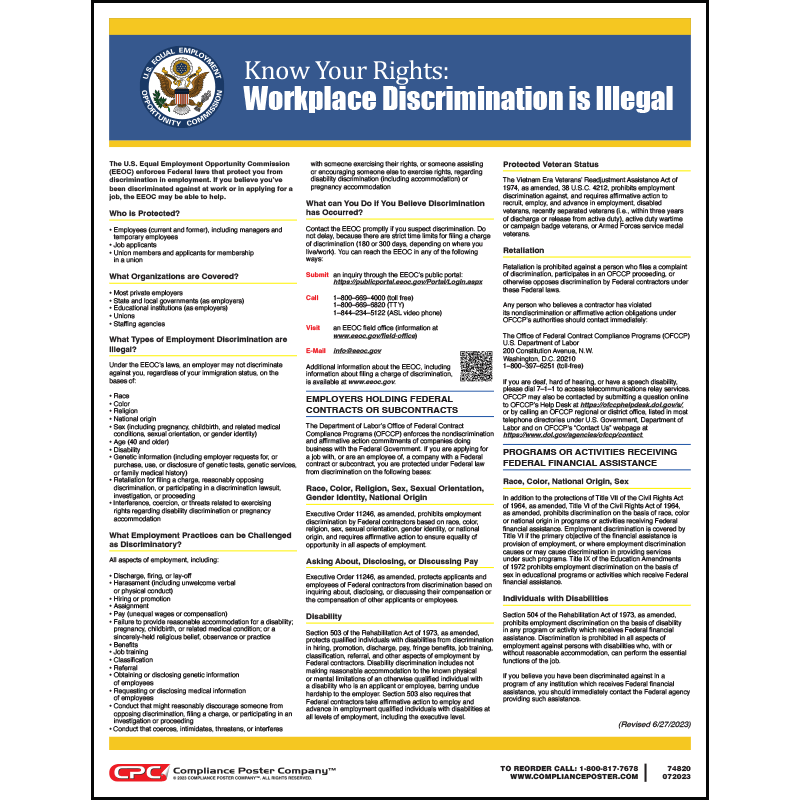
The EEOC issued its final Enforcement Guidance on Retaliation and Related Issues on August 25, 2016, along with a Q&A publication and a Small Business Fact Sheet. It replaced older compliance-manual sections used by investigators and became the EEOC’s first comprehensive retaliation review in nearly 20 years. Retaliation had become the most frequently alleged basis of discrimination, and retaliation complaints made up nearly half of all discrimination charges filed with the EEOC at the time. In restaurants, the same manager who assigns sections, controls breaks, and writes the schedule can also decide who gets the Friday night close, who gets called back, and who gets pushed into a slow lunch shift after a complaint. In a business where tips, hours, and tables drive take-home pay, that kind of control makes retaliation risk feel immediate.
The complaints restaurant workers are most afraid to raise
In restaurants, retaliation concerns usually start with money. Wage theft complaints, off-the-clock work, missed overtime, broken tip-pool rules, and minimum-wage shortfalls are the kinds of issues line cooks, servers, bartenders, hosts, and shift managers are often reluctant to raise because they know the response can be subtle and fast. Harassment and safety complaints carry the same risk, especially in kitchens and dining rooms where the crew is already stretched thin and staffing shortages make everyone replaceable in management’s eyes.
The EEOC’s standard is not limited to outright firing. Protected activity includes internal complaints, threatening to complain, and helping another worker complain about discrimination. A worker does not need to march into a courthouse to be protected. A server who flags sexual harassment to a general manager, a cook who backs up a coworker’s wage complaint, or a host who tells a supervisor they are calling the labor department has likely engaged in protected activity.
What counts as retaliation in a restaurant
Retaliation under EEOC standards means more than a pink slip. The question is whether the employer took a materially adverse action, meaning something that might deter a reasonable person from speaking up again. In restaurant terms, that can mean cutting hours, changing shifts, moving a worker to worse sections, denying training, excluding someone from tip pools, or otherwise altering work conditions after the complaint lands.
A server moved from the patio to a dead section can lose meaningful income without any formal discipline. A bartender suddenly taken off prime weekend shifts may not be fired, but the hit to tips is real. A host pulled off the front door and stuck on side work after raising a harassment issue may see the change before any formal discipline appears.
The EEOC’s materials also cover coercion, threats, intimidation, and interference in some circumstances. In a dining room, that can look like a manager joking about who is “hard to schedule,” warning that complainers do not last long, or making a worker’s next shifts miserable enough that they stop speaking up. Those moves are often harder to prove than a termination.
Tip money and scheduling make the risk sharper
Restaurant wage disputes do not sit neatly in one box, because tip rules and scheduling rules often overlap with retaliation fears. Under U.S. Department of Labor rules, tip-pooling or tip-sharing arrangements are permissible only if the employees participating in the pool have somehow participated in serving the customers who left the tips. That makes tip disputes especially sensitive for workers who believe money is being redirected unfairly or that a manager is using the pool to reward favorites.
That same pressure spills into scheduling. Restaurant employers have been challenged by mandated changes involving tips and scheduling, and workers who question those changes may be the first to feel a schedule squeeze. If a server pushes back on a tip-credit practice or a back-of-house worker complains that pooled tips are not being shared correctly, a sudden shift cut can look less like coincidence and more like a response.
What workers should document right away
The cleanest retaliation cases usually rest on timing and pattern. If you complain about harassment, wages, safety, or discrimination and your hours drop the next week, that timeline matters. Save schedules, texts, section assignments, shift swaps, tip-pool notices, and any written complaint you made, because the comparison between before and after is often what shows the change.
It also helps to keep track of who knew about the complaint and what explanation management gave for the change. A restaurant can try to justify a schedule cut as business as usual, but if the cut hits right after you raised a wage or harassment issue, the explanation has to make sense against the facts. In a high-turnover industry where staffing is always tight, managers often have plenty of excuses. The paper trail is what separates a bad excuse from a provable pattern.
What managers need to do differently
For operators, the guidance is a reminder that complaint handling is not just an HR task. In restaurants, supervisors make decisions fast and often informally, which means an irritated comment, a quick schedule change, or a joking threat can turn into a legal problem before the shift is over. The safest response is to treat a complaint as a protected event, not a personal insult.
That means holding steady on hours, sections, and schedules while a complaint is being reviewed unless there is a documented business reason to change them. It also means training shift leaders, not just owners and general managers, because the people with the most power on the floor are often the least likely to think of themselves as decision-makers. The EEOC’s 2016 guidance, along with the Q&A and Small Business Fact Sheet, applies to ordinary staffing decisions.
Why this lands harder in restaurants than elsewhere
Restaurants run on proximity. The person taking the complaint is often the same person controlling the next shift, the next section, and the next paycheck. That makes retaliation easier to hide and harder to ignore, especially when workers depend on tips and are already managing burnout, short staffing, and high turnover.
If speaking up about pay, harassment, scheduling, or safety suddenly costs you hours, sections, training, or tip access, that may be retaliation under EEOC standards.
This article was produced by Prism’s automated news system from verified source data, official records, and press releases, then run through automated quality and moderation checks before publishing. The system is built and supervised by the people who set the standards it runs under. Read our full AI policy.
Did this article answer your question?