Restaurant worker pay trails CEO compensation at major chains
At Starbucks, one CEO package equals about 6,666 median worker paychecks. The gap lands alongside low hourly earnings, burnout, and staffing pressure across major chains.
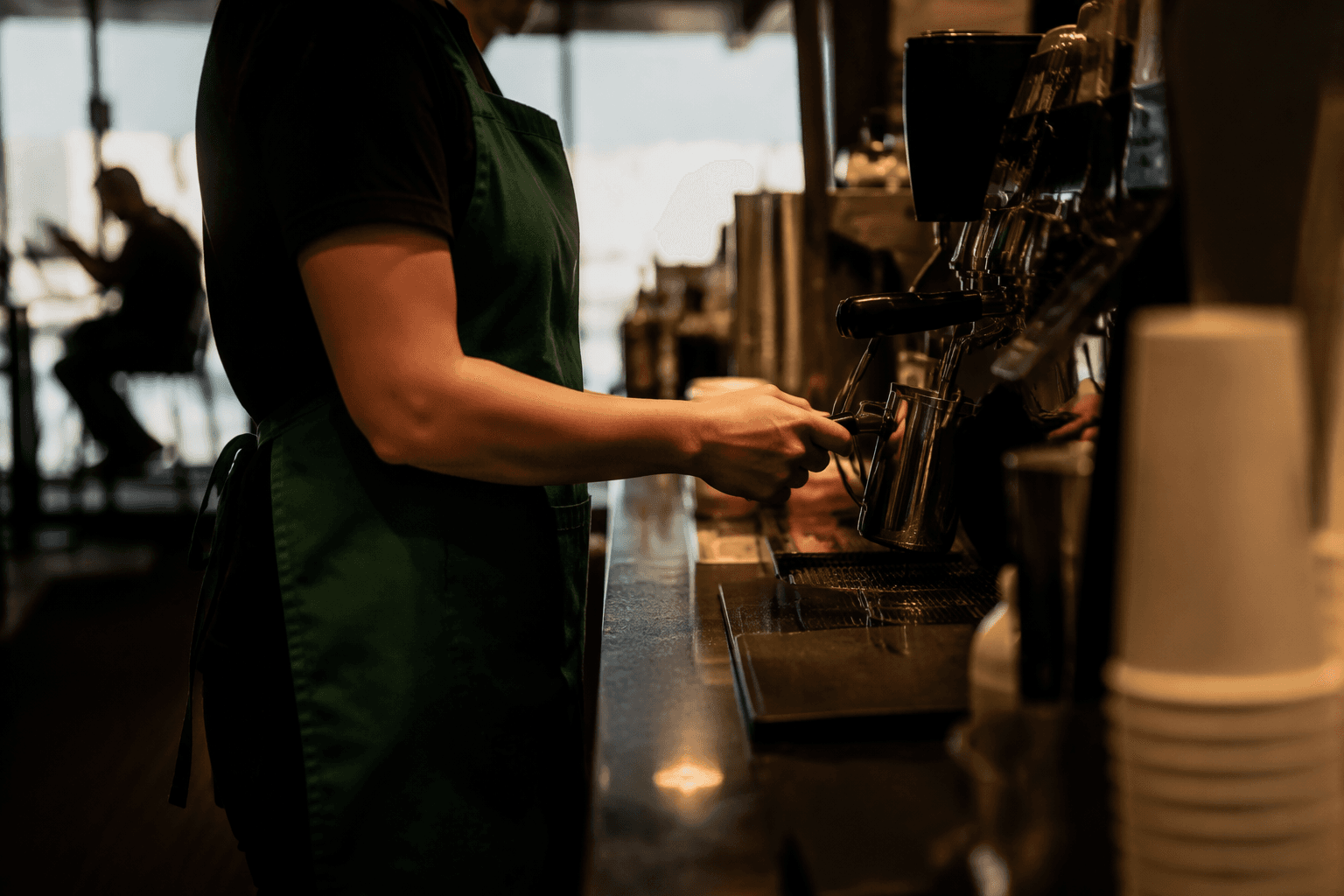
Starbucks CEO Brian Niccol’s $97.8 million compensation package dwarfs the company’s median employee pay of $14,674. Put another way, one executive paycheck equals about 6,666 median worker paychecks, or roughly 13.9 million worker-hours on a full-time annual basis.
Restaurant Dive’s analysis of 10 leading chains found median hourly compensation at major restaurant companies hovers near, and sometimes below, the poverty line, while CEOs at the top of the industry can earn tens of millions.
How the ratio is built, and why workers keep seeing it in proxy filings
The figures come from the SEC’s CEO pay-ratio disclosure rule, adopted in August 2015 under the Dodd-Frank Wall Street Reform and Consumer Protection Act. Public companies must disclose the ratio of CEO compensation to the median compensation of employees, giving workers and investors a standardized way to compare executive pay with store-level pay.
In restaurants, the median worker is often not a fully scheduled full-time employee. It is frequently a part-time barista, crew member, or server whose annual income is pulled down by short shifts, variable schedules, tipped-wage structures, and limited hours. Even when a posted wage looks competitive, the annualized figure can fall sharply if the schedule is unstable or tip income is uneven.
Why the restaurant sector makes the gap feel even wider
The restaurant business leans hard on part-time labor, and that pushes the median compensation number down. In a chain where a lot of workers are scheduled for fewer than 40 hours a week, the proxy filing can make the gap look even larger than employees expect from the hourly rate on the hiring poster.
Restaurant compensation debates often spill into staffing, retention, and morale. The AFL-CIO argues high CEO-to-worker pay ratios can contribute to economic inequality and can undermine employee morale and productivity.
What the wider labor trend says about the gap
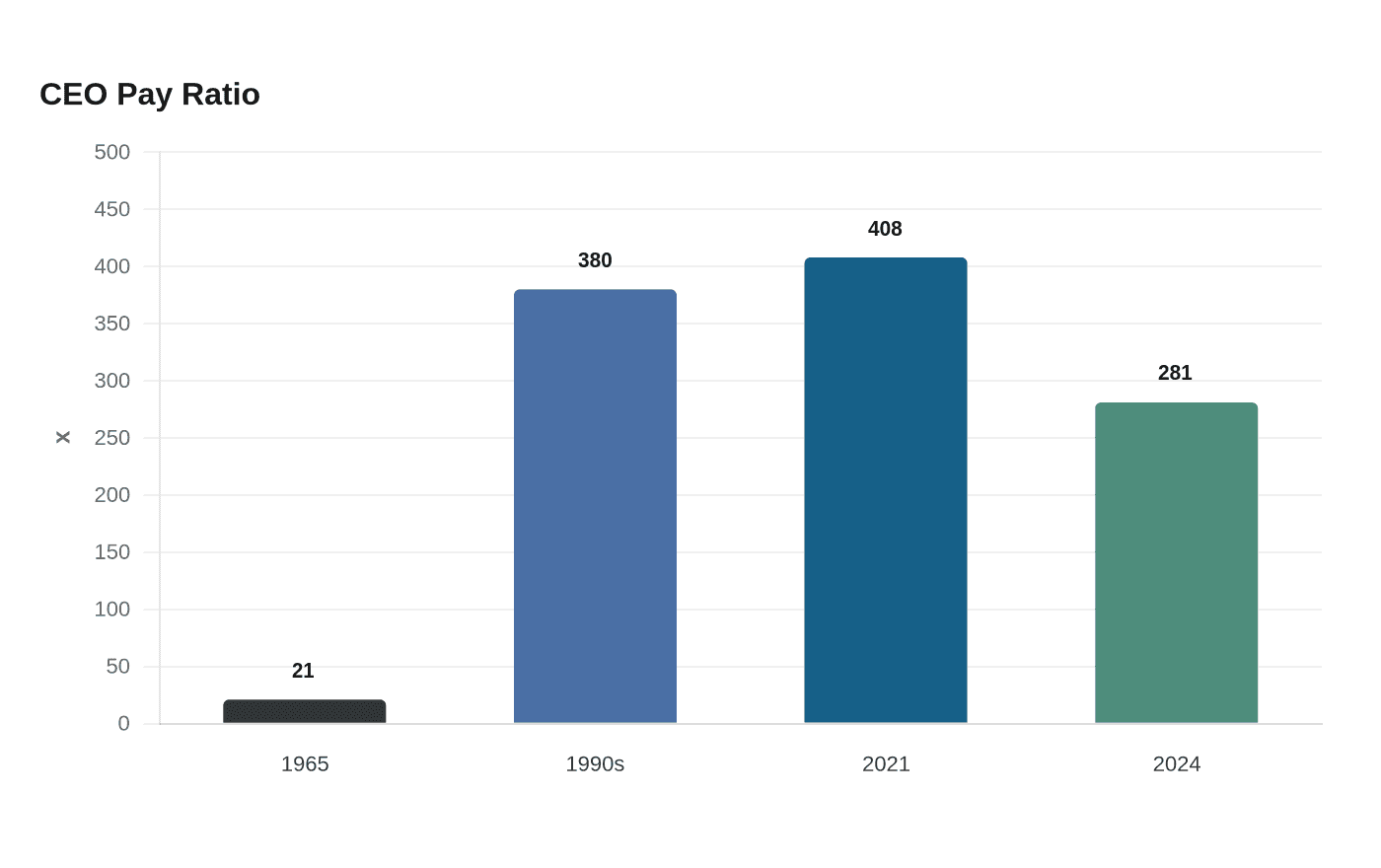
The Economic Policy Institute puts CEO pay at nearly 300 times a typical worker’s pay. Policy Matters Ohio shows the long view: in 1965, CEOs at the largest U.S. companies were paid 21 times as much as their typical worker. The ratio peaked at 380-to-1 in the 1990s, reached 408-to-1 again in 2021, and fell to 281-to-1 in 2024.
In 2024, Restaurant Business Online found that median pay packages for top executives at publicly traded restaurant chains declined that year, but the industry still produces some of the widest pay spreads workers will see anywhere in hourly retail or food service.
Where the tension shows up on the floor
Starbucks baristas have faced a growing workload as mobile and delivery channels add parallel production demands without the same staffing growth.
A 2024 Restaurant Dive study found that Chipotle had the second-highest burnout rating among companies in the survey, behind only Progressive, and Starbucks also ranked high for burnout. A raise that looks solid on paper can still lose value if the job comes with heavy multitasking, a squeezed labor budget, or tip volatility that makes each paycheck hard to predict.
What workers should compare when looking at offers
The CEO ratio is useful, but it should not be the only number you look at. A higher posted wage does not always mean higher annual earnings if the hours are thin, the tip pool is weak, or the scheduling system cuts a shift before you can make a living wage.
- How many hours are actually guaranteed each week
- Whether tips are pooled and how they are split
- Whether pay includes service charges, cash tips, or only base wages
- How fast hourly workers move into supervisor or manager roles
- Whether the company’s wage increases are matched by better staffing
When comparing restaurant jobs, the more useful questions are:
At Chili’s, Brinker International said it would raise hourly employee earnings, including tips, to $18 by fiscal 2023 and increase Chili’s general manager pay to an average of $100,000 by fiscal 2025.
Why the 2025 scrutiny still matters
Pay-ratio disclosures remain a major governance issue in 2025. Harvard Law School’s Forum on Corporate Governance identified executive pay disclosures as a continuing focus during proxy season, and Georgia State University research suggested some companies may be “massaging” CEO pay ratios without changing actual pay.
This article was produced by Prism’s automated news system from verified source data, official records, and press releases, then run through automated quality and moderation checks before publishing. The system is built and supervised by the people who set the standards it runs under. Read our full AI policy.
Did this article answer your question?