How Federal Rules and Statutes Shape Restaurant Tip Distribution and Disputes
Tip distribution and rules for tipped staff remain a top cause of restaurant disputes, shaped by federal statutes and Department of Labor guidance tied to October 29, 2021.

Tip distribution and the rules governing tipped employees are among the most common sources of disputes in restaurant workplaces, and federal guidance and statutory requirements tied to October 29, 2021 continue to shape day-to-day practice for servers, bussers, hosts, and managers. Owners and general managers face consequences in payroll audits and wage claims when tip policies conflict with Department of Labor guidance or the Fair Labor Standards Act.
This explainer synthesizes Department of Labor guidance and federal statutory requirements, translating those rules into concrete actions for restaurant managers and hourly staff. The guidance referenced with the October 29, 2021 date centers on who may participate in tip pools, recordkeeping expectations, and the circumstances under which an employer may rely on a tip credit under the Fair Labor Standards Act. For restaurants, that means policy language on tip pooling and tip retention must match federal rules or invite investigations.
On the floor and in the back office, the practical implications are specific. Managers should audit shift-level tip pooling procedures, document how pooled tips are allocated among front-of-house and back-of-house employees, and record those allocations on each payroll cycle. Owners must ensure payroll staff apply any tip credit consistently and retain wage records that show tips received and wages paid. When managers allocate tips outside written policy or supervisors accept a share, the federal guidance tied to October 29, 2021 is the reference point investigators and courts use.
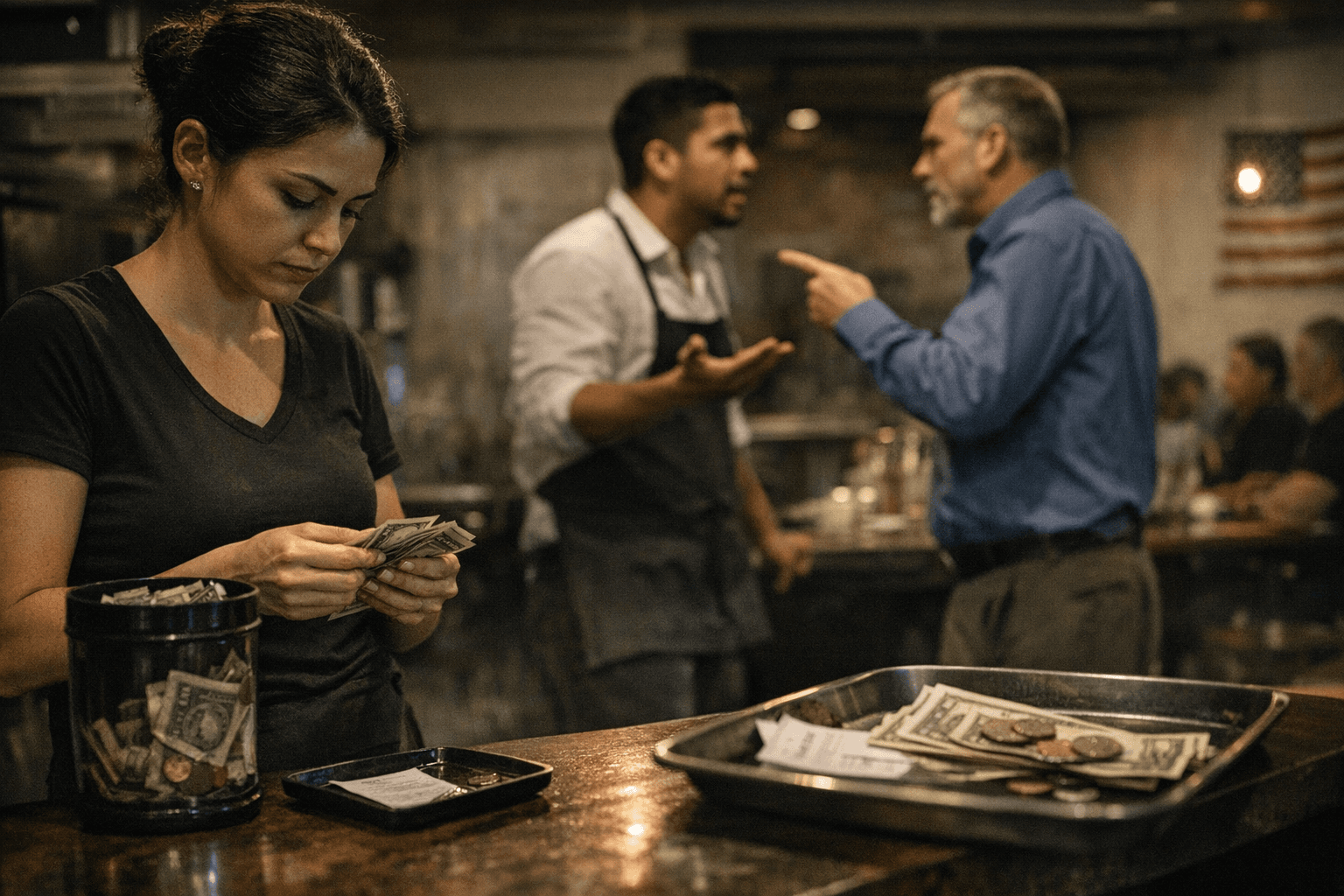
For servers and tipped employees, the takeaways are concrete: keep contemporaneous records of cash and card tips for each shift, compare those logs with paystubs, and raise discrepancies with a designated manager or wage-and-hour investigator. The Department of Labor guidance and the Fair Labor Standards Act inform whether employees can be required to share tips with certain coworkers, and whether employers may lawfully keep a portion of tips for credit card processing fees or other expenses.
Enforcement and litigation remain practical risks for restaurants that do not align policies with federal standards. On February 23, 2026, restaurants should treat the October 29, 2021 guidance as part of the compliance baseline: review written tip-pooling and payroll procedures, train shift supervisors on allowed distributions, and maintain the detailed records that investigators cite in wage complaints. Bringing policy language, payroll practice, and front-line habit into alignment reduces the most common source of tip disputes in restaurant workplaces.
Know something we missed? Have a correction or additional information?
Submit a Tip