Investigation: Grubhub subcontracted deliveries to Relay to avoid NYC delivery-worker pay law, internal docs show
Relay couriers earned $13.35/hr while NYC law required $21.44; a Grubhub internal email from May 2024 describes the subcontracting deal as designed to "stem elevated driver pay costs."
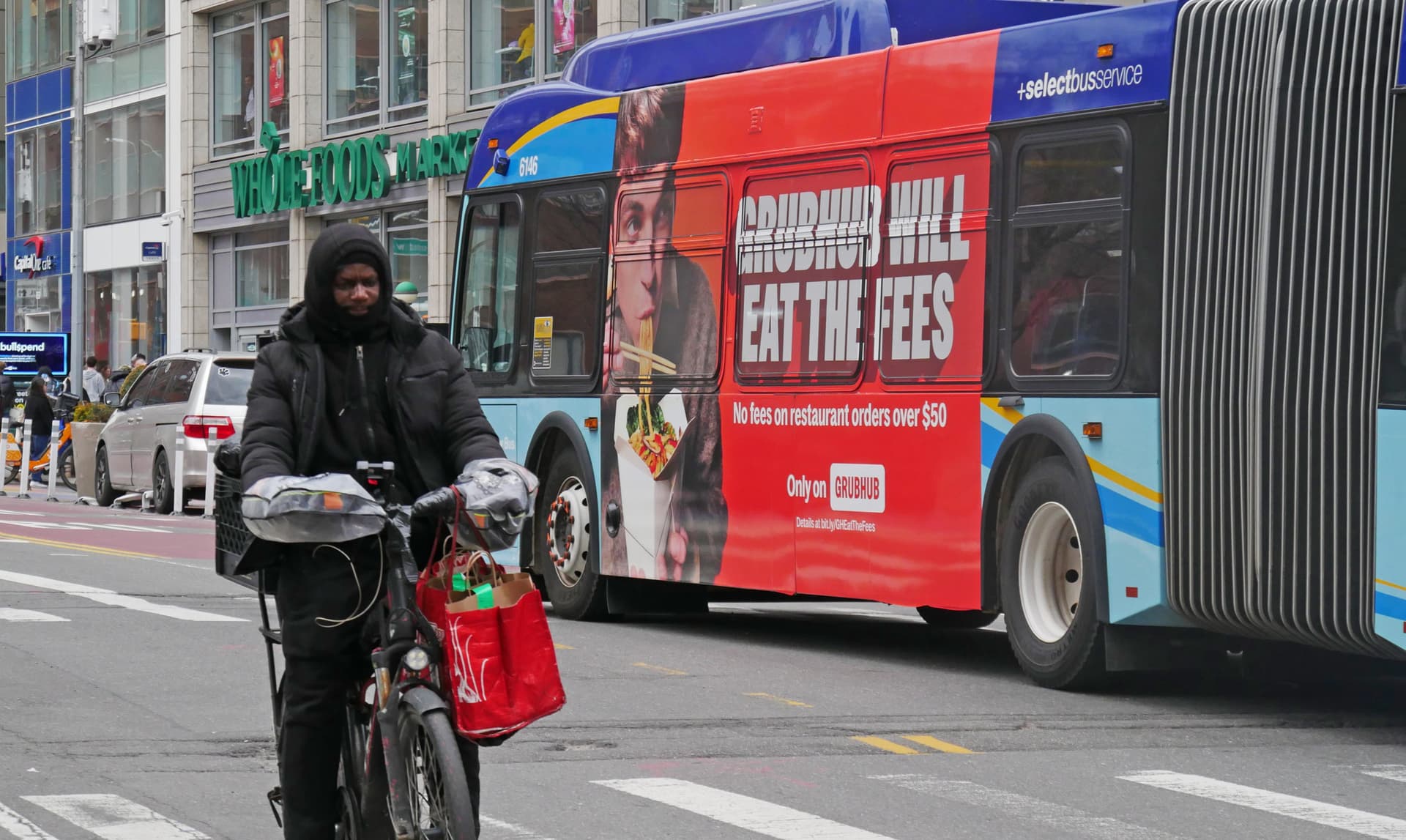
By October 2024, Relay couriers completing food deliveries for Grubhub in New York City were earning $13.35 per hour. The city's minimum-pay floor for app delivery workers at the time was $19.96, climbing to $21.44 effective April 2025. The gap of more than six dollars per hour wasn't a compliance failure that slipped through the cracks; it was the point.
An internal Grubhub email circulated to company employees in or around May 2024 described the company's partnership with Relay, a separate courier fulfillment platform, as a vehicle to "stem elevated driver pay costs in NYC." Internal documents reviewed in the investigation show the arrangement launched in January 2024, a month after the city's delivery-worker minimum-pay law took effect in December 2023. Grubhub, which also owns Seamless, confirmed that an average of less than 20 percent of its NYC orders were routed through Relay; former employees put that figure between 20 and 30 percent.
The mechanism that made this work hinged on a legal distinction. NYC's pay standard applied directly to Grubhub's own fleet. Relay, however, was entangled in separate litigation and injunctions that, for a stretch, exempted it from the same compliance obligation. Grubhub's couriers were entitled to the guaranteed minimum; Relay's couriers, dispatched on the same app and delivering to the same restaurants, were not. Two workers, effectively the same job, separated by a contract structure most customers and restaurant partners never see.
For line cooks plating orders and servers fielding "where's my delivery" calls, this arrangement has a tangible texture. When up to a third of fulfillment volume moves through a lower-paid, higher-turnover courier pool, on-time rates slip and cancellation friction rises. Those complaints surface at the restaurant, not on Grubhub's support dashboard. The reputational cost lands on the kitchen, not the platform.

New York City's Department of Consumer and Worker Protection said it was reviewing how delivery platforms were complying with the law. Both Grubhub and Relay disputed aspects of the investigation's findings, arguing that tips push effective courier earnings above the mandated floor. NYC's law explicitly rejects tip-inclusive math for satisfying the pay guarantee, which leaves that defense on shaky ground if DCWP moves toward enforcement.
The subcontracting playbook identified here is not necessarily unique to Grubhub. Other cities have passed or are weighing delivery-worker pay standards, and if routing orders through lower-obligation fulfillment partners becomes a recognized cost-control lever, those laws face the same structural pressure.
Restaurant managers who route orders through third-party platforms have a practical interest in what's buried in those contracts. Ask platform partners directly: are deliveries fulfilled by the platform's own couriers, or dispatched to a subcontractor operating under different pay terms? Document delivery performance by platform and by time period. If fulfillment degrades in ways that generate guest complaints or damage tip expectations for servers handling reorders, that data is leverage when renegotiating platform terms or deciding where to focus delivery volume.
Know something we missed? Have a correction or additional information?
Submit a Tip