NLRB Posts GC 26‑02 to Improve Timely Case Resolution Across Regional Offices
The NLRB’s Office of the General Counsel posted GC 26‑02 to push for faster, more consistent case handling across regional offices, a change that could speed resolution of workplace disputes for restaurant workers.
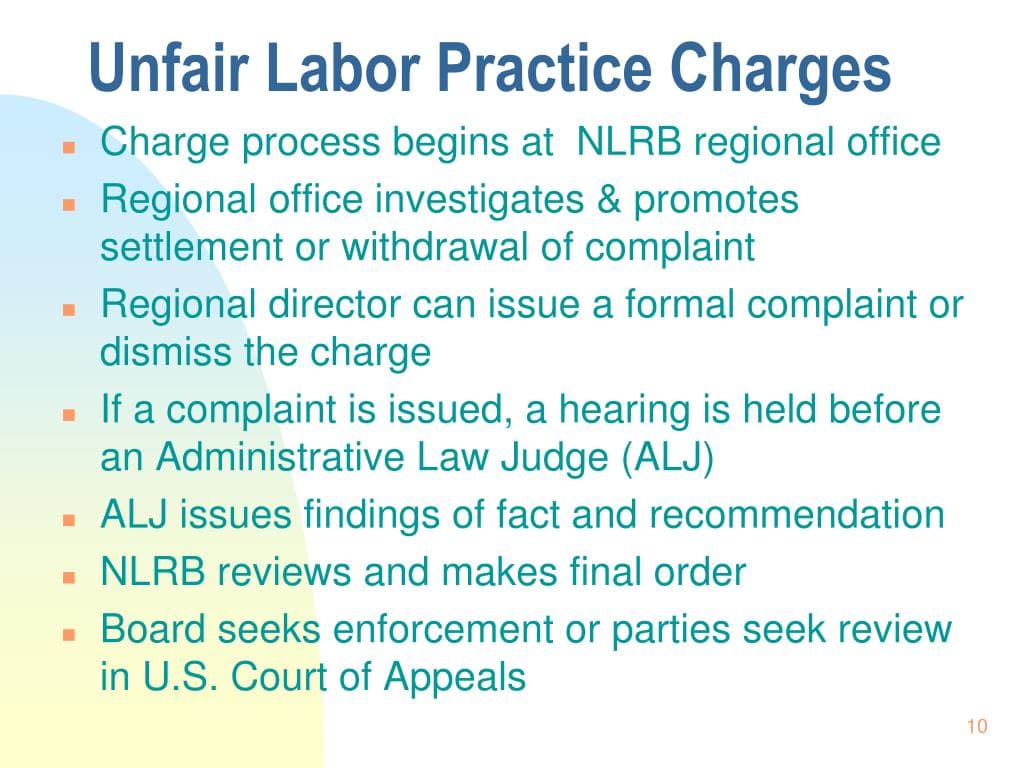
The National Labor Relations Board’s Office of the General Counsel has issued internal guidance aimed at shortening the time it takes to process unfair labor practice charges and to standardize procedures across regional offices. Faster case resolution could reduce months of uncertainty for front-of-house and back-of-house restaurant staff pursuing or defending charges, while also changing some practical responsibilities during intake.
"On January 28, 2026 the NLRB’s Office of the General Counsel posted GC 26‑02, an internal guidance memo setting operational priorities to ensure more consistent, fair, and timely resolution of cases across regional offices." The memo accompanies GC 26‑01 (new docketing protocol) and outlines changes intended to streamline early case processing and reduce backlog.
The new docketing protocol, described in accompanying guidance, changes how charging information is collected. "According to the Board’s press release, the Charging Party has always been required to provide relevant information about an unfair labor practice charge after it has been filed." Historically, "the Board initiated that process by having an assigned investigator reach out directly to the Charging Party typically via phone call or email exchange." Under the new protocol, however, "the Charging Party must automatically provide the same information rather than wait for a request from an investigator." Regional staff have been told to allow leeway when needed: "Regional Offices have been instructed to exercise flexibility and grant Charging Parties additional time when needed."
The Office of the General Counsel’s explanation, as summarized by a legal update, stresses the change is procedural. "As an update to our previous blog, on January 28, 2026, the National Labor Relations Board (‘NLRB’ or ‘the Board’) issued further guidance clarifying GC 26-01, explaining that the new docketing protocol is intended only as a practical adjustment to improve efficiency and is not meant to alter the evidentiary burden of Charging Parties nor the standard for dismissal of charges."
Proskauer Rose’s Labor Relations Update also flagged a possible friction point in rollout: "The guidance appears to have been promulgated unprompted - after it was reported on and distributed widely by Bloomberg News - which may indicate that the Board’s updated protocol created uncertainty and incurred some degree of pushback." That interpretation suggests the Board moved to clarify after news coverage raised questions among practitioners.
Context for the memos includes the NLRB Office of Inspector General’s stated priorities to sharpen timeliness and quality, including goals to "Issue accurate, clear, concise, and convincing products;" "Continuously monitor and assess NLRB programs and operations to identify emerging and high-risk areas, and target resources accordingly;" and to ensure that "In administrative misconduct matters, within 90 days complete investigative field work and issue the report."
For restaurant workers and managers, the practical implications are immediate: charges could move through intake faster and reach investigation or dismissal sooner, shortening periods of ambiguity that can affect jobs and scheduling. At the same time, requiring Charging Parties to provide information promptly shifts a burden onto employees and unions to gather details early; the instruction that regional offices allow flexibility will be important for workers with limited access to documentation or counsel.
What comes next is implementation and data. The full texts of GC 26‑02 and GC 26‑01, and the Board press release, will be needed to confirm deadlines, required forms, and any performance targets. Restaurant employers, workers, union representatives, and labor counsel should watch for regional office guidance and be prepared to meet earlier documentation requests if the protocol is put into practice.
Know something we missed? Have a correction or additional information?
Submit a Tip