NLRB Releases Dashboard to Track Restaurant Representation Petitions and Charges
The NLRB publishes updated lists of recent representation petitions and unfair labor practice charges; Jackson Lewis says its dashboard aggregates that data to help track restaurant organizing.
The NLRB publishes an updated list of recently filed representation petitions (RC) and unfair labor practice charges across regions and industries, an essential primary source for tracking union organizing activity and employer responses in restaurants and other hospitality sector.
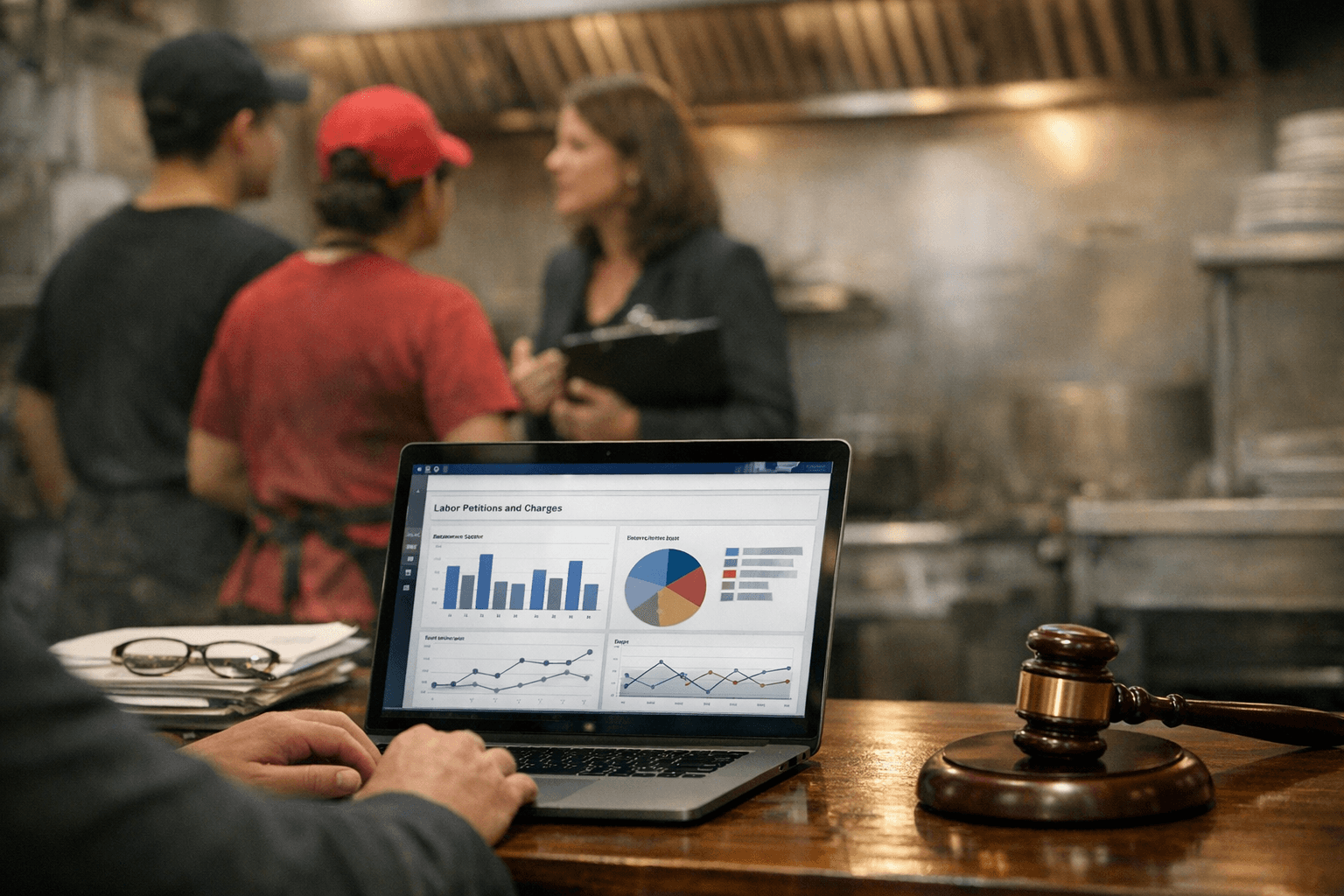
Jackson Lewis is marketing an analytical tool called the NLRB Petition & Charge Activity Dashboard that it says offers "a more direct way to stay informed, track trends and make strategic decisions concerning labor organizing and employee engagement." Jackson Lewis describes the product as "an innovative tool that aggregates and analyzes data from the NLRB’s website." According to the material, the dashboard "catalogues representation petitions and unfair labor practice charges filed across various states and NLRB regions since 2019" and gives users "easy access to comprehensive data points that can be sorted across multiple filters and presented in multiple formats."
The dashboard copy highlights user-facing sections and controls under headings such as "Functionality + features," "Data Points," and "Filters + Displays," and promises that its "intuitive design simplifies data searching and sorting, while offering a range of text and graphic display options." The promotional excerpt also includes site navigation labels - "Secondary Menu," "Main navigation," and "Social Menu" - and carries a footer reading "Jackson Lewis P.C. © 2026."
For restaurant employees and managers, the development matters because the NLRB lists are the authoritative record of new representation petitions and unfair labor practice charges. Aggregated views can speed pattern-spotting across states and NLRB regions and make it easier to compare organizing activity in front-of-house and back-of-house operations, to see whether certain markets or employers are attracting repeated filings, and to surface where employer responses are prompting ULP charges. That visibility can affect how bargaining campaigns are planned, how compliance teams prioritize training, and how local crews weigh options for representation.
The available materials also leave key questions unanswered. The excerpts do not include filing counts, example cases, a public link to the dashboard, an update cadence, or whether the tool is publicly accessible or subscription-based. The marketing copy attributes the underlying records to the NLRB but does not explain aggregation methodology, deduplication rules, or whether the dashboard reports case dispositions in addition to newly filed matters.
Until those details are confirmed, the NLRB’s own posted lists remain the primary source for journalists, employers, and worker organizers seeking concrete counts and case histories. Restaurants and hospitality-sector stakeholders should track both the NLRB postings and the Jackson Lewis dashboard as complementary resources; reporters and practitioners will want to verify the dashboard’s scope, update frequency, and access terms to determine how useful it is for real-time monitoring and strategic response.
Know something we missed? Have a correction or additional information?
Submit a Tip