NRN Session: Second-Generation AI and Automation Easing QSR Labor Crisis
NRN is hosting a session on how second-generation AI and automation can ease QSR labor pressures by reducing injuries, lowering turnover, and shifting staff to guest-facing work.
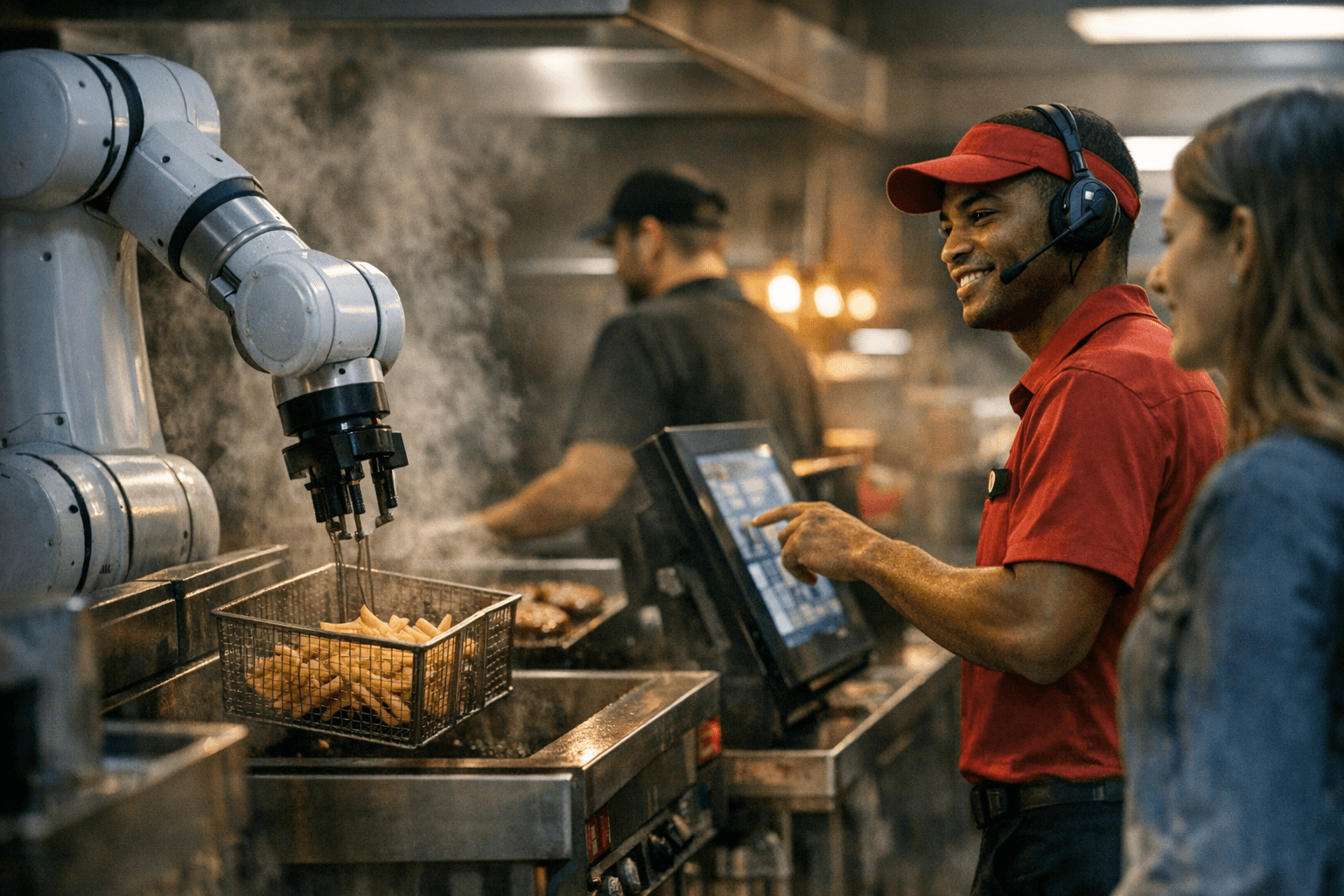
Automation and second-generation AI are being presented as practical levers to ease an acute labor crisis in quick-service restaurants, with operators saying the technology can cut hazard exposure, lower replacement costs, and reallocate staff to hospitality-facing roles. NRN is hosting an industry session today that brings operators and vendors together to show how real-world deployments are changing back-of-house work.
Speakers from operators and vendors, including White Castle and Miso Robotics, outlined deployments that target very elevated turnover rates in critical kitchen roles, rising replacement costs, and high rates of employee injuries in back-of-house positions. The discussion focused less on headline-grabbing robots and more on sequencing algorithms, kitchen automation and second-generation AI systems that automate or assist dangerous, repetitive, or hard-to-fill tasks while preserving human roles that require judgment and guest interaction.
Panelists described automation use cases designed to reduce hazard exposure for line cooks and prep staff, convert physically demanding jobs into tech-assisted roles, and tame what operators call mobile-order chaos through improved order sequencing and timing. Presenters stressed evaluation of automation ROI, showing that high turnover and increasing costs of hiring and training make some capital investments financially sensible for tight-margin QSRs.
For workers, the shift promises a mix of outcomes. Automation can reduce exposure to burns, slips and repetitive strain by taking on the heaviest, most hazardous work. That can lower injury rates and time-off incidents that currently exacerbate staffing shortages. At the same time, operators emphasized reallocating labor toward expediting, guest service and quality control - tasks that tend to be higher value and more visible to customers. That will require training, new job descriptions and changes to scheduling and supervision.
The session acknowledged operational trade-offs. Deploying sequencing algorithms and AI-in-the-loop systems affects crew workflows, requires maintenance and changes shift choreography, and can introduce new skill requirements for shift leads and managers. Vendors such as Miso Robotics discussed integration challenges, while operators including White Castle shared early lessons on measuring throughput, safety metrics and workforce impacts.
For managers and crew, the immediate takeaway is pragmatic: pilot the systems where injury and turnover costs are highest, measure ROI against replacement and workers compensation costs, and plan training so displaced tasks become opportunities for upskilling. The broader industry implication is that second-generation AI and targeted automation are moving from novelty to toolbox item for QSR operators aiming to stabilize staffing, reduce burnout and keep the focus on speed of service and hospitality.
Know something we missed? Have a correction or additional information?
Submit a Tip