NYC DOT Seeks Council Help to Boost Low Roadway Dining Participation
Only 500 NYC restaurants cleared for roadway dining's 2026 season, down from 8,000 at peak, as a six-month approval gauntlet keeps small operators out.

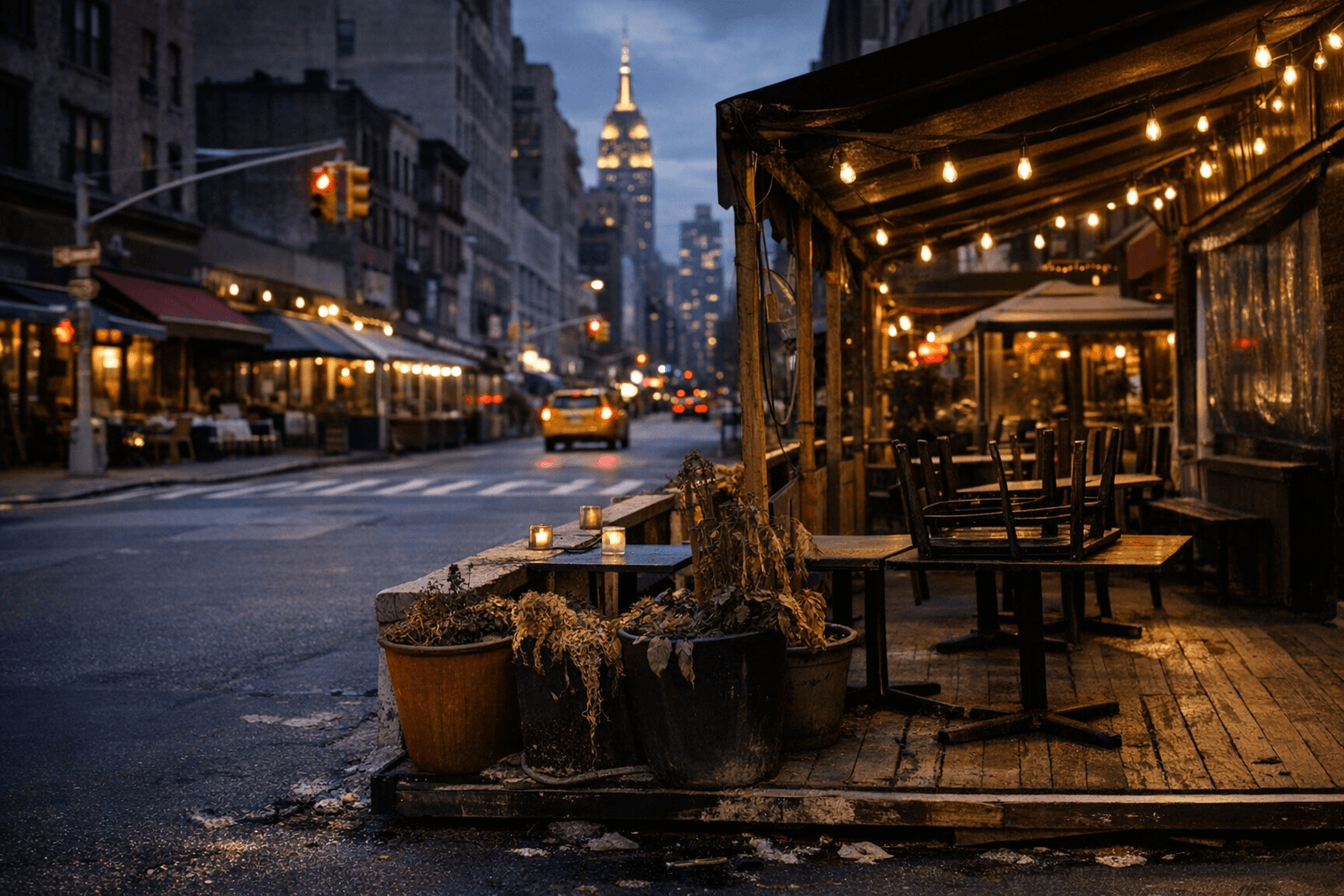
Maire McCrea can double B'artusi's capacity with a single outdoor setup. The West Village restaurant runs 40 seats inside; the roadway cafe adds 40 more. "It makes a significant impact on our business model," McCrea told reporters as the 2026 season opened April 1. The catch: only about 500 restaurants citywide managed to clear the city's approval process in time to actually use it.
That number is a fraction of the more than 8,000 restaurants that operated outdoor setups during the peak of the pandemic-era program, and it illustrates the core tension that NYC's Department of Transportation and City Council are now openly working to resolve. The Dining Out NYC program, which replaced the emergency setup, comes with a multi-stage review process requiring sign-off from local community boards, the City Council, and DOT itself. That gauntlet can run six to eight months, and for a program that only permits roadway operation from April 1 through November 29, the math discourages many small operators before they even apply.
DOT Commissioner Mike Flynn acknowledged the problem in a Daily News op-ed, writing that the agency will work with the City Council to bring back year-round roadway dining and cut red tape. Council Speaker Julie Menin has been direct: "We are going to fix the outdoor dining program and make it year-round." Mayor Zohran Mamdani said he would back the move. The alignment at the top of city government is unusual; the urgency is not. Council Member Lincoln Restler of Brooklyn, whose bill would remove seasonal restrictions on roadway cafes and limit community board review powers, put the collapse plainly: "More than 80% of the restaurants and cafes that used to have outdoor dining no longer have outdoor structures. It's become a bureaucratic boondoggle."
The backlog is visible in the licensing data. About 700 of the city's 1,300 sidewalk cafe applicants hold fully approved licenses; the remaining 600 are operating under conditional approvals while DOT works through its queue. Roughly 1,800 total roadway and sidewalk setups are currently permitted, a figure that once topped 12,000 during the height of the pandemic program.
Andrew Rigie, executive director of the NYC Hospitality Alliance, put the fix in economic terms: "It helps generate revenue, create jobs. People love dining al fresco, and if you reduce the red tape, you make the roadway cafes year-round, I think you'll definitely see more restaurants participating."
For the line cooks and servers whose hours expand when a dining room effectively doubles in size, the stakes are direct. Restler's bill cannot take effect until the Council acts, but with the DOT, the speaker, and the mayor aligned, the window for a legislative fix this season is narrower than the sidewalk spaces many of these restaurants are still waiting to fill.
This article was produced by Prism’s automated news system from verified source data, official records, and press releases, then run through automated quality and moderation checks before publishing. The system is built and supervised by the people who set the standards it runs under. Read our full AI policy.
Did this article answer your question?