Restaurant Brands reports stronger sales, boosts 2026 shareholder returns
Sales rose 6.2%, but RBI also pushed more cash to shareholders, leaving workers to watch whether growth shows up in hours, staffing, and pay.
Restaurant Brands International’s latest quarter showed enough sales growth to give the company room, but not enough evidence that workers will feel it first. The Miami-based owner of Burger King, Tim Hortons, Popeyes and Firehouse Subs said system-wide sales rose 6.2%, comparable sales climbed 3.2%, and net restaurant growth reached 2.6%, while also resuming share repurchases in March and planning to buy back $500 million in 2026.
The profit picture was even stronger beneath the top line. On the earnings call, RBI said organic adjusted operating income grew 10.7% and adjusted earnings per share rose 14.6%. CNBC reported first-quarter adjusted EPS of 86 cents on revenue of $2.26 billion. Net income attributable to common shareholders rose to $338 million from $159 million a year earlier. RBI also reaffirmed its 8% plus organic adjusted operating income growth target from 2024 through 2028, along with a goal of 5% plus net restaurant growth by 2028, and said it intends to sunset the Restaurant Holdings segment by the end of 2027.
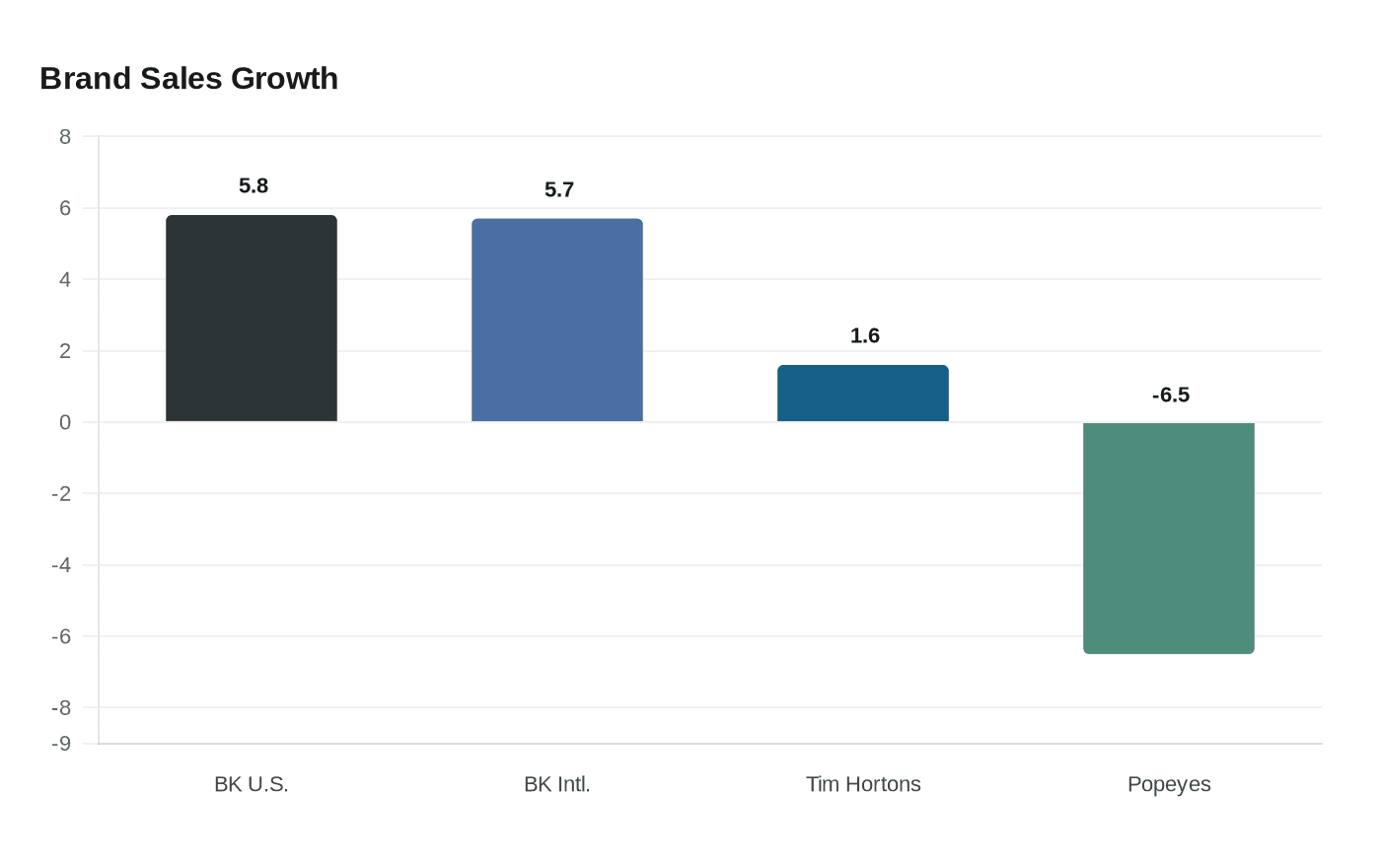
For restaurant employees, the split between brands matters as much as the companywide numbers. Burger King U.S. comparable sales increased 5.8% and International rose 5.7%, while Tim Hortons delivered 1.6% comparable sales growth for its 20th consecutive positive quarter. Popeyes was the weak spot in the portfolio, with several reports based on the release putting comparable sales down 6.5% for the quarter. In chain restaurants, that kind of brand divergence often translates into different labor pressures store by store. Strong sales can mean more hiring and more hours, but a soft brand can mean tighter schedules, harder labor targets, and more urgency from managers to squeeze more output from the same crew.
The company’s bigger growth plan suggests more openings and more pressure to keep restaurants performing. RBI said in 2024 that it expected to reach at least 40,000 restaurants, $60 billion in system-wide sales and $3.2 billion in adjusted operating income by 2028. It also said in February that it would return $1.6 billion of capital to shareholders in 2026. That leaves workers with a familiar question: how much of the growth goes into better staffing, training and support, and how much is reserved for buybacks and margin protection?
Know something we missed? Have a correction or additional information?
Submit a Tip