Restaurants Say ICE Presence Imperils Business as Immigrant Staff, Customers Stay Away
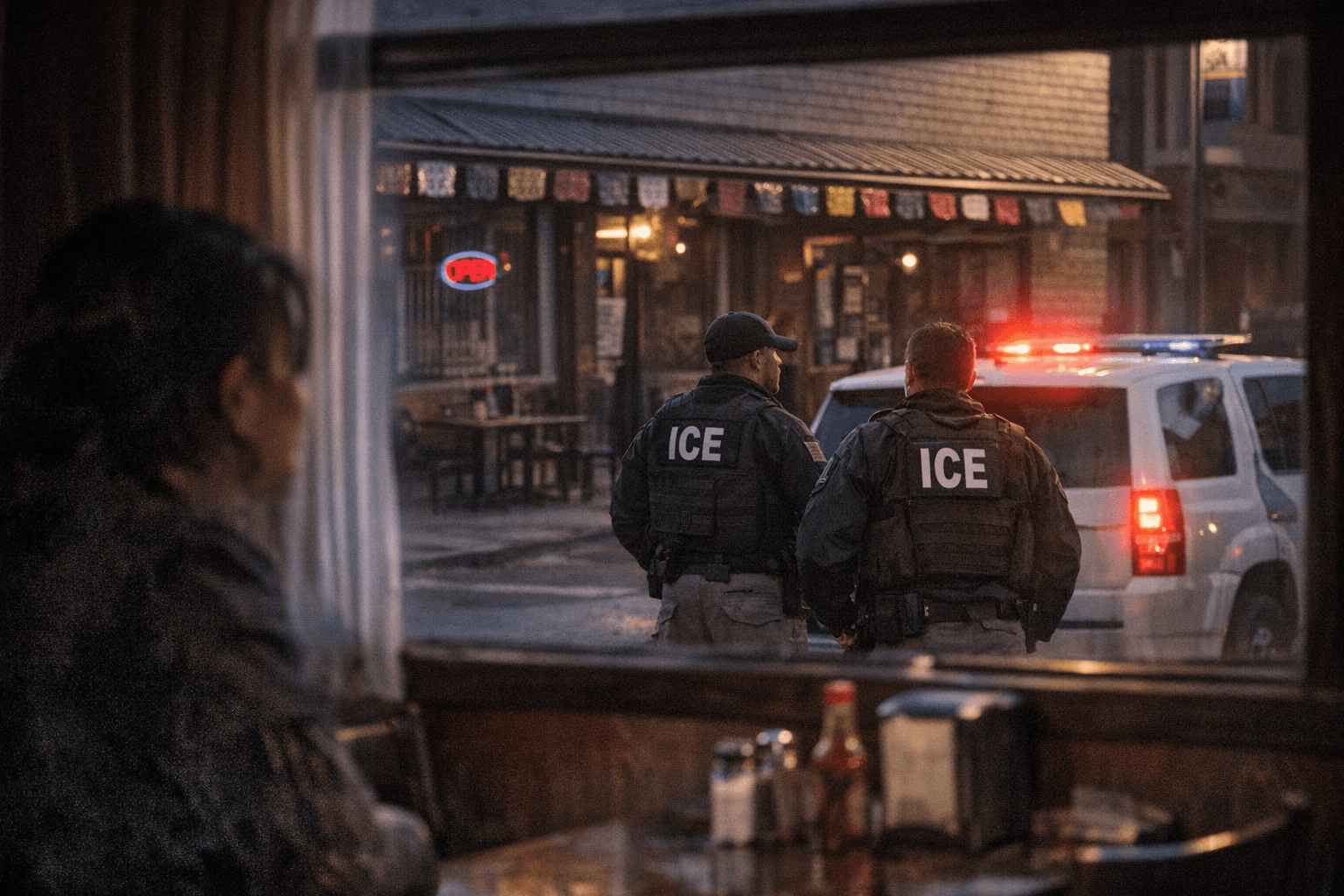
"Throughout the last eight months, whenever there's been a ICE sighting...within minutes, the streets go silent," La Carreta owner Sam Robles says, as owners report closures and steep sales drops.

Throughout the last eight months, whenever there's been a ICE sighting in our neighborhood, it's quickly posted on social media, and within minutes, the streets go silent - no more traffic, no more people. Everyone goes into hiding. You can feel the tension in the air. Usually, we decide to close for the rest of the day. We know what follows ... an empty restaurant, and for the following week or so, fewer customers," said Sam Robles, owner of La Carreta Mexican Restaurant in East Los Angeles, describing the pattern that business owners say has hollowed out holiday weekends and midweek service.
The industry-level vulnerability is sharp: the American Immigration Council estimates immigrants comprise 22 percent of the restaurant workforce nationwide, a share that exceeds 30 percent in California, New York and Texas. In Chicago's Little Village, a spokeswoman for the neighborhood Chamber of Commerce estimated local business sales "have fallen 50 to 70 percent since 2024," a slump that neighborhood activists tie to intensified enforcement and fear in the community.
Photographer Tony Luong's image of Suya Joint, a Nigerian restaurant in Boston, captures a similar scene: "The dining room at Suya Joint, a Nigerian restaurant in Boston, one of many places that say they have lost business since ICE stepped up immigration enforcement." In Los Angeles's Koreatown along Pico Boulevard, organizer Maria Morales of the Koreatown Immigrant Workers Alliance said former employees were already hurt by wildfires and now "these people cannot afford rent," as several restaurants have closed for lack of business since enforcement sweeps began in June.
Palm Beach communities also felt disruption when José Gonzalez, a manager at upscale Bice Ristorante, was detained at the state-run immigration center in the Everglades known as Alligator Alcatraz before his release just before Christmas. Residents held vigils and signed petitions in response to his detention, and owners in other affluent areas report similar alarm.
In Minneapolis-St. Paul, Vietnamese cafe co-owner Savio Nguyen said the fear extends to citizens in immigrant families: "My siblings, even though they’re citizens, are afraid to leave their homes because they don’t want to be harassed." St. Paul bar owner Wes Burdine described how he "meets up with an ICE patrol group. Burdine spends the next two hours monitoring ICE activity on the east side of the city and trying to document and alert neighbors to immigration actions with his car horn, a whistle, and his cell phone." Minnesotan restaurateurs report that January, already a slow month for service, became worse as staffing and sales dropped because of the ICE presence, and some owners like Lopez provided money to employees who could not work.
Restaurants that publicly oppose enforcement say they face retaliation. Cheetie Kumar, co-owner of Ajja and vice-president of the Independent Restaurant Coalition, said, "It’s really important for small businesses to speak up and make our point of view clear... But at the same time, I’m an immigrant, there are people in my restaurant who work for me who are immigrants, and I definitely don’t want to put a target on anyone’s back." In Kingston, New York, Lone Wolf owner Anton Kinloch posted a sidewalk sign reading: "WE LOVE ICE IN DRINKS. WE DON'T LOVE ICE IN REAL LIFE. SOLIDARITY ALWAYS." Owners report online harassment, boycott threats, phony negative reviews and occasional confrontations linked to their public stances.
Independent grocers and markets say the effects go beyond dining rooms. Erika Crenshaw, co-owner of El Sereno Greengrocer, said the store "relies heavily on workforce stability that is now shaken by fear of potential immigration raids," and she "believes [fear] has led to reduced staffing, supply delays, and fewer shoppers." Anonymous voices in affected neighborhoods express the depth of anxiety: "Pretty soon they’ll just have us tattoo our immigration information on our foreheads in big block letters. Or do they want tattoos on our arms, like the Nazis?"
Several timeline details in these accounts are not specified in the initial reports: the year referenced by the "June" enforcement sweeps and the calendar year of José Gonzalez's detention and "just before Christmas" release are not provided in the available material.
Know something we missed? Have a correction or additional information?
Submit a Tip