Starbucks Faces Investor Push to Oust Directors Over Labor Relations
Investors including NYC and NYS pension funds are pushing to oust two Starbucks directors over failed labor oversight, one day before the company's annual meeting.
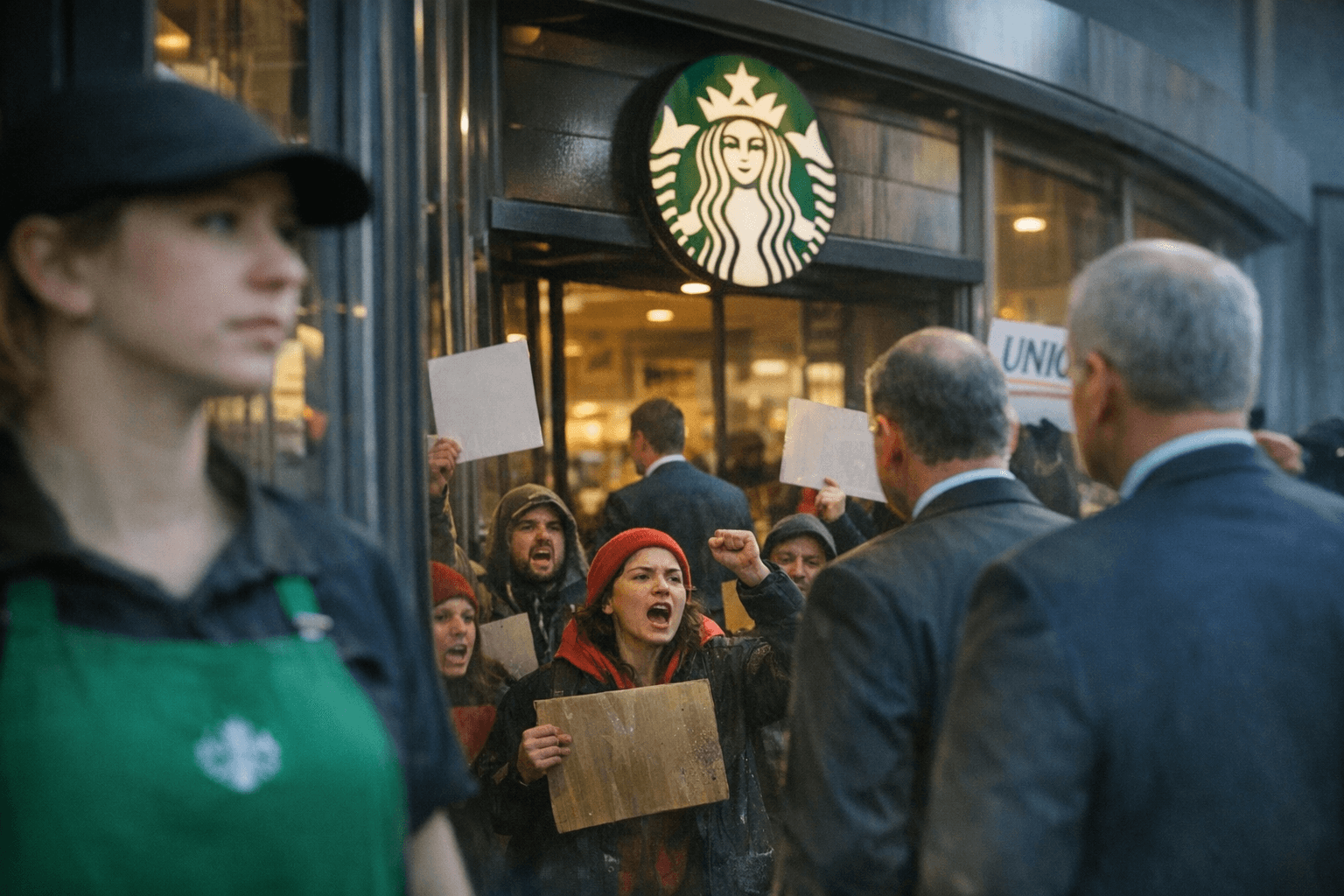
With Starbucks' annual shareholder meeting set for tomorrow, March 25, a coalition of major institutional investors is pressing fellow shareholders to vote out two board directors it holds responsible for four-plus years of failed labor oversight, even as the company and Starbucks Workers United moved this week toward resuming contract negotiations.
The investor coalition includes New York City Comptroller Mark Levine, acting on behalf of the five New York City public pension systems, New York State Comptroller Thomas DiNapoli, on behalf of the New York State Common Retirement Fund, Merseyside Pension Fund, the Shareholder Association for Research and Education, SOC Investment Group, and Trillium ESG Global Equity Mutual Fund. Their target: two sitting directors who led the board's labor oversight apparatus.
Jørgen Vig Knudstorp, the independent lead director, and Beth Ford, chair of the nominating and corporate governance committee, are under fire for dismantling the board's Environmental, Partner and Community Impact (EPCI) Committee. Ford chaired the committee at its end, and Knudstorp is responsible for ensuring independent oversight of board activities.
The investors' core grievance is not just that a first contract remains elusive. Over the past thirteen months, labor negotiations appear to have stalled without producing a first contract, labor disputes have escalated, operational and reputational risks have intensified, and the board's newly formed oversight committee has quietly disappeared. Currently, over 11,000 baristas are unionized with Starbucks Workers United, and the momentum toward unionization has not slowed, with 125 additional stores joining in 2025 alone.
The scale of the underlying dispute is staggering for any barista who has lived through it. In the first three years of the unionization effort, workers filed over 700 unfair labor practice charges, the NLRB issued over 135 complaints, and administrative law judges delivered over 60 decisions against Starbucks. After a joint commitment to build a constructive path forward in February 2024, new charge filings and strike activity briefly abated but are now rising again, with workers filing more than 125 additional unfair labor practice charges since January 2025, including charges of failure to bargain in good faith and retaliatory firings. Institutional Shareholder Services also highlighted a $38.9 million settlement Starbucks recently agreed to pay over claims it violated New York City law requiring fast-food workers to be given predictable and stable schedules.
Starbucks has defended its compensation record, pointing to renewed pressure it faces after dissolving the board committee responsible for overseeing labor relations. The company states that average hourly pay stands at $30 and that benefits are available to employees who work an average of 20 hours per week. Proxy advisory firm Glass Lewis, however, landed on the investors' side of the ledger. Glass Lewis recommended shareholders vote against re-electing Beth Ford, citing that the governance committee she chairs "bears responsibility for failing to ensure" oversight of risks that could harm shareholder interests.
There is one new development that complicates the picture heading into tomorrow's vote. Starbucks Workers United confirmed it communicated a revised contract proposal, including a $17 starting wage, during earlier bargaining sessions, a reduction from the union's initial $20 target following a protracted strike. A resumption of bargaining is now possible, both sides confirmed, with Starbucks spokesperson Jaci Anderson stating the company proposed resuming in-person bargaining on March 30 and was available for negotiations throughout April.
For the baristas on the floor who have watched two years of tentative agreements pile up without a ratified contract, the proxy challenge offers a different kind of accountability than anything that happens at the bargaining table. Investor signatories noted that, once again following renewed investor focus on labor relations risks, Starbucks announced its intention to resume in-person bargaining, but this time with no time-bound goal of completing bargaining, raising concern that progress may advance during a period of elevated investor scrutiny but falter if that attention subsides.
"Starbucks' unionized baristas help keep the coffee brewing and the company going, but for too long the Board has failed to ensure that management treats them with the respect they deserve," said New York City Comptroller Mark Levine. The March 25 vote will be the first real test of whether that argument can move enough institutional capital to hold individual directors directly responsible for a labor strategy.
Know something we missed? Have a correction or additional information?
Submit a Tip