Starbucks Tests Kiosks, Scheduled Orders at Airports and Travel Hubs
Starbucks is piloting kiosks and time-specific order-ahead slots at airports, shifting how licensed-location baristas handle transactions and raising questions about tips and scheduling.
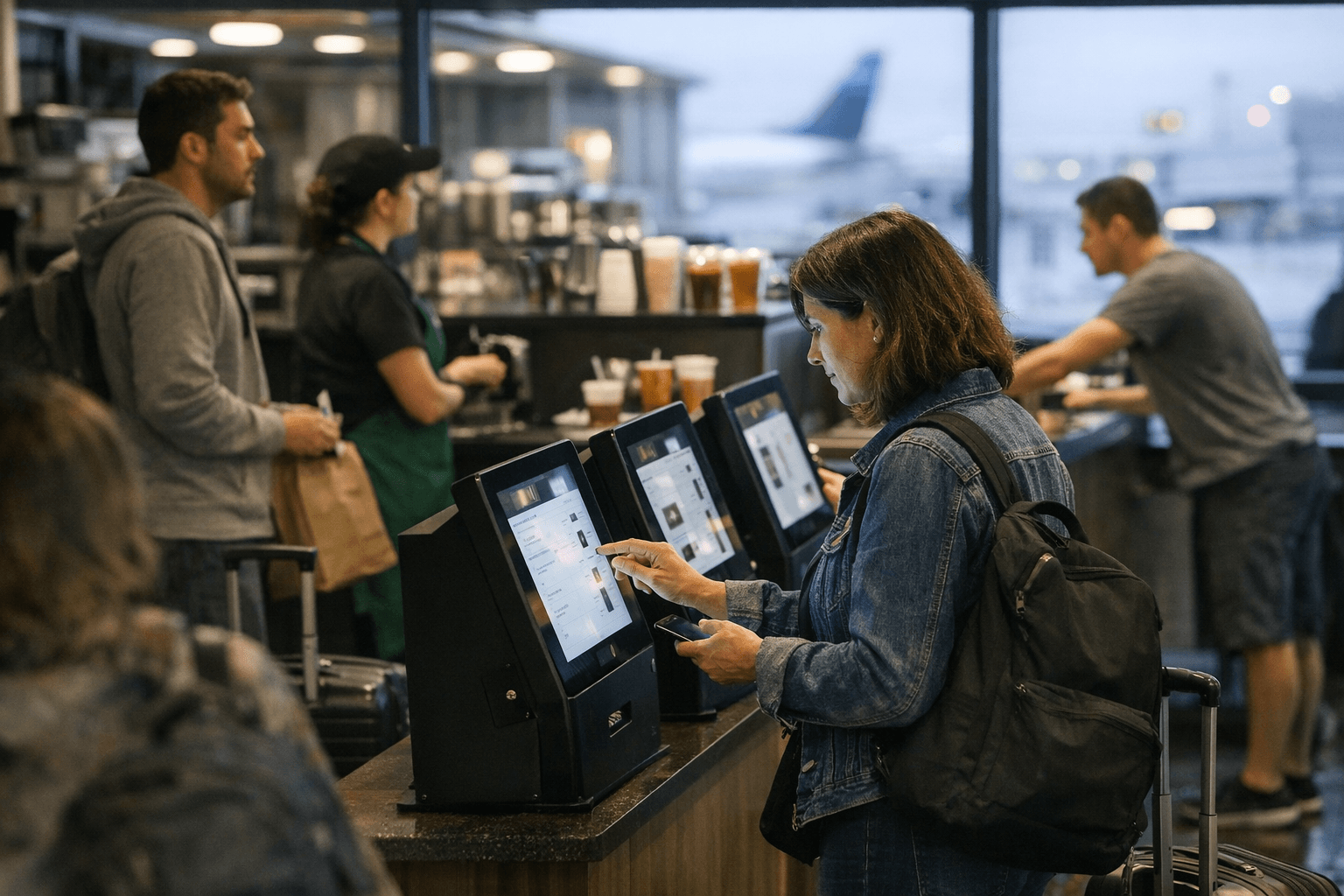
Starbucks launched a pilot program at high-traffic licensed locations, including airports and travel hubs, testing self-service kiosks and scheduled app orders designed to move customers through faster in environments where physical layouts and ordering patterns differ sharply from street-level cafes.
The initiative, announced March 25, accompanies a broader structural shift in how Starbucks manages its U.S. licensed coffeehouse business. The company reorganized that segment from a regional to a segment-focused model, grouping airports, hospitals, and campuses together under an operational framework tailored to each environment's specific constraints. For high-volume travel sites, that means piloting kiosks, time-specific order-ahead slots, and customized equipment packages meant to accelerate throughput.
Aaron Koransky, who oversees the licensed segment work, described the approach as preserving the Starbucks experience while improving speed. The framing tracks with the company's larger turnaround priorities, which have centered on reducing wait times and tightening operational consistency across channels.
For baristas and shift supervisors working these locations, the practical effect is a rebalancing of what the job looks like hour to hour. Kiosks and scheduled orders consolidate the transactional side of order-taking, which can reduce the stop-start rhythm of customization conversations at the register. The tradeoff is that labor hours may shift away from front-counter roles toward drink assembly and mobile-order fulfillment, with fewer people needed for order entry.
The tip question is significant and unresolved. Kiosk and app orders typically generate less tip income than face-to-face transactions, a dynamic already familiar to baristas at high-volume urban locations. As more orders migrate to self-service channels, tip pools at airport locations could thin even as order volume holds steady or grows.
What complicates the picture further is the licensed-store structure itself. Airport Starbucks locations are typically run by concessionaires and airport vendors, not the company directly. That means workers staffing these pilots may operate under different pay scales, scheduling rules, and benefit packages than counterparts at company-owned stores. Two baristas making identical drinks in identically branded environments may have fundamentally different protections depending on who signed the license agreement.
As the pilots expand, the pressure point for worker advocates will be whether licensees adopt consistent standards around scheduling predictability, tip treatment on digital orders, and training for the new equipment. The structural gap between licensed and company-operated stores has existed for years; automation pilots that reshape job functions without addressing that gap risk widening it further.
This article was produced by Prism’s automated news system from verified source data, official records, and press releases, then run through automated quality and moderation checks before publishing. The system is built and supervised by the people who set the standards it runs under. Read our full AI policy.
Did this article answer your question?