Sweetgreen Sales Slump Threatens Worker Hours, Hiring, and Benefits Nationwide
Sweetgreen posted an 11.5% same-store sales drop last quarter and projects further declines; line workers should expect schedule changes and watch their hours closely.
When a chain posts an 11.5% same-store sales drop in a single quarter, the pain doesn't stay in the boardroom. At Sweetgreen, it arrives on the schedule board.
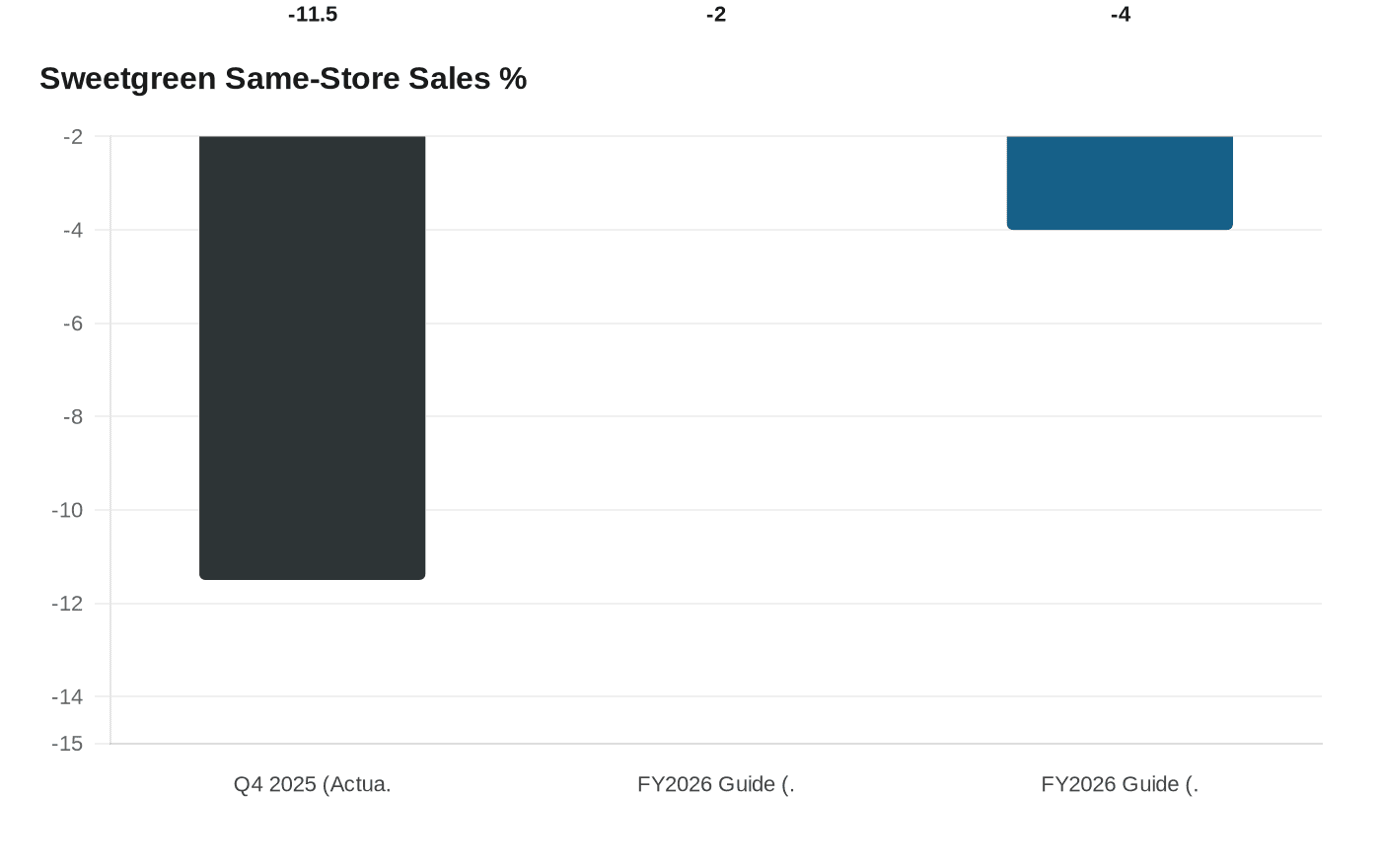
CEO Jonathan Neman acknowledged publicly that the company is "executing with urgency" on a transformation plan following a fourth quarter that ended December 28 with same-store sales down 11.5%. Net losses for the full year 2025 reached $134.1 million, and restaurant-level margins collapsed nearly 700 basis points to 10.4%. At that margin, every labor dollar gets scrutinized. The company has already cut 10% of its support center workforce, and analysts projected that Q1 2026 same-store sales declines could top 10%, weighed down by consumer weakness and adverse weather. Sweetgreen's own guidance projects full-year 2026 comps down 2% to 4%, though that forecast may prove optimistic.
For workers on the line, those numbers have a concrete translation: fewer posted hours. Shift consolidations, last-minute cuts, and reduced weekly guarantees tend to follow within weeks of a company announcing this kind of margin pressure. Multi-unit chains don't sit on the numbers; they move on labor first.
The scorecard is perhaps the most telling development for store-level workers. Sweetgreen introduced a performance tracking system for managers and realigned bonus incentives around financial and operational metrics including kitchen pacing. That means the shift lead overseeing prep cooks now has compensation directly tied to throughput and cost controls, creating a structural incentive to minimize labor hours, not protect them.
Hiring is another casualty. Workers counting on moving from hourly crew to shift lead, or from shift lead to assistant manager, may find those rungs frozen while the chain focuses on stabilizing rather than developing. Neman told investors the company has "more work to do," a phrase that in restaurant operations typically means reorganization tasks and retraining protocols absorbed by existing staff without added headcount.
The urgency playbook also includes expanded deployment of Sweetgreen's Infinite Kitchen, the chain's automated assembly system. Automation rarely slows during a turnaround; cost reduction is exactly the pressure that accelerates it. For prep workers at locations slated for Infinite Kitchen upgrades, the calculus on long-term hours shifts further.
The broader industry picture frames Sweetgreen's problem clearly. Fast-casual concepts built on urban daytime office traffic, with check averages above the lunch-crowd comfort zone, have been losing customers in 2026 while value-oriented formats hold steady. That means the labor pool in many Sweetgreen markets has options, which may limit the chain's ability to hold onto experienced staff even when it wants to.
The metric worth watching next quarter is restaurant-level margin. If it stays stuck at 10.4% or deteriorates further, any talk of hour stabilization will be short-lived.
Know something we missed? Have a correction or additional information?
Submit a Tip