Toast says restaurant benefits can boost retention and cut labor costs
Restaurants are discovering that benefits are not fluff. Used well, they can help cut turnover, lower recruiting pressure, and steady service on the floor.
Benefits are becoming a retention budget
Restaurants have spent years trying to hire through a labor market that never quite lets up. Even with applicant flow improving, the National Restaurant Association said 77% of operators still considered retaining employees a significant challenge in 2025. That is not a soft morale problem. It is a staffing problem that touches scheduling, training, service consistency, and the cost of constantly replacing people.

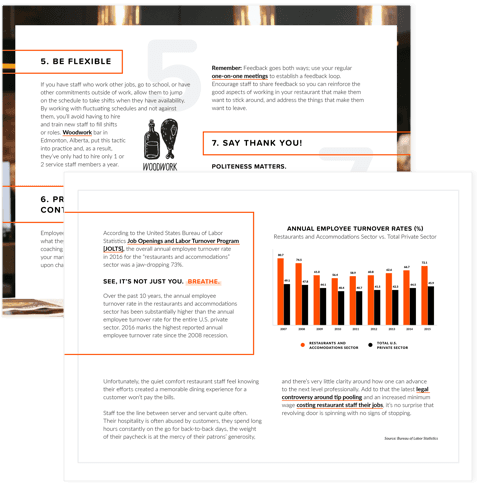
The scale of the industry makes that harder to ignore. The association projected $1.5 trillion in restaurant sales and 15.9 million employees by the end of 2025, which means even small improvements in turnover can ripple across a massive workforce. And the churn is not a new headache. The restaurant-and-accommodations turnover rate hit 74.9% in 2018, up from 72.5% in 2017, and the National Restaurant Association has also cited a 73% turnover rate for the industry. In that context, benefits are not an HR extra. They are one of the few levers that can change who applies, who stays, and how much a restaurant spends replacing them.
What workers actually respond to
The strongest benefits programs are built around what hourly staff say they need, not what sounds good in a recruiting deck. More than half of restaurant workers say they are dissatisfied with their current benefits package, which helps explain why some restaurants feel like revolving doors while others hold onto people longer.
The clearest signal comes from a DoorDash and Technomic survey of 300 restaurant operators and 300 restaurant employees. In that study, 66% of employees said they were more likely to apply for a job that offered health benefits. And 86% of workers who were dissatisfied with their benefits said they would be more likely to stay if benefits improved. That is a huge clue for managers who keep treating benefits as a nice-to-have. Health coverage can influence whether someone takes the job in the first place, and whether they keep showing up six months later.
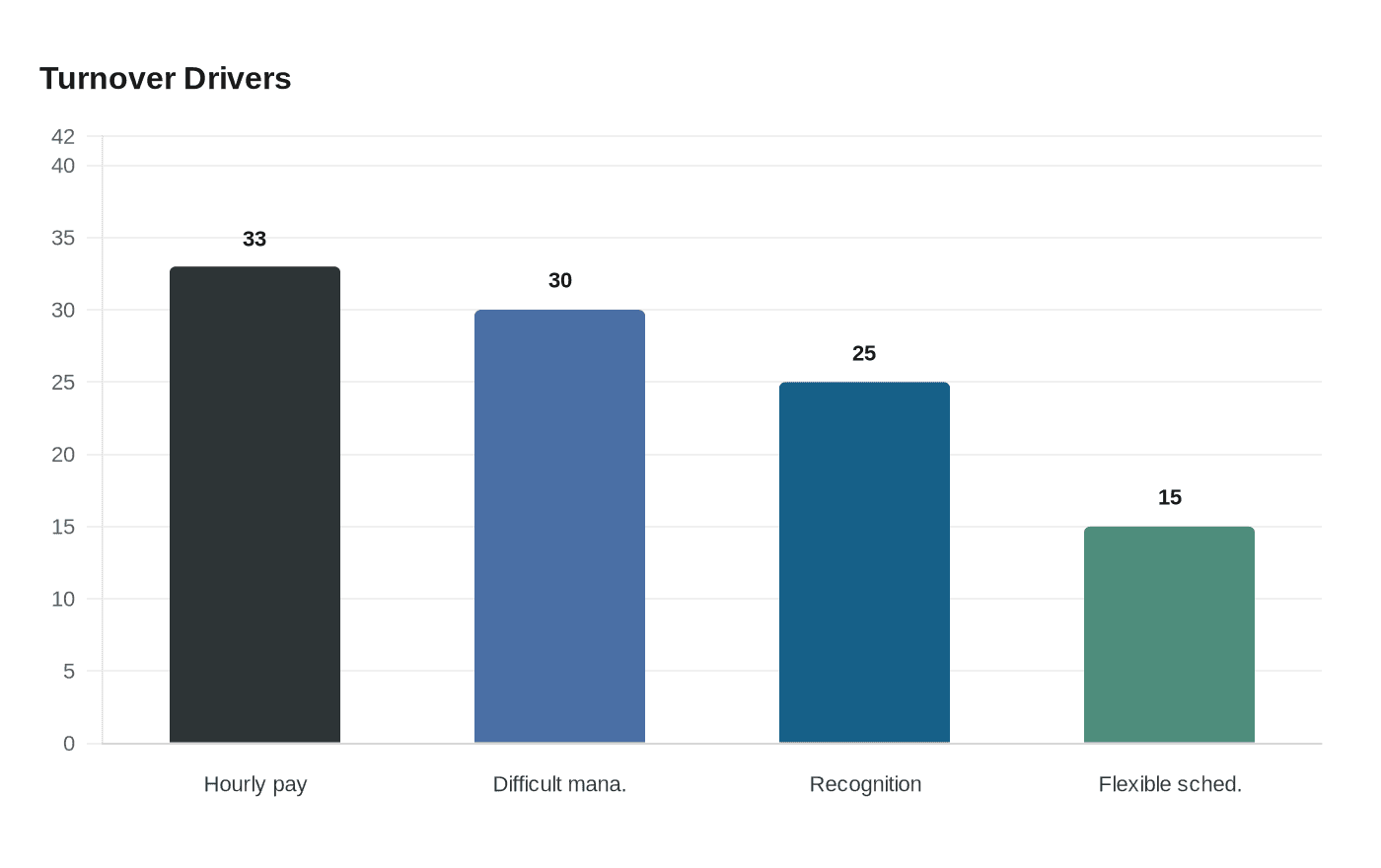
Toast’s 2025 survey of more than 600 current restaurant workers points to the same conclusion, but with more detail from inside the shift. Fifteen percent cited lack of flexible scheduling as a top pain point. When workers were asked what drives turnover, 33% pointed to hourly pay, 30% to difficult managers, and 25% to lack of recognition. That tells restaurant leaders something important: benefits alone will not fix a toxic kitchen or a pay structure that feels unfair, but the right package can make a fragile job feel more workable.
The benefits that move the needle
The smartest way to approach benefits is to ask which ones reduce turnover, stabilize attendance, and make a job easier to keep. That usually means starting with health coverage, paid time off, scheduling flexibility, and support that helps people manage life outside work. It also means paying attention to financial wellness support and simple recognition systems, because workers are telling employers that day-to-day respect matters just as much as a glossy perk.
For hourly staff, especially in restaurants where pay can already be unpredictable, the value of a benefit often comes down to whether it smooths out real instability. A health plan matters if it helps a line cook or server avoid an impossible medical bill. Paid time off matters if it actually can be used without guilt or chaos on the schedule. Flexible scheduling matters if it gives someone enough certainty to manage child care, a second job, or school. And recognition matters when management wants people to stay but does not show them why they should.
The big mistake is offering benefits that workers do not understand. Toast’s guidance makes that point clearly: a good benefit that nobody knows about does nothing for retention. If staff cannot tell you what is available, when it starts, or how to use it, the restaurant has spent money without changing behavior. Communication is part of the benefit package, not an afterthought.
Think like an operator, not a slogan writer
Benefits have to be judged the way restaurants judge labor in general: by what they cost and what they prevent. A better benefits package may not feel dramatic on a spreadsheet, but it can reduce turnover, cut recruiting and training churn, and keep a shift from collapsing when someone quits. It can also help a restaurant avoid the hidden cost of absenteeism, since workers with more stability outside the job are more likely to show up consistently inside it.
That is why the best operators are treating benefits as a business strategy. They are not asking whether a perk sounds generous. They are asking whether it helps them keep a server long enough to build regulars, keep a line cook long enough to train others, or keep a manager long enough to stop resetting the whole team every few months. In restaurants, the real cost of a bad benefits package is not just dissatisfaction. It is the constant scramble to refill empty roles.
Build for the workforce you actually have
Arthur J. Gallagher & Co., in a 2024 benchmarking addendum based on responses from 132 hospitality and restaurant organizations, found operators prioritizing flexible and competitive compensation strategies, healthcare benefits, a stronger employee experience, and reliable wage increases. That mix is telling. Restaurants are not just looking for cheaper labor. They are looking for labor that stays.
ADP adds another reason the benefits conversation is changing: the industry is expected to recruit more older workers as it faces a labor gap created by 1 million fewer working teens by 2031. That shift matters because a workforce that spans teens, parents, career changers, and older employees will not all respond to the same pitch. Some will care most about health coverage. Others will care about predictable schedules, time off, or a manager who actually follows through. The best benefits programs are broad enough to work across those needs without trying to be everything at once.
For restaurants, the lesson is straightforward. Benefits are not a separate goodwill project sitting outside the business. They are part of the operating system. When they are designed around retention, communicated clearly, and matched to what hourly workers actually value, they do more than make the workplace feel better. They lower the odds that the whole place falls apart one quit at a time.
Know something we missed? Have a correction or additional information?
Submit a Tip