Wahlburgers Expands Into Home Depot, Airports and Hotels, Driving Hiring
Wahlburgers is expanding into Home Depot, airports, hotels and Bass Pro Shops to recover lost locations and will drive immediate hiring in retail and travel foodservice roles.
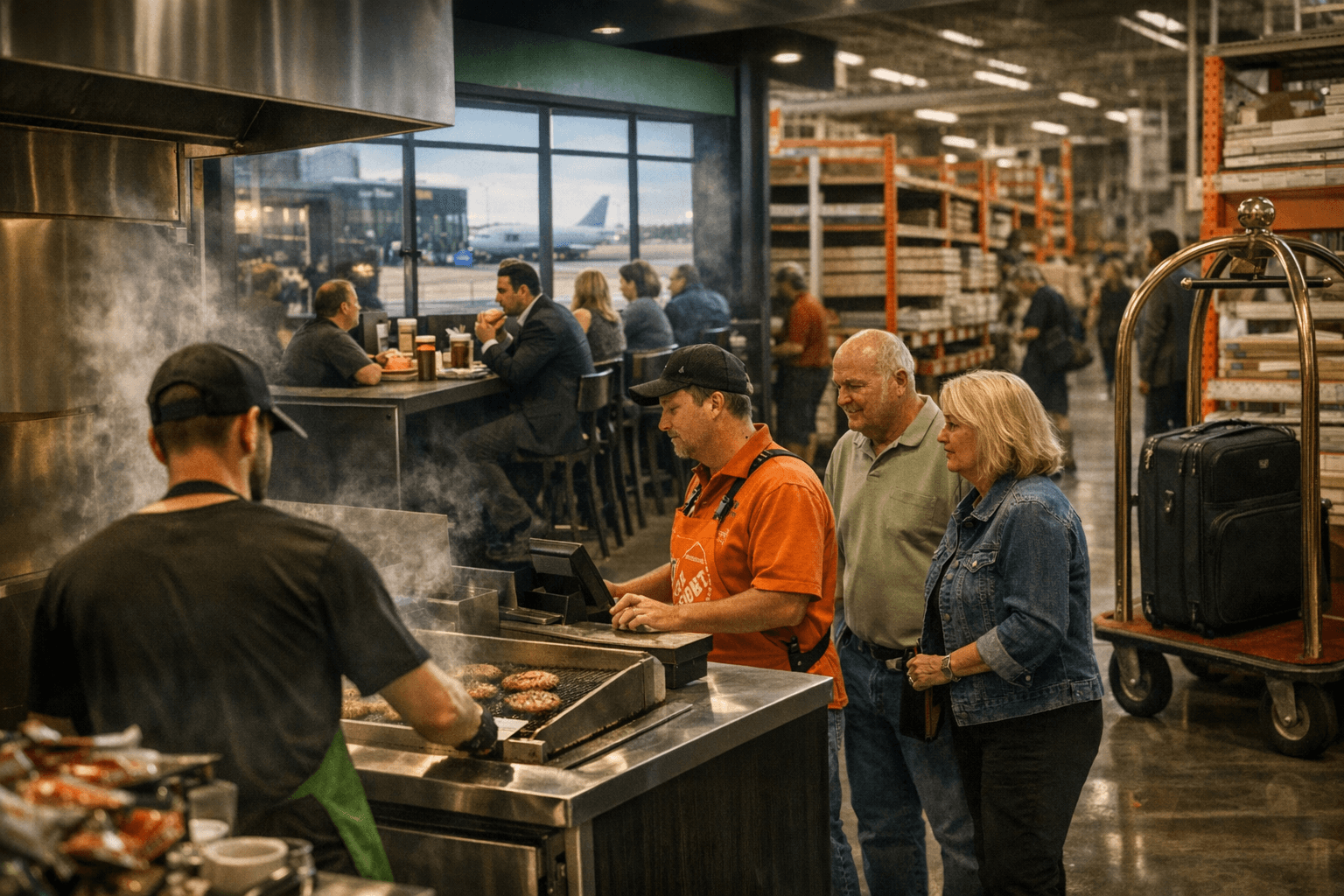
Wahlburgers is accelerating its growth strategy in 2026 by opening nontraditional units inside Home Depot stores, airports, hotels and Bass Pro Shops locations, a move that will create immediate hiring demand across retail and travel foodservice roles. The company announced Jan. 26, 2026, that the push into these alternative footprints is meant in part to recover units lost after a prior distribution and partner change.
The expansion shifts the chain away from a pure brick-and-mortar restaurant model and toward smaller, site-specific formats that sit inside larger retail and travel hubs. That transition matters for workers because these locations use different labor models than standalone restaurants. Employers and local managers will need to recruit cooks, servers and managers who can work in compact kitchens, operate within host-site rules, and adapt to the rhythms of retail and airport traffic.
Nontraditional units often require different staffing, training and scheduling approaches. For Wahlburgers, that could mean more cross-training between front-of-house and back-of-house tasks, compressed staffing rosters for limited-footprint kitchens, and schedules aligned with store hours or flight schedules rather than typical restaurant peak times. Managers will face new operational constraints and will likely prioritize hires with experience in retail foodservice, concessions or travel-oriented dining environments.
The hiring impact is likely immediate. Filling multiple small-format locations within Home Depot and Bass Pro Shops stores can produce a steady demand for hourly cooks and servers, while airport and hotel sites typically need supervisors and managers familiar with security procedures, vendor coordination and guest service under time pressure. For restaurant employees, the openings present opportunities to move into roles that blend restaurant skills with retail or hospitality logistics.
For labor organizers and HR teams, the rollout will test recruiting pipelines and training systems. Companies that scale through nontraditional footprints often rely on centralized training modules, flexible scheduling software and partnerships with host-site human resources to streamline hiring. Local labor markets with a strong pool of hospitality and retail experience may fill seats faster than markets dependent on traditional restaurant staffing pools.
Wahlburgers’ strategy highlights a broader shift for restaurant operators seeking growth without large standalone builds. For workers, the change means a wave of new job listings and the need to demonstrate adaptability to retail and travel settings. Job seekers should monitor local openings and emphasize transferable skills such as point-of-sale experience, multi-station cooking, and customer service in high-traffic venues. Employers will need to move quickly to staff up and train teams so new sites can open and meet guest expectations.
This article was produced by Prism’s automated news system from verified source data, official records, and press releases, then run through automated quality and moderation checks before publishing. The system is built and supervised by the people who set the standards it runs under. Read our full AI policy.
Did this article answer your question?