What Restaurant Workers Need to Know About Tips, Wages, and Rights
Tips, wages, and overtime rules are among the most litigated issues in foodservice; here's what every restaurant worker needs to know to protect their pay.
Few industries generate as many wage disputes as restaurants. As one analysis of foodservice employment law puts it, "Restaurant workplace rules on tips, overtime, and wage protections remain among the most frequently litigated and practically important issues for foodservice employees and employers." Whether you work in the UK or the United States, understanding where your money comes from, how it's protected, and what your employer is legally required to provide can make a material difference to your livelihood.
Your baseline wage: what the law requires
The floor beneath your paycheck is set by statute, and the numbers differ sharply depending on which side of the Atlantic you work on.
In the UK, the National Minimum Wage Act sets the standard. As of April 2023, workers aged 23 and over are entitled to £10.42 per hour. Rates vary by age bracket and apprenticeship status, so younger workers and apprentices fall under different thresholds. The principle, however, is consistent: "You deserve fair compensation that meets legal requirements."
In the United States, the federal minimum wage sits at $7.25 per hour, though many states have set higher rates. The federal floor has not changed in years, so workers in states with higher minimums benefit from those state-level protections rather than the federal baseline.
Regardless of jurisdiction, the right to transparent wage calculations applies. As workers in the UK are explicitly protected: "You have the right to transparent wage calculations and proper payment for all hours worked." That means every hour on the clock, including prep time, closing duties, and any off-the-clock work an employer may informally expect, must be reflected in your pay.
Tips: whose money are they, really?
The answer depends on where you work, but in both the UK and the US, the law has moved to place clearer limits on employer control over gratuities.
In the UK, protections are now explicit and statutory. Front-of-house staff who receive tips are covered by the Employment (Allocation of Tips) Act 2022, which prohibits employers from withholding tips or using them to meet minimum wage obligations. The principle is direct: "Employers cannot withhold tips or use them to top up wages to minimum wage levels. Those tips belong to you, not your employer's bottom line." Critically, tips and service charges "can't be used to top up wages to meet minimum wage requirements." Your base wage must be paid in full before any tip is counted.
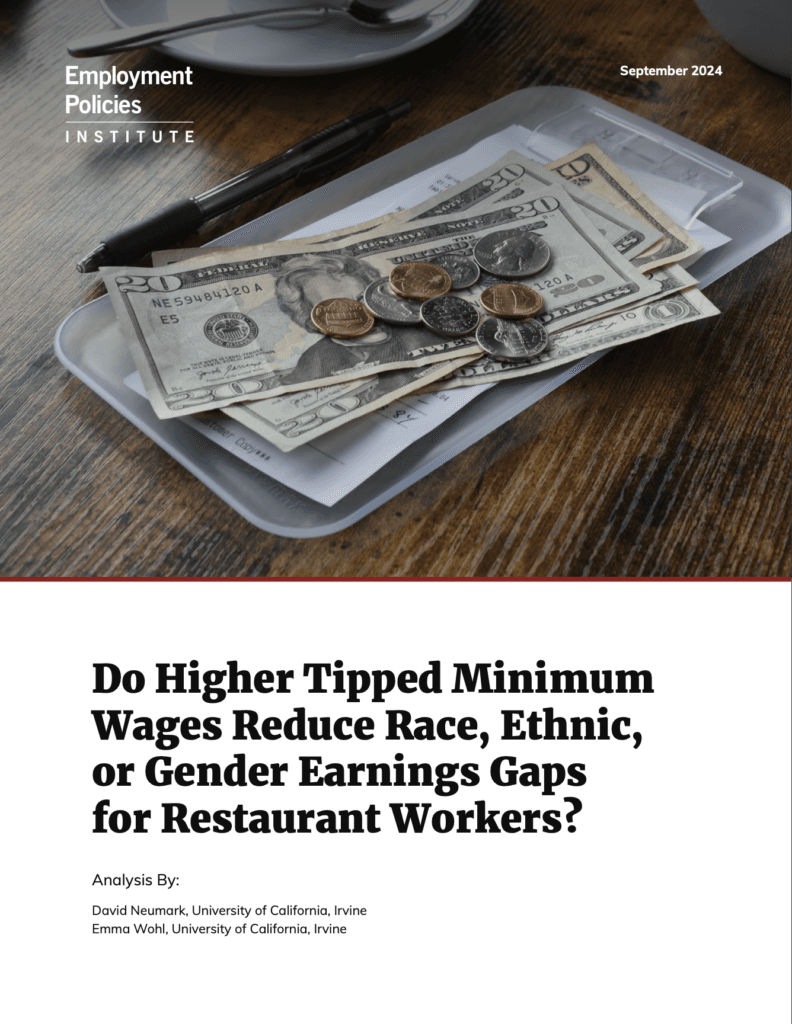
The US operates a different but consequential framework. Federal law permits a "tip credit" mechanism, allowing employers to pay tipped employees a minimum cash wage of just $2.13 per hour, provided the employee earns enough in tips to bring their total hourly compensation up to the federal minimum of $7.25. The employer's obligation is firm: they must ensure that employees earn enough in tips to make up the difference, and must pay the full minimum wage if tips do not cover it. If your tips fall short on a given shift, your employer cannot simply pocket the gap.
Workers in tipping roles should track their tips and compare totals against their paychecks. If the numbers don't add up, the law is on your side.
Overtime: when extra hours must mean extra pay
Both the UK and the US have frameworks protecting workers who put in more than their contracted or standard hours, though the thresholds and rules differ.
Under the US federal standard, restaurant employees are entitled to overtime pay for any hours worked over 40 in a week, and that overtime pay must be at least 1.5 times the employee's regular rate of pay. State laws may provide additional protections. This 1.5x rule applies regardless of whether you are a salaried or hourly employee in most circumstances, and regardless of whether the extra hours were formally scheduled.
In the UK, the Working Time Regulations cap the average working week at 48 hours. Employees working beyond that threshold should have proper written agreements in place. As the guidance makes clear, "hours beyond contracted time typically warrant overtime rates." If your manager routinely adds shifts or extends your hours without any formal agreement and without additional pay, that is a situation worth examining carefully.
Breaks: a patchwork of protections
Rest periods during a shift are one area where coverage is genuinely uneven, particularly in the United States.

At the federal level in the US, there is no legal requirement for employers to provide breaks to adult employees. However, many states have enacted their own break laws, and employers must comply with those state-specific rules, which may include both rest periods and meal breaks. If you work in a state with break protections, your employer cannot simply ignore them because federal law is silent.
The practical implication: find out what your state requires. Working through a double shift without any mandated rest period may feel like loyalty; in states with break laws, it may be an employer obligation that is not being met.
Health and safety: more than a first-aid kit
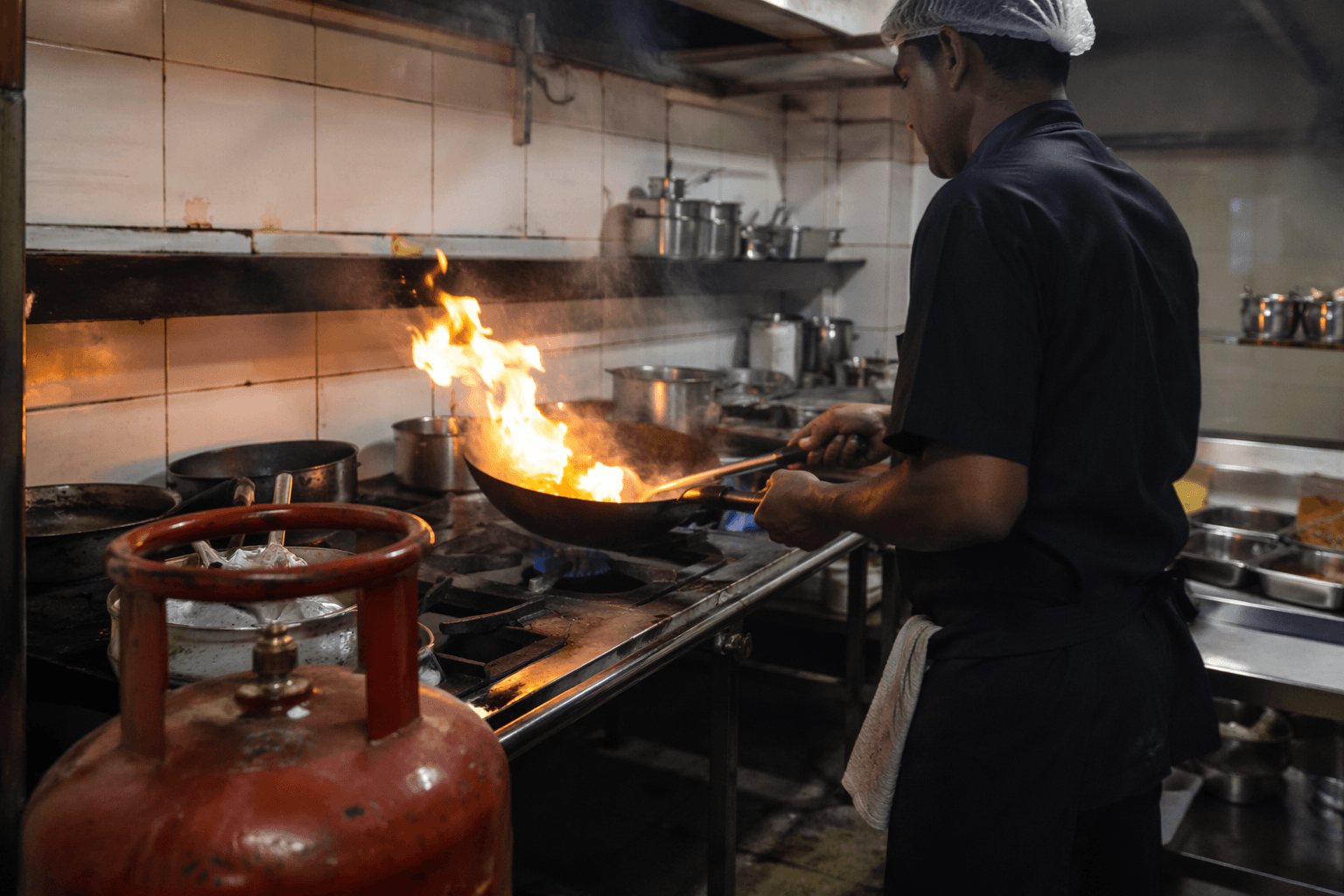
Restaurant kitchens are genuinely hazardous environments. Hot surfaces, sharp knives, wet floors, and the constant pressure of service create what one source describes as "perfect conditions for accidents." Hospitality workers face higher injury rates than many other industries, and the legal obligations on employers reflect that reality.
In the UK, the Health and Safety at Work Act 1974 (HASAWA 1974) requires employers to provide safe working environments. The practical examples are specific: non-slip flooring, proper training on handling hot equipment, and the provision of appropriate personal protective equipment. Crucially, employer responsibility "extends far beyond having a first aid kit available."
Every worker has the right to proper PPE, adequate safety training, and, importantly, "a culture where reporting safety concerns isn't seen as complaining." If raising a concern about a slippery floor or a faulty piece of equipment leads to pushback from management, that response itself reflects a failure of the employer's statutory obligations.
Discrimination: protections across the employment relationship
In the UK, the Equality Act 2010 provides comprehensive protection against discrimination, covering the full scope of employment from hiring decisions through to shift allocations. Being passed over for shifts, denied promotion, or treated differently because of a protected characteristic, whether that's age, sex, race, disability, or another protected attribute, is not simply unfair. It is unlawful.
The practical scope matters for restaurant workers specifically. Shift allocation in hospitality is often informal and manager-discretionary. The Equality Act 2010 makes clear that this informality does not remove legal accountability.
Protecting yourself: four practical steps
Knowing your rights in the abstract is only useful if you act on them in practice. Several concrete steps can help you stay protected from the moment you're hired.
Before you accept any job offer, ask questions. During the interview process, raise pay rates, scheduled hours, break entitlements, and how tips are distributed or pooled. Understanding these terms before you're on the payroll is significantly easier than disputing them afterward.
Read every contract before signing it. Employment contracts often contain important details about job responsibilities, pay rates, and termination clauses that affect your legal position. If a clause is unclear, seek clarification before committing.
Once you start working, keep accurate records of your hours and your pay. Document what you worked and what you received. These records can support you in any dispute, negotiation, or formal complaint. Employers who miscalculate wages, whether through error or design, are harder to challenge without documentation.
Finally, speak up. Report safety hazards, raise pay discrepancies, and flag concerns about tip handling. Workers who stay silent about violations, often out of concern about job security, inadvertently allow those violations to continue. The protections described throughout this guide only function when workers are willing to invoke them.
Restaurant work is demanding, often physically punishing, and frequently underpaid relative to the effort it requires. The legal frameworks in both the UK and the US have evolved specifically to address the vulnerabilities that workers in this industry face. Understanding those frameworks, and knowing when an employer is falling short, is the foundation of any meaningful workplace protection.
This article was produced by Prism’s automated news system from verified source data, official records, and press releases, then run through automated quality and moderation checks before publishing. The system is built and supervised by the people who set the standards it runs under. Read our full AI policy.
Did this article answer your question?