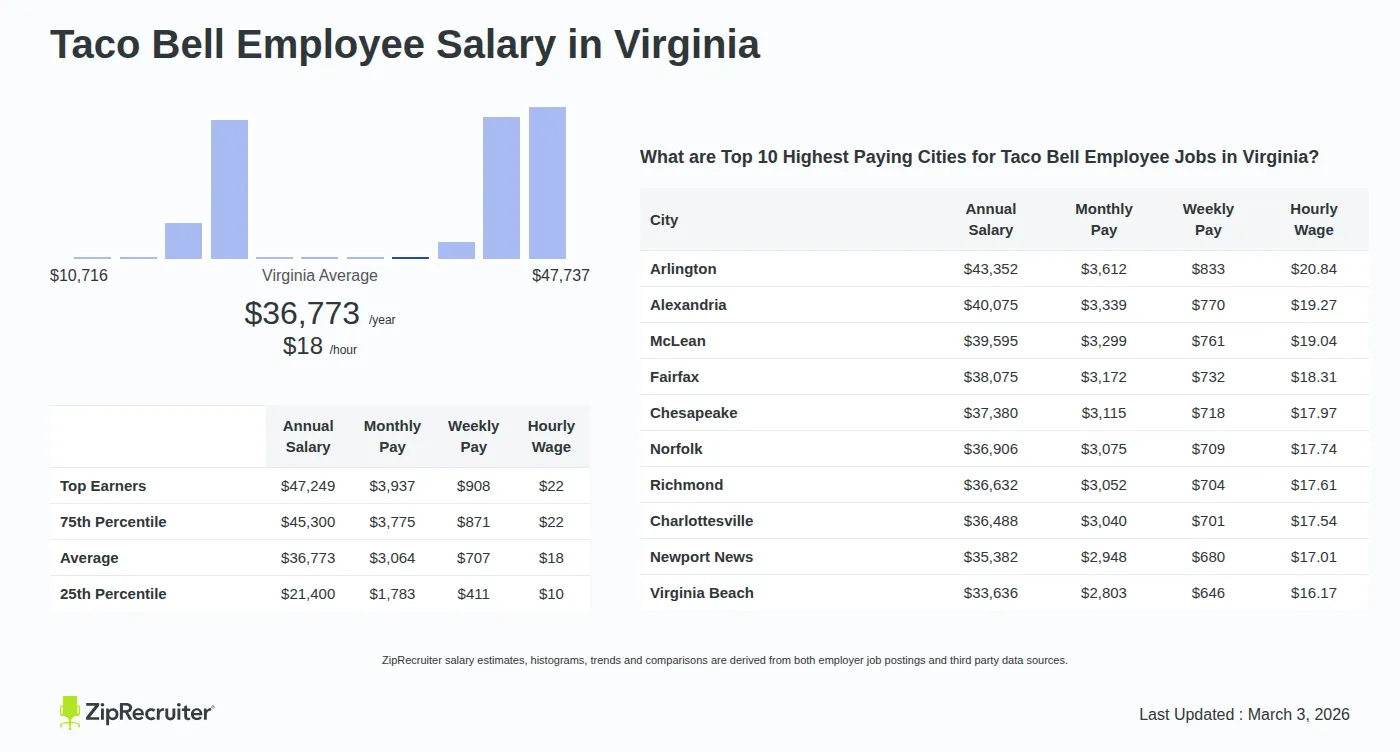
Explainer for tipped and gig workers: how the new 'no-tax-on-tips' deduction works (practical takeaways for Taco Bell delivery drivers and tipped crew)
A new federal deduction lets eligible tipped workers shield up to $25,000 from income taxes, but gig delivery drivers juggling multiple apps face the highest risk of getting it wrong at filing time.
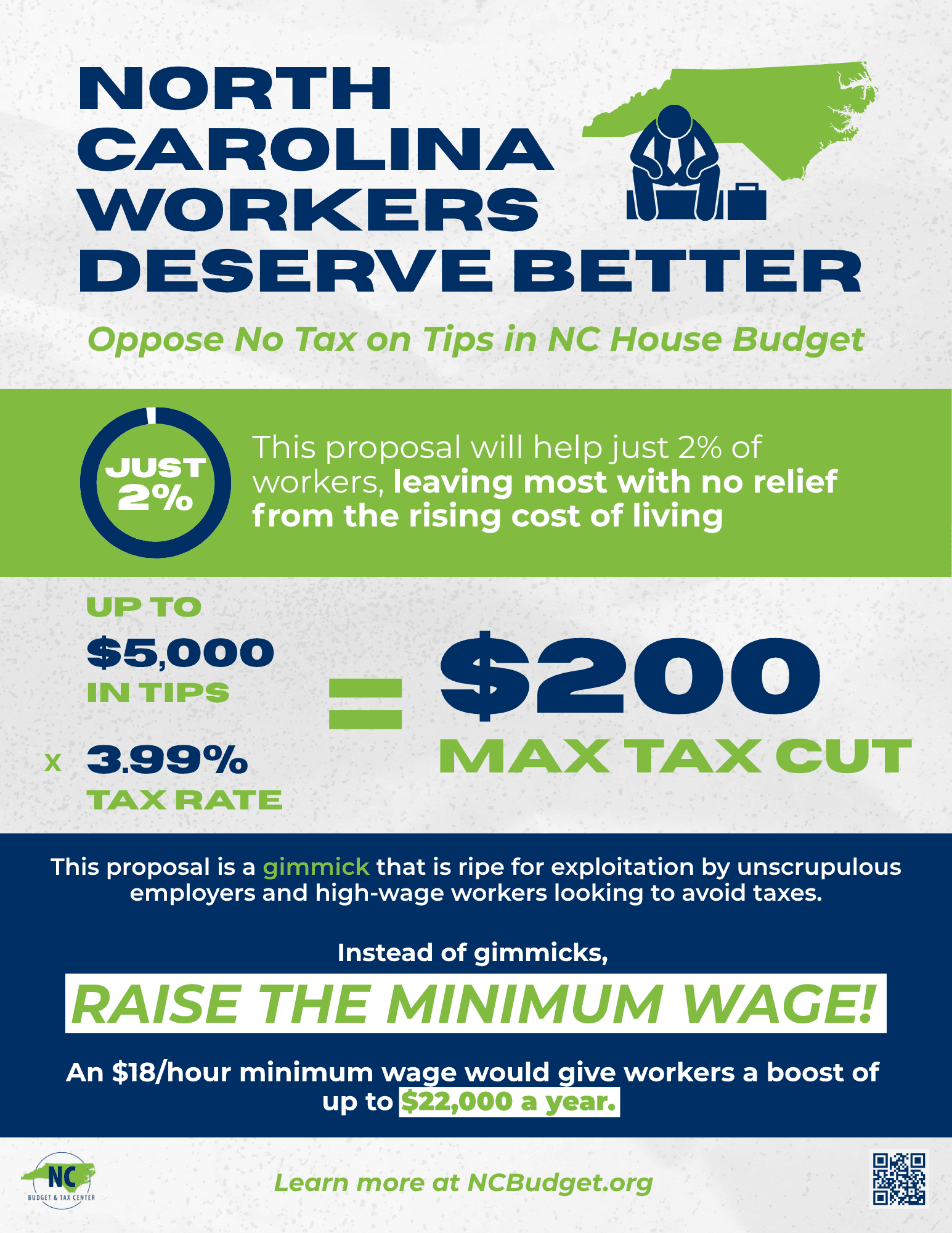
Six million American workers report tipped wages to the IRS. Starting with tax year 2025, a significant portion of those workers can now deduct up to $25,000 in qualifying tip income directly from their federal taxable income, potentially saving thousands of dollars at filing time. For Taco Bell delivery drivers and any crew member who relies on tips as part of their income, this is one of the most concrete federal tax changes in years. But the deduction has teeth: it only bites if you meet the eligibility criteria, report your tips correctly, and keep the paperwork to prove it.
What this deduction is and where it came from
The no-tax-on-tips provision was created under the One Big Beautiful Bill Act and is administered through a new IRS form, Schedule 1-A. The schedule consolidates several new deductions, including qualified tips, qualified overtime compensation, and certain car-loan interest, into a single filing vehicle. The tip deduction itself runs through tax years 2025 to 2028, making it a temporary but immediately actionable benefit.
Critically, this is an above-the-line deduction, meaning you can claim it whether you take the standard deduction or itemize. You do not have to choose between this and your standard deduction; they stack. The IRS released Schedule 1-A instructions alongside worksheets and occupation-specific examples to help workers calculate their eligible amount. Those instructions are the starting document for any Taco Bell worker trying to figure out where they stand.
Who actually qualifies: the IRS occupation list
The deduction is not available to every worker who occasionally receives a tip. The IRS published a list of 68 qualifying occupations across eight industry categories, and your occupation must appear on that list for your tips to count as "qualified tips." The categories include food and beverage service (servers, bartenders, baristas, food delivery drivers), transportation (taxi drivers, rideshare drivers), hospitality, personal care, and home services, among others.
For Taco Bell delivery drivers specifically, whether employed directly by a franchisee on a W-2 or operating independently through a delivery aggregator, food delivery drivers are explicitly named in the food and beverage service category. That is a meaningful green light. Rideshare and delivery drivers also appear under the transportation category. The overlap provides additional clarity for drivers whose work spans multiple functions.
The more ambiguous case at Taco Bell is counter crew who receive cash tips through a tip jar. The IRS list designates qualifying occupations based on whether tips are "customarily and regularly" part of that role. Counter-service fast food has historically not been considered a tipped occupation in the formal sense, and crew members in that position should not assume eligibility without checking the Schedule 1-A instructions carefully or consulting a tax professional. Payroll or franchise HR can help flag whether a role's classification supports the claim.
The math: what the deduction actually saves
The maximum deduction is $25,000 per return for married taxpayers filing jointly, and $12,500 for single filers. If you earned less than the maximum in qualifying tips, you deduct your actual tip amount. The deduction phases out for single filers with modified adjusted gross income above $150,000, and above $300,000 for joint filers, at a reduction rate of $100 per $1,000 over the threshold. Most Taco Bell drivers and crew members will fall well below those thresholds, meaning the phase-out is largely irrelevant for the people reading this.
The savings depend on your tax bracket. A tipped worker in the 24% bracket who qualifies for the full $25,000 deduction would reduce their federal tax bill by $6,000. A lower-income worker in the 12% bracket who earned $7,000 in qualifying tips would save $840. That may sound modest, but it represents a savings that an equally paid non-tipped coworker does not receive at all.
A realistic Taco Bell delivery driver scenario: a driver earning $34,000 total in wages and tips, with $9,000 of that in qualifying tips, sits in the 12% bracket. Deducting the $9,000 in tip income saves roughly $1,080 in federal income taxes at filing. That is a real number that changes take-home impact at tax time, not a rounding error.
One critical caveat that many workers miss: the no-tax-on-tips deduction reduces your federal income tax liability, but it does not eliminate Social Security and Medicare taxes (FICA) on those tips. Tips remain subject to payroll taxes regardless of this deduction. That distinction matters for gig workers doing their own quarterly estimated payments.
The gig worker problem: where 1099 income makes things complicated
This is where most Taco Bell delivery drivers will face the greatest compliance risk. Workers employed directly by a Taco Bell franchisee and paid through payroll will have their qualifying tips reported on Form W-2, box 7, which is the most straightforward documentation path. For tax year 2026 onward, employers are also required to include a Treasury Tipped Occupation Code (TTOC) on updated W-2 forms, making the occupation classification explicit.
But many drivers who work through third-party delivery platforms (DoorDash, Uber Eats, Grubhub) receive Form 1099-NEC or Form 1099-K instead of a W-2, and they are classified as independent contractors rather than employees. For tax year 2025, platforms were not required to separately break out tip income on those forms; the total earnings figure may lump base pay and tips together. That means drivers need to reconstruct their own tip figures from in-app transaction histories, merchant statements, and personal records.

The compounding problem: a driver who works Taco Bell deliveries through one app and grocery delivery through another has two separate 1099 income streams, potentially with different occupation codes, different tip breakdowns, and different rates. Each stream must be reconciled separately. Qualified tips from a food delivery role count; tips from a non-qualifying role do not, and mixing them inflates the deduction incorrectly.
For self-employed drivers, there is one additional constraint: the deduction cannot exceed your net income from the qualifying trade or business. You cannot use tip income to generate a business loss. Drivers with high vehicle expenses relative to income may find their deductible tip amount limited even if their raw tip total is large.
What the IRS requires you to document
The deduction is only as strong as your records. The IRS requires that qualifying tips be reported, meaning they must appear on a W-2, 1099-NEC, 1099-MISC, or 1099-K, or be self-reported on Form 4137 (which applies to unreported cash tips). Mandatory service charges or automatic gratuities that a business adds to a bill do not qualify; only voluntary tips determined by the customer count.
Employees are required to maintain a daily tip log and report all tips to their employer in writing each month, due by the 10th of the following month. For gig workers without an employer to report to, the equivalent discipline is keeping a running daily record of cash tips received and cross-referencing it against platform statements at month's end. The documentation burden is real but manageable if you build the habit now rather than reconstructing months of transactions in April.
Do this this week
If you receive tips as part of your Taco Bell work or your gig delivery work, take these steps before you file:
- Check your occupation against the IRS list. Review the Schedule 1-A instructions to confirm your role appears in the qualifying occupations. Food delivery drivers are listed; generic counter crew may not be. Do not guess.
- Gather every income document. Pull your W-2 (look at box 7 for reported tips), and every 1099-NEC and 1099-K from every delivery platform you used in 2025. Treat each form as a separate reconciliation.
- Reconstruct your cash tip log. If you did not keep a daily log during 2025, pull transaction histories from each delivery app now. Most platforms show per-delivery tip breakdowns in your account history.
- Separate qualifying tips from non-qualifying income. If you work multiple gigs, identify which income streams came from occupations on the IRS list and which did not. Do not combine them.
- Confirm FICA is still being addressed. If you do quarterly estimated payments as a self-employed driver, your Social Security and Medicare obligations on tips are unchanged by this deduction. Adjust estimates accordingly.
- Use Schedule 1-A, not a shortcut. The IRS worksheet in the Schedule 1-A instructions walks through the calculation step by step, including the phaseout. Run through it yourself or hand it to your tax preparer and ask them to verify they have applied it.
Franchise managers who field questions from delivery drivers should redirect workers to the IRS Schedule 1-A instructions and IRS Free File resources rather than offering tax guidance directly. What managers can do is ensure that payroll produces clear year-end statements and, going into 2026 filings, that updated W-2 forms carry the correct Treasury Tipped Occupation Code. The policy shifts real money for some workers on your team. Getting the documentation right is what determines whether they actually see it.
This article was produced by Prism’s automated news system from verified source data, official records, and press releases, then run through automated quality and moderation checks before publishing. The system is built and supervised by the people who set the standards it runs under. Read our full AI policy.
Did this article answer your question?