University of California, Santa Cruz study prompts coverage: California’s $20 fast-food minimum linked to automation and reduced hours — implications for Taco Bell crew in the state
A UC Santa Cruz study found a Taco Bell location now runs entirely on kiosks with no printed menus, as California's $20 wage floor drove a 14.5% price spike and erased overtime sector-wide.
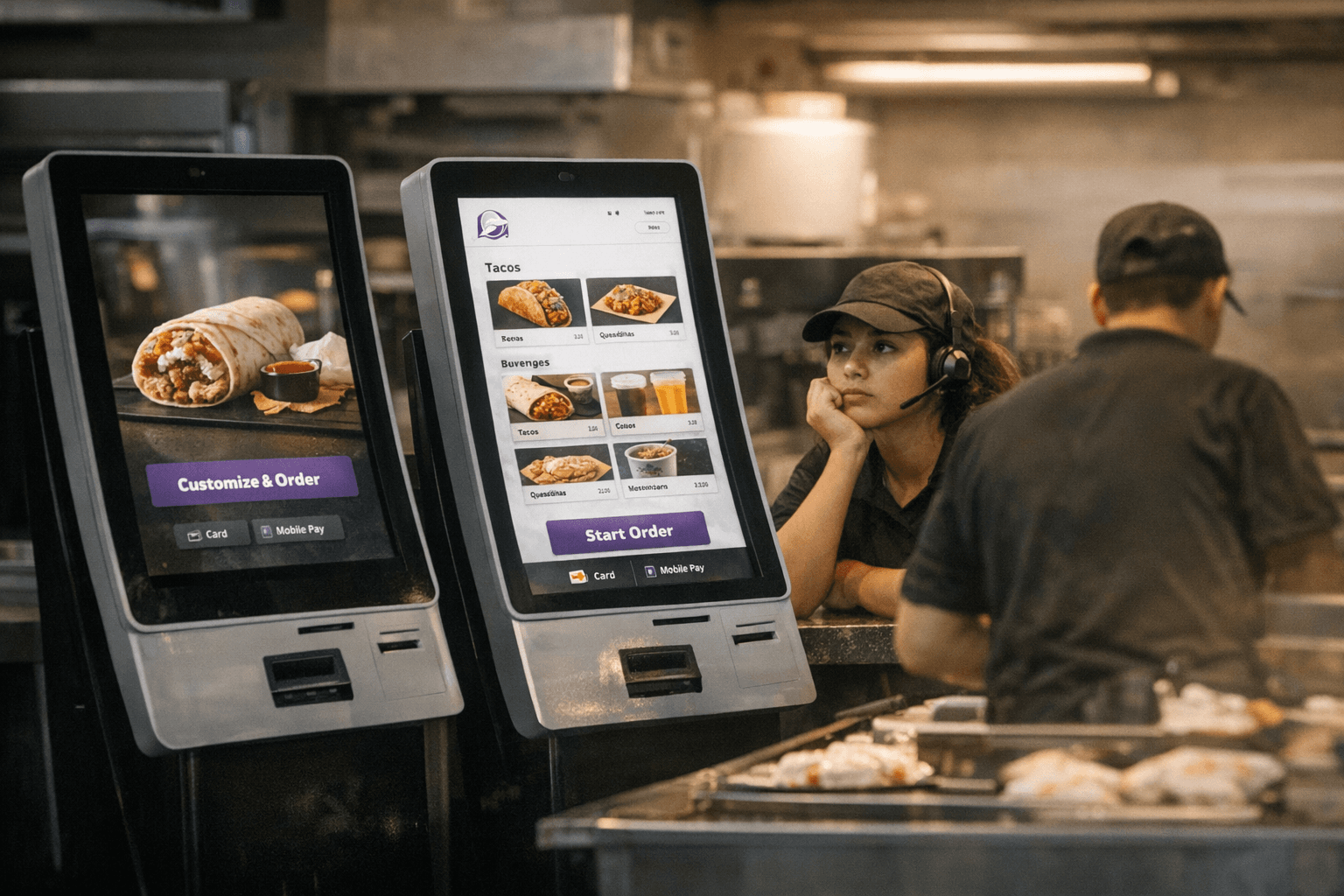
Stephen Owen walked into a Taco Bell on Mission Street in Santa Cruz and found something missing: printed menus. There were none on the walls. Customers ordered only from kiosks. The human order-taker, a position that defined fast-food entry-level work for decades, was gone.
That single observation sits at the center of a working paper Owen and a team of undergraduate researchers at UC Santa Cruz assembled after visiting and studying more than 100 fast-food franchise restaurants across Santa Cruz and the Central Valley. The paper, titled "Let Them Eat Big Macs, Crunchwraps, and Whoppers," examined what California's AB 1228, the $20 per hour sector-specific minimum wage that took effect in April 2024, has actually produced for workers at large chains.
"The results indicate a plethora of negative outcomes such as higher menu prices for consumers, reductions in employee working hours, widespread elimination of overtime and loss of benefits for employees," Owen said. "Further decreases in employee opportunities are being driven by automation and the adoption of labor replacement technologies is accelerating."
The numbers behind those outcomes are specific. Menu prices at affected establishments rose 14.5% following implementation. A Berkeley Research Group analysis, drawing on Bureau of Labor Statistics data, tallied 10,700 jobs lost in the sector between June 2023 and June 2024. Labor costs for franchise operators climbed roughly 25%, and the UC Santa Cruz team found that the dominant cost-management response combined schedule cuts, overtime elimination, benefit restructuring, and technology investment rather than simple price increases alone.
For Taco Bell crew in California, the kiosk story is not hypothetical. Owen's team specifically observed that Taco Bell, Burger King, and McDonald's franchises had all invested in automated kiosks for ordering and payment. Some were also piloting AI voice ordering systems and automated dishwashing. The Mission Street location showed the model at its furthest point: a store where front-of-house order-taking has been fully absorbed by machines, redirecting crew entirely to food prep and fulfillment.
That shift in task structure is the first concrete change crew members should track. If kiosk expansion has not come with cross-training conversations or a clear explanation of how roles are evolving, that communication gap is a management problem worth surfacing. Owen's team is explicit that the acceleration is not simply organic technological progress; it is a direct response to the 25% jump in labor costs the wage floor imposed.
The second pressure point is the paystub. The study flagged reduced overtime and eligibility challenges for healthcare and other benefits as franchises rebalanced their labor cost mix. If overtime that was once routine has disappeared without explanation, or if benefit eligibility thresholds have quietly shifted, those changes are precisely what the UC Santa Cruz research documented as widespread across the sector.
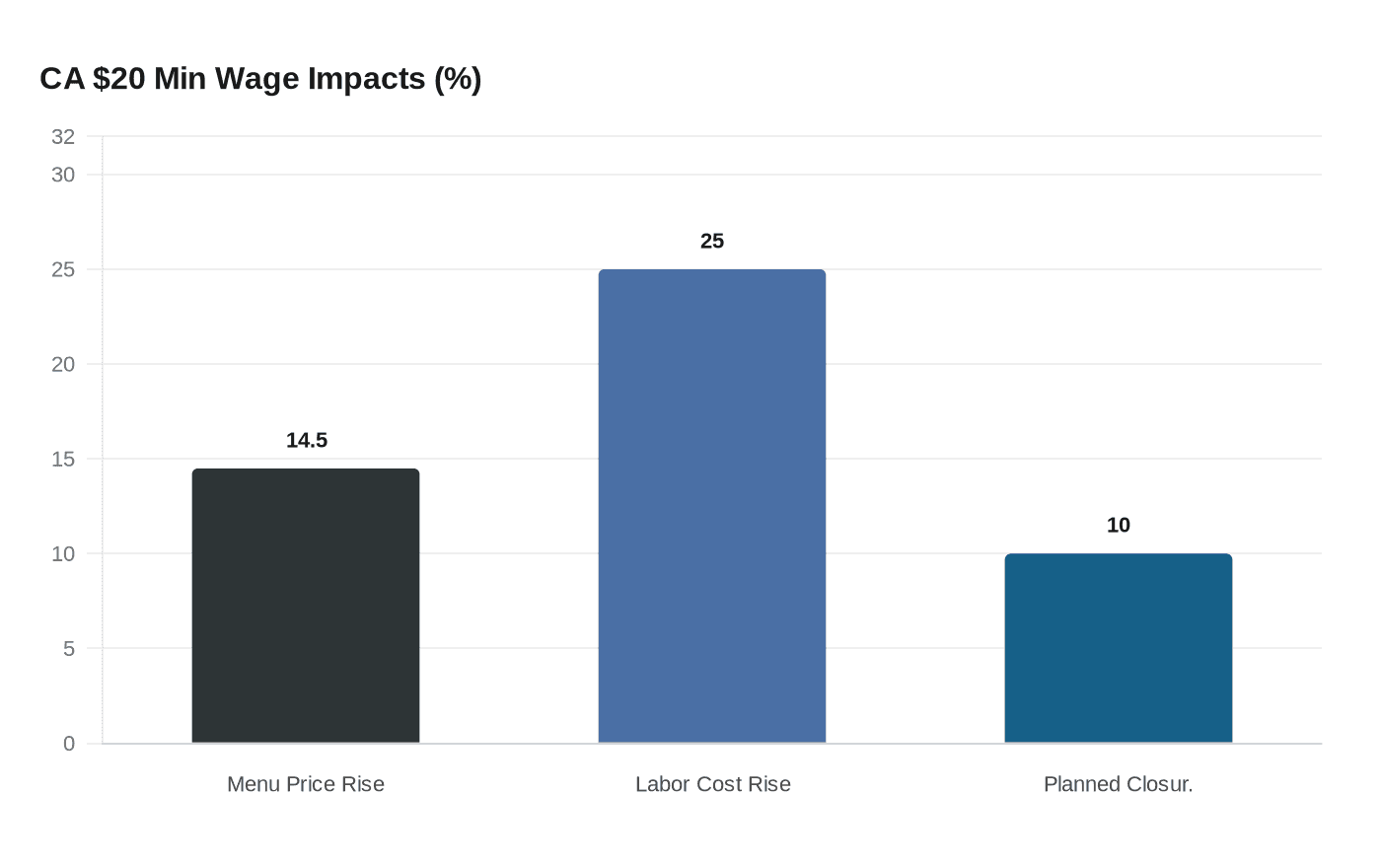
Owen framed the longer-term trajectory in terms that franchise operators should weigh carefully: "Businesses can absorb increased costs to a certain extent, but the question is for how long. I would argue that we will likely see closures ahead." One Burger King franchise owner in Northern California told his research team they plan to close the lowest-performing 10% of their locations within two years. That kind of calculus is now the backdrop for every scheduling and staffing decision California franchise operators make.
For Taco Bell managers in the state, the UC Santa Cruz paper signals that researchers and policymakers are tracking operational responses closely. Auditing schedules and payroll for compliance, documenting any changes with a clear business rationale, and briefing crew on technology transitions before confusion sets in are the operational basics that Owen's findings make impossible to defer.
This article was produced by Prism’s automated news system from verified source data, official records, and press releases, then run through automated quality and moderation checks before publishing. The system is built and supervised by the people who set the standards it runs under. Read our full AI policy.
Did this article answer your question?