Viral Videos Capture Taco Bell Staff Facing Unruly Customer Confrontations
Police were called to one Taco Bell Cantina 212 times in a single year, with trespassing among the top three incident types. The documented pattern shows where crew protocols break down before a confrontation turns into a police call.
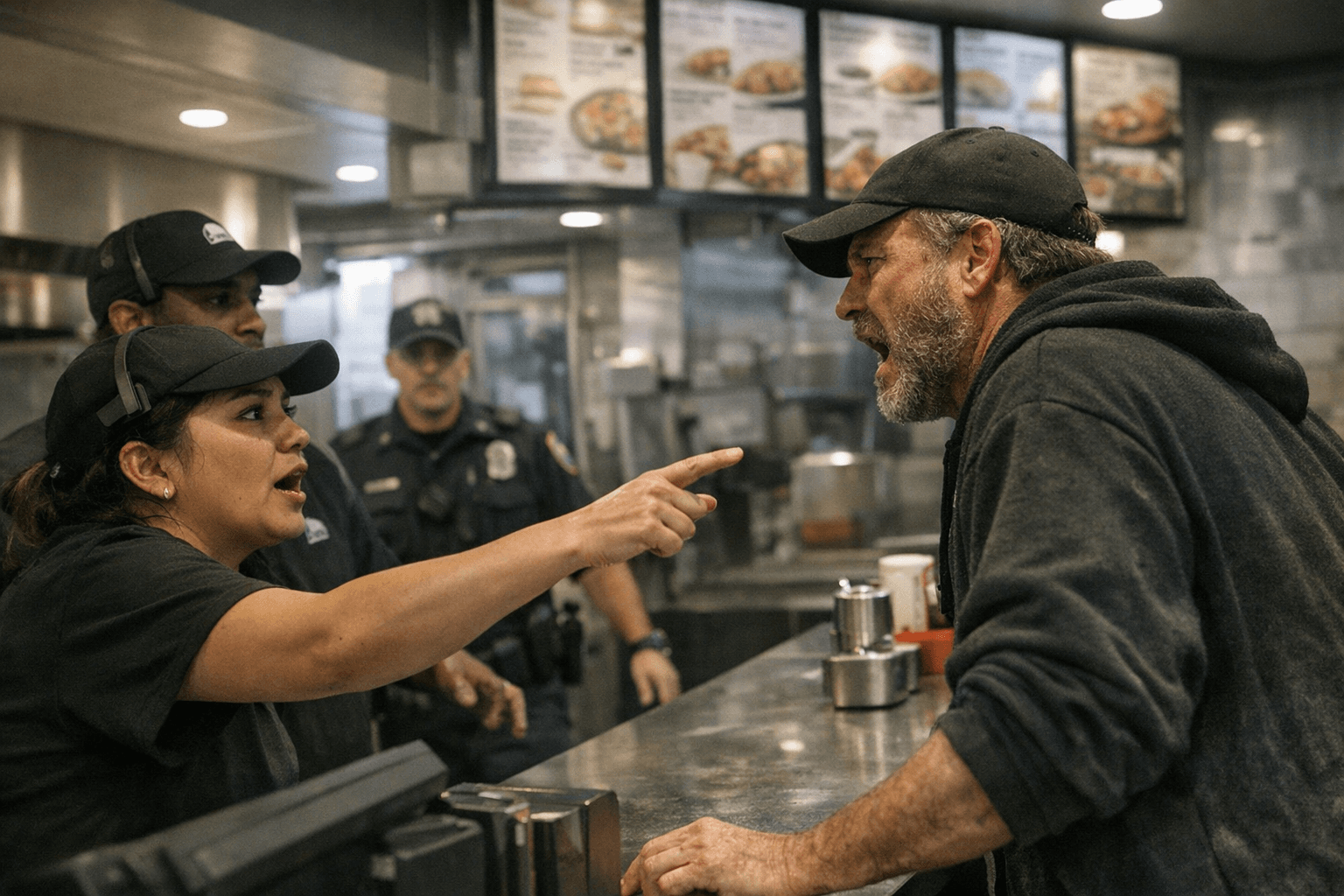
A group of customers at a Colorado Taco Bell walked in with a complaint about wrong orders and left having thrown drinks and food at the employees behind the counter. The February 2026 TikTok video spread quickly across social media, with comment sections splitting along a familiar line: some blamed the customers, others questioned whether the crew responded correctly. Taco Bell issued no public statement. No charges were filed.
That absence of a documented outcome is exactly the problem. Viral clips capture the spectacle. They almost never capture what should have happened in the 60 seconds before the first cup left someone's hand.
The Colorado video arrived as evidence accumulated that customer confrontations at Taco Bell locations are not isolated flare-ups. The Taco Bell Cantina at 1 South Orange Avenue in Orlando logged 212 police calls between August 2024 and August 2025, according to Orlando Police Department records. Trespassing accounted for 37 of those calls, making it the third most common incident type at a single address. Suspicious persons generated 53 reports; general disturbances added 38 more. Fights, thefts, drug violations, and a commercial burglary rounded out the year.
That is not a difficult location having a bad stretch. That is a location without a functional system for stopping a confrontation before it requires a squad car.
Most crew conflicts do not start with thrown drinks. They start with a wrong order, a longer-than-expected wait, or a customer who arrives already wound up. The window between complaint and escalation is almost always wider than it feels in the moment, and what happens in that window determines whether a shift manager fixes an order or calls 911.
The foundational principle of de-escalation is simple: acknowledge the complaint without debating it. Customers who feel heard are harder to keep angry. Lower your own voice; in most circumstances, the customer will mirror it. Where possible, move the conversation away from the main counter and away from any line of other customers who can become an audience. An audience makes de-escalation harder because the escalating customer is now performing for witnesses rather than solving a problem.
Offer a concrete remedy instead of an explanation. Explaining why the order was wrong tells the customer how the system failed them; a clear offer to fix it right now gives them a reason to stand down. Keep the response to one person. Multiple crew members engaging simultaneously signals threat, raises stakes, and often accelerates what it was meant to contain.
There is a point at which de-escalation is no longer the appropriate tool. Taco Bell, as a private business, has full legal authority to deny service and direct a customer to leave. That authority sits with a manager, not crew members at the register, and it should be exercised before physical contact, before the volume reaches other guests, and certainly before any object is thrown. The trigger for refusal is conduct, not the complaint itself. A customer furious about a wrong Crunchwrap has a grievance. A customer blocking the counter, directing abuse at crew, or physically threatening anyone on the floor has crossed into conduct grounds.
The refusal should be delivered clearly and once: "I need you to leave the restaurant now. I'll refund your order." No debate, no invitation for a crew member to add commentary from the side. One manager, one message, without heat.
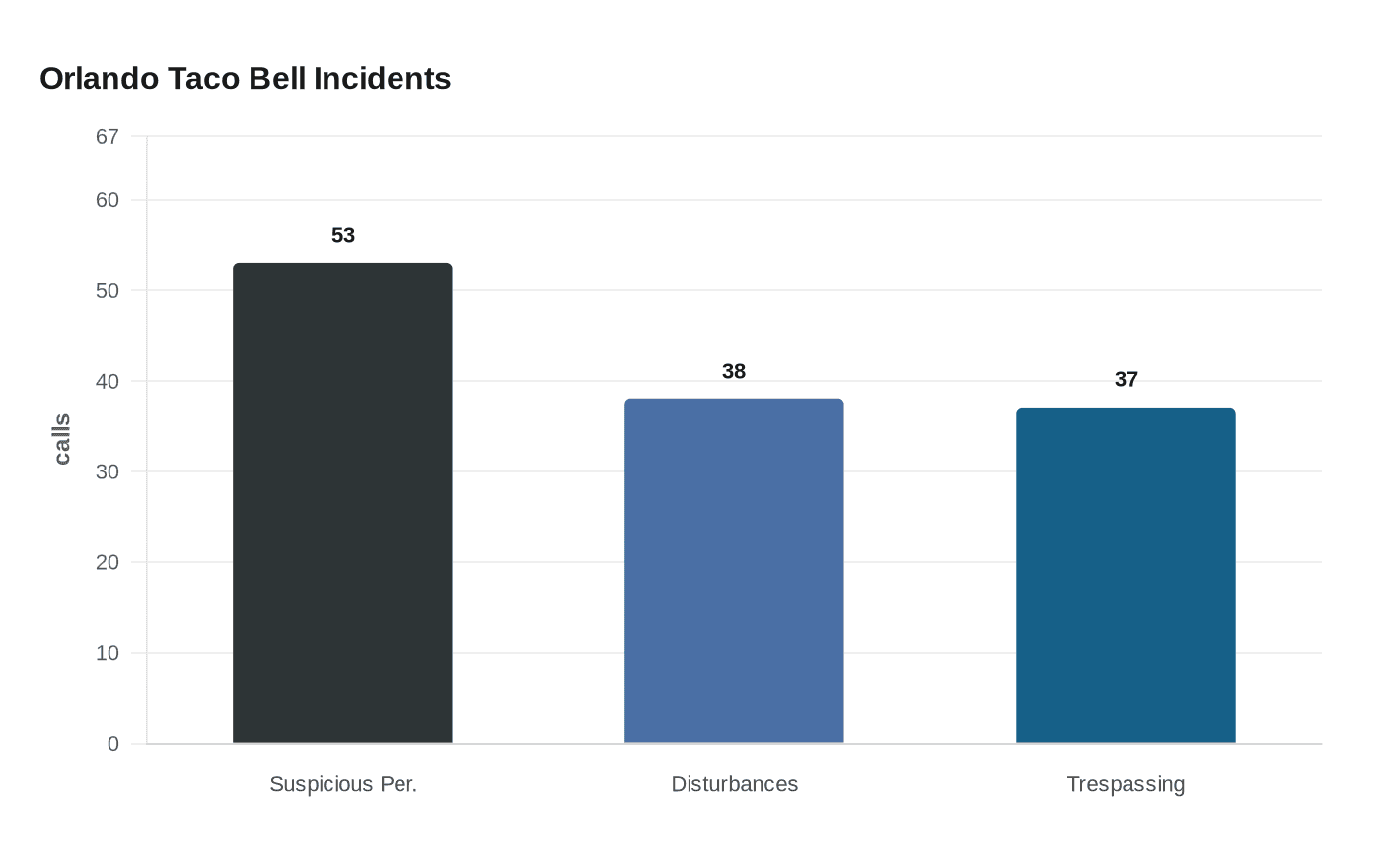
If the customer refuses to leave, the situation has moved past a service failure into a legal matter. Calling police at that point is the correct next procedural step, not an escalation of the conflict. When officers respond, a manager can request that a formal trespass warning be issued on the spot. In most jurisdictions, that warning legally prohibits the individual from returning to the property; a subsequent visit constitutes criminal trespass and is arrestable. The Orlando Cantina's 37 trespassing calls in 12 months indicate that formal warnings were being issued and that some individuals returned anyway, which is exactly the scenario where police documentation matters as much as their physical presence.
Managers should ask responding officers to put the warning in writing and retain a copy in the location's incident file. Those records carry weight when the franchise operator or corporate evaluates whether the location needs additional security staffing or a formal barring order.
A security guard at a downtown Los Angeles Taco Bell Cantina was filmed slapping a woman in the face on February 9, 2025, after she refused to leave the restaurant while trying to order at a self-service kiosk. Witness Alejandro Sanchez, 29, described the confrontation in real time. The guard was fired. Civil rights leaders demanded his arrest and launched protests at the location. The woman, however disruptive her refusal may have been, became the victim in every account that followed.
Physical force by non-law-enforcement personnel against a customer, absent an active physical threat to staff, strips a location of every legal and procedural protection it held before contact was made. The disruptive customer becomes the injured party. The guard and the franchisee absorb the liability. Crew members who did nothing wrong spend the next weeks fielding questions about what happened on their shift.
After any confrontation involving a refusal of service, a police call, or a physical threat, crew members should document the incident before clocking out. Write down the sequence of events, the names of any staff witnesses, and the exact times police were contacted and arrived. Most franchise operators maintain an incident reporting system; Taco Bell corporate maintains a workplace safety reporting line. Use both, even when the situation resolves without injury or charges.
Workers who believe their location lacks adequate protocols for managing disruptive customers have external options as well. OSHA's general duty clause requires employers to maintain a workplace free from recognized hazards, and repeated customer violence without a documented management response plan qualifies. In California, the FAST Recovery Act created a Fast Food Sector Council empowered to recommend de-escalation training requirements across the industry.
When a confrontation starts and a customer is no longer engaging with a problem but performing anger for the room, the first 60 seconds set the trajectory. Do not match the volume. If you are a crew member, get a manager to the counter immediately. If you are the manager, take a visible position between the customer and your crew. Reference the order number rather than the customer's name; it keeps the exchange transactional rather than personal. Offer the remedy clearly and once. If the customer refuses the remedy and continues escalating, say it plainly: "I'm going to need you to step aside so I can help you further, or I'll need to ask you to leave." One warning, no deadline you cannot enforce. If they do not move, ask them to leave. If they do not leave, call police. In that order, without improvising.
The Colorado video ended without police, without charges, and without any statement from the company. It also ended with multiple employees visibly overwhelmed behind a counter covered in someone else's drinks. That outcome is not the inevitable result of a hard shift. It is what happens when a crew faces a confrontation without a protocol and has to make it up as they go.
This article was produced by Prism’s automated news system from verified source data, official records, and press releases, then run through automated quality and moderation checks before publishing. The system is built and supervised by the people who set the standards it runs under. Read our full AI policy.
Did this article answer your question?