FDA retail food safety guide highlights Taco Bell crew hygiene priorities
Sesame’s addition as a major allergen and FDA’s illness tool turn routine Taco Bell hygiene into a shift checklist managers can use before the lunch rush.

A shift checklist built for the line, not the binder
The cleanest Taco Bell shift starts long before the first burrito is wrapped. FDA’s retail food protection resources pull the biggest food-safety risks into one place, and for crew members and managers that means the job is really about five moments that decide whether a store stays safe: handwashing, illness response, allergen control, sanitation, and food defense.
That matters because the FDA’s Food Code is not just a reference book. It is the agency’s model for a uniform system of provisions that protect food offered at retail and in food service, and FDA released the 2022 Food Code on December 28, 2022. In 2025, FDA marked the code’s 30th anniversary, a reminder that the rules crews work under are part of a long-running national standard, not a one-off compliance push.
Start with handwashing that survives a rush
In quick-service restaurants, hand hygiene is often the first habit to slide when the drive-thru stacks up or the line gets backed up. That is exactly why FDA’s Retail Food Protection page points operators to employee health and personal hygiene resources, including training materials built for the retail and food-service floor.
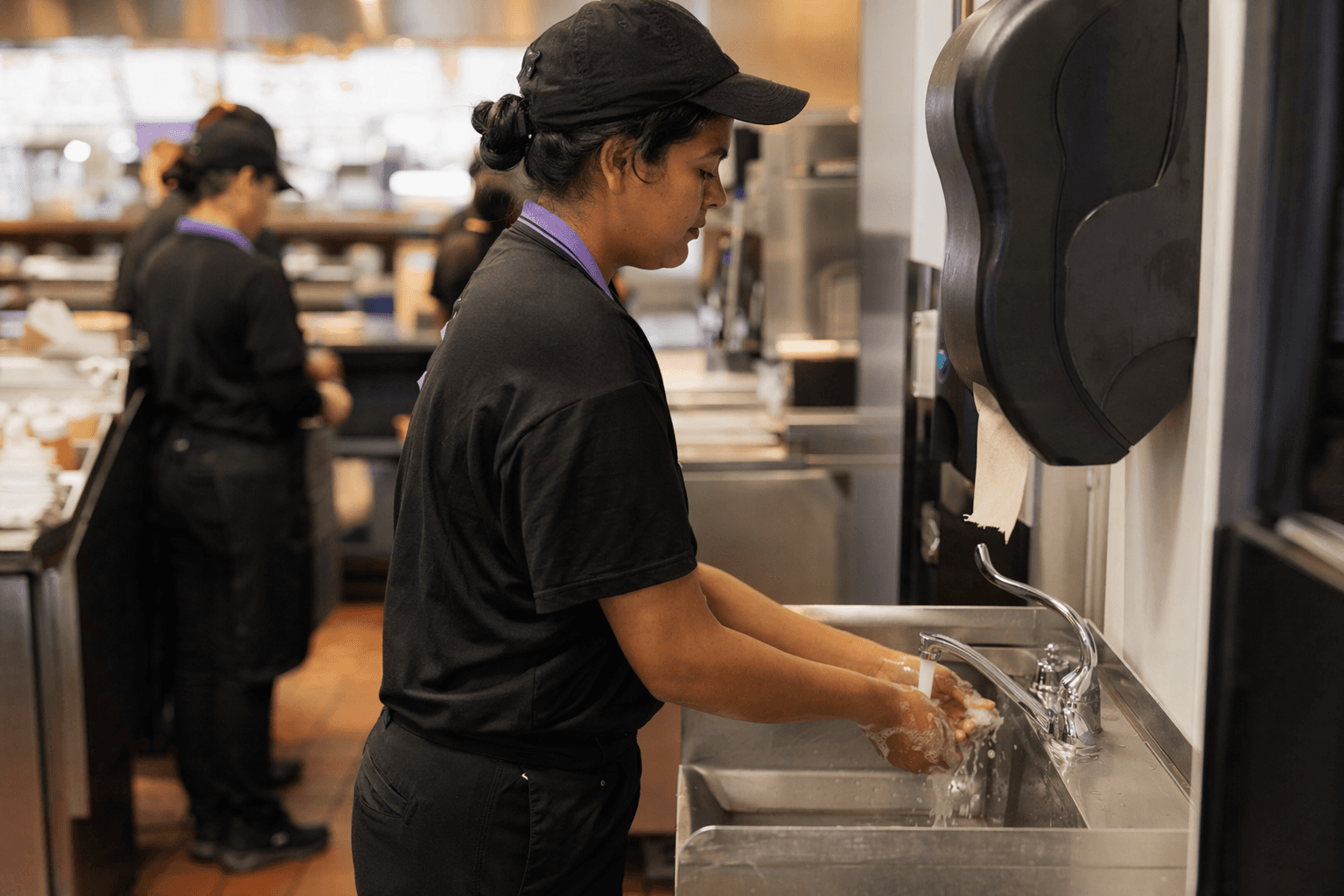
For Taco Bell crews, the practical rule is simple: wash hands before food handling, after touching anything that can contaminate food, and after any interruption that pulls someone off the line. The FDA’s employee health and personal hygiene handbook is built around behaviors that help prevent food employees from spreading bacteria and viruses, which is the real risk when a store is moving fast and shortcuts start to look harmless.
A manager should treat handwashing the way they treat the fryer or the cash drawer: as an operational control. If the sink is blocked, the soap is missing, or a new worker has not been shown when to stop and wash, the whole line is exposed.
Keep sick workers out of food-handling tasks
The fastest way to turn a normal shift into a public health problem is to let an ill worker keep handling food. FDA developed an Employee Health Policy Tool to help food establishments navigate illness restriction and exclusion requirements in the 2022 Food Code, and the agency says the tool is intended to help prevent the transmission of foodborne viruses and bacteria from ill employees.
That is not an HR side issue. It is a restaurant operations issue. If a crew member is vomiting, has diarrhea, or has another symptom that should trigger restriction or exclusion, the manager needs a clear call made early, before contamination spreads across shared tools, prep surfaces, or the make line.
For Taco Bell managers, the right move is to make illness reporting routine and low-drama. Crews should know that telling a shift lead they are sick is safer than pushing through a close-quarters rush, because one bad call can ripple into cleanup, product loss, failed inspections, and a store that is short-staffed anyway.
Treat allergen handling like a line-speed issue, not a special request
The allergen conversation has become more serious, not less. Starting January 1, 2023, sesame became the 9th major food allergen in the 2022 FDA Food Code and in federal law, which raised the stakes for label reading, ingredient checks, and cross-contact prevention across the industry.
FDA’s Retail Food Protection resources include allergen labeling guidance, and the agency hosted an educational webinar on allergen labeling for retail food stores and food-service establishments on December 18, 2024. That ongoing attention reflects a grim reality: FDA says allergic reactions to foods are the most common cause of anaphylaxis in the United States.
Taco Bell’s own allergen information shows why this matters on the floor. The chain says peanuts, tree nuts, fish, and shellfish are not used in regular menu items, but some allergens may appear in test and limited-time-only items. It also offers an allergen tool for customizing meals around eggs, milk, wheat, or soy. At the same time, Taco Bell says it does not claim any food as gluten-free because items are prepared in common kitchen areas, and common fryer oil can expose food to gluten.
That means the safe habit is not assuming a modifier button or a customer request solves the problem. Crew members still need to check ingredients, avoid cross-contact on utensils and surfaces, and understand that shared equipment changes the risk profile of even a simple build. For managers, allergen training has to be part of opening, onboarding, and menu-change briefings, especially when limited-time items hit the line.
Use sanitation to protect the line, the tools, and the customer
FDA’s retail food protection hub also points restaurants to foodborne illness and risk factor reduction resources, which is a useful reminder that sanitation is not one chore. It is a series of habits that reduce contamination across the shift.
For a Taco Bell store, that means keeping prep surfaces clean, changing out dirty tools, and making sure the same hands do not move from contamination-prone tasks to ready-to-eat food without a reset. The smaller the kitchen, the easier it is for one lapse to travel from one station to another.
Managers should think of sanitizing as part of flow control. If a line gets messy during a rush, the fix cannot wait until close. Wiping, switching gloves when appropriate, and resetting tools during the shift are often what prevent a minor mess from becoming a compounding safety problem.
Know what food defense means before an emergency forces the question
FDA defines food defense as the effort to protect food from intentional adulteration or tampering, and the Retail Food Protection page includes food defense and emergency response resources among its core topics. That makes the guide useful for more than everyday hygiene; it also gives operators a framework for the weird, rare, high-stakes events that can catch a restaurant off guard.
For managers, food defense means knowing who checks product integrity, what to do if packaging looks off, and how to respond if there is a contamination concern or emergency issue. The point is not paranoia. It is readiness, because a store that has a basic response plan can protect customers faster and get back to normal service with less confusion.
What Taco Bell managers should tighten before the next rush
- Keep handwashing stations ready and visible.
- Use the Employee Health Policy Tool to decide when illness means restriction or exclusion.
- Train crews on the sesame update and other allergen risks.
- Treat common fryer oil and shared prep areas as real cross-contact hazards.
- Build food defense checks into opening, receiving, and emergency response.
The FDA material points to a simple playbook that works on a Taco Bell shift:
This is the practical side of food safety: not a binder on a shelf, but a store that can keep serving without making avoidable mistakes. In a labor market where speed, staffing, and pay debates already stretch crews thin, the restaurants that run best are usually the ones that make hygiene part of the shift, not an afterthought at the end of it.
This article was produced by Prism’s automated news system from verified source data, official records, and press releases, then run through automated quality and moderation checks before publishing. The system is built and supervised by the people who set the standards it runs under. Read our full AI policy.
Did this article answer your question?