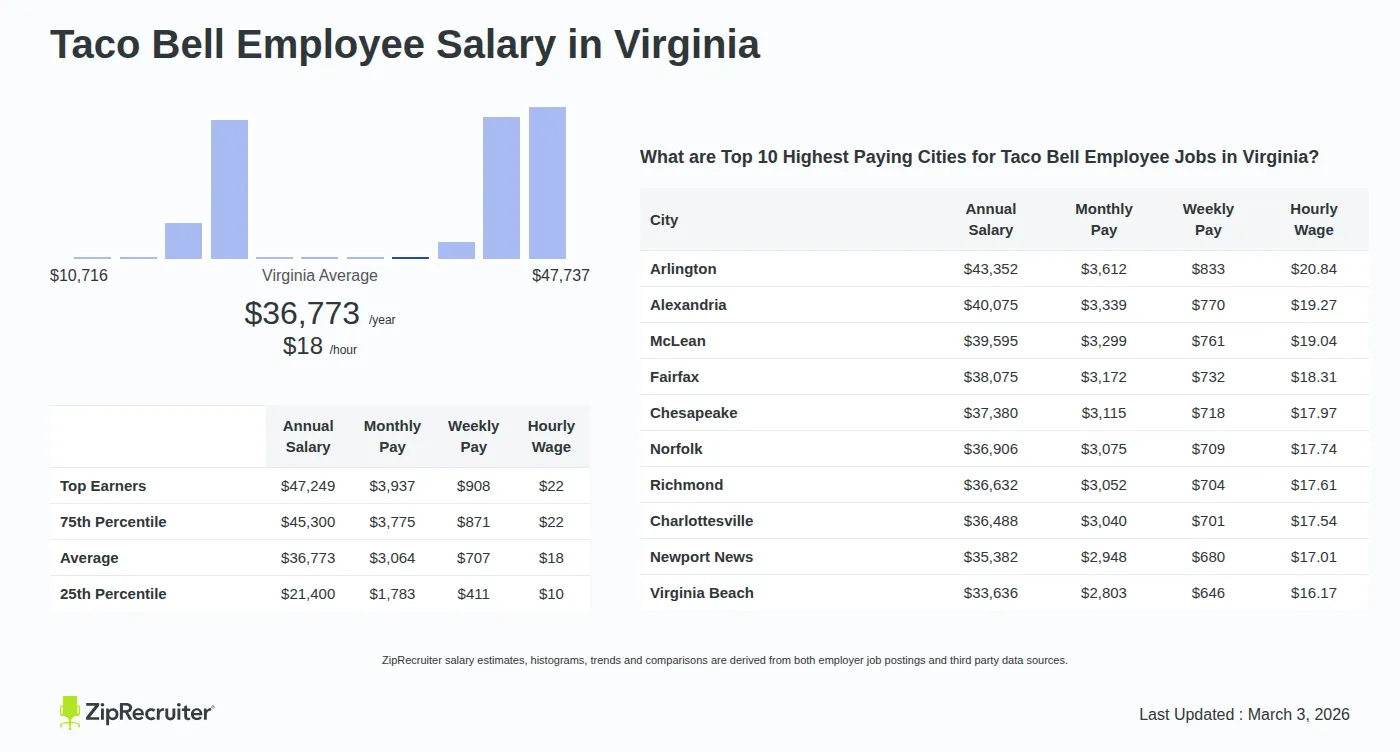
Restaurant Industry Adds 21,500 Jobs in March, Topping Pre-Pandemic Levels
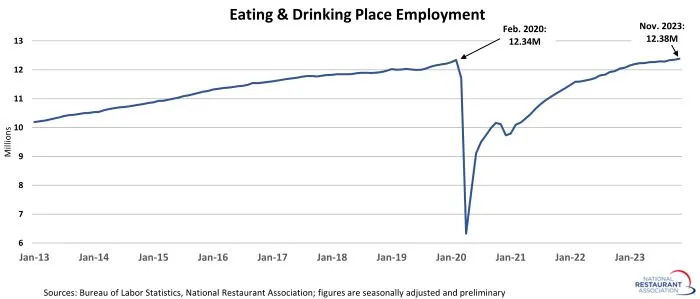
The National Restaurant Association reports eating and drinking places added 21,500 jobs in March, pushing the sector 76,800 above its pre-pandemic employment peak.
The National Restaurant Association's April 3 analysis of BLS March employment data delivered a number Taco Bell managers should write into their next 30-to-60-day staffing plan: 21,500 net new jobs added to eating and drinking places last month, on a seasonally adjusted basis. Cross-training your line crew now, before the next promotional push, is the single highest-leverage move that data supports.
That 21,500 figure brought the sector to approximately 76,800 jobs above its February 2020 employment peak, a milestone that marks the industry's full numerical recovery from the pandemic collapse. The NRA characterized the current labor market as "in expansion mode, albeit at a somewhat slower pace," attributing part of March's rebound to weather-related softness that had suppressed February's numbers.
The recovery comes with a caveat that matters more at the store level than the headline figure suggests. Year-over-year and quarterly growth have both slowed from the strong gains logged through the second half of 2025. The NRA flagged ongoing pressures from rising business costs and the early-stage footprint of automation as structural forces shaping how operators plan headcount. For a Taco Bell franchise manager scanning these numbers to decide whether to post a new hire listing, the honest read is: the market is adding jobs, but the pace signals targeted opportunism over broad ramp-ups.
Quick-service restaurants tend to move fastest in hiring recoveries. Their ability to scale hours rapidly and absorb demand spikes through modular roles gives them an advantage over full-service competitors. That same flexibility cuts both ways. When growth moderates, as the NRA data now indicates it has, QSRs also feel the pressure to sharpen payroll discipline, cutting speculative shifts and building schedules around tighter sales forecasts.
For shift managers at Taco Bell, that translates into a specific operational posture over the next month and a half. Rather than posting broadly for new crew, expect hiring to cluster around identifiable revenue windows: regional limited-time offers, late-night daypart growth, and delivery-driver capacity in markets where aggregator volume is rising. Each of those hiring moments is discrete and measurable, which makes the case for cross-training existing crew to cover multiple stations rather than adding net-new headcount at the margins.

Where national data can genuinely mislead a local operator is in applicant flow assumptions. A sector-wide net gain of 21,500 jobs tells you the industry absorbed more workers than it shed in March. It does not tell you whether a Taco Bell in a college town with a new competitor down the street is seeing more or fewer applicants per posting. Local wage benchmarks, competitor shift premiums, and school-calendar hiring cycles will shape your actual recruiting environment more than the BLS aggregate. The NRA's own guidance points operators toward local data comparisons as the more actionable layer.
Retention, not recruiting volume, may be the sharper lever right now. Because hourly talent is still competitive and workers are weighing multiple offers, predictable scheduling and visible career pathways, from crew to shift lead to assistant manager to restaurant general manager, carry real weight in a candidate's decision to stay or leave. A predictable 35-hour schedule beats an unpredictable 40-hour one for most crew members, and communicating clearly about why shift structures change when sales patterns shift reduces the ambient uncertainty that often drives quiet turnover before a manager notices the gap on the board.
The sector's position above its pre-pandemic employment peak is real. For Taco Bell operators, the more useful frame is that the industry has finished rebuilding its baseline; the next phase is about efficiency and retention, not headcount recovery.
This article was produced by Prism’s automated news system from verified source data, official records, and press releases, then run through automated quality and moderation checks before publishing. The system is built and supervised by the people who set the standards it runs under. Read our full AI policy.
Did this article answer your question?