Taco Bell managers face uneven labor recovery, retention still key
Taco Bell stores may be past the worst hiring crunch, but uneven staffing still means a strong week can vanish by Friday night.
A Taco Bell can look stable on paper and still be one callout away from a bad dinner rush. That is the reality of a labor market that has cooled from the pandemic scramble but has not fully settled into normal, especially for stores that depend on steady crew coverage, predictable schedules, and managers who can keep people from leaving.
The National Restaurant Association said eating and drinking places were only 71,400 jobs, or 0.6%, above their February 2020 peak as of April 2026. That gain masks the unevenness underneath: staffing was still below pre-pandemic levels in 18 states and the District of Columbia, and West Virginia had nearly 6% fewer eating-and-drinking-place jobs in the fourth quarter of 2025 than in the fourth quarter of 2019. Limited-service restaurants were doing better than full-service, but the broader message was clear: recovery has not looked the same everywhere.
For Taco Bell managers, that means applicant flow can improve without solving the real problem. A store may get more resumes, but if callouts are still frequent, if turnover keeps pulling experienced crew out of the schedule, or if raise expectations keep climbing faster than labor budgets, the unit can still feel short-handed. The practical pressure now is less about getting anyone hired and more about keeping the right people long enough to make cross-training, shift leadership, and labor forecasting actually work when value traffic spikes or a Friday night drive-thru line stretches out the door.
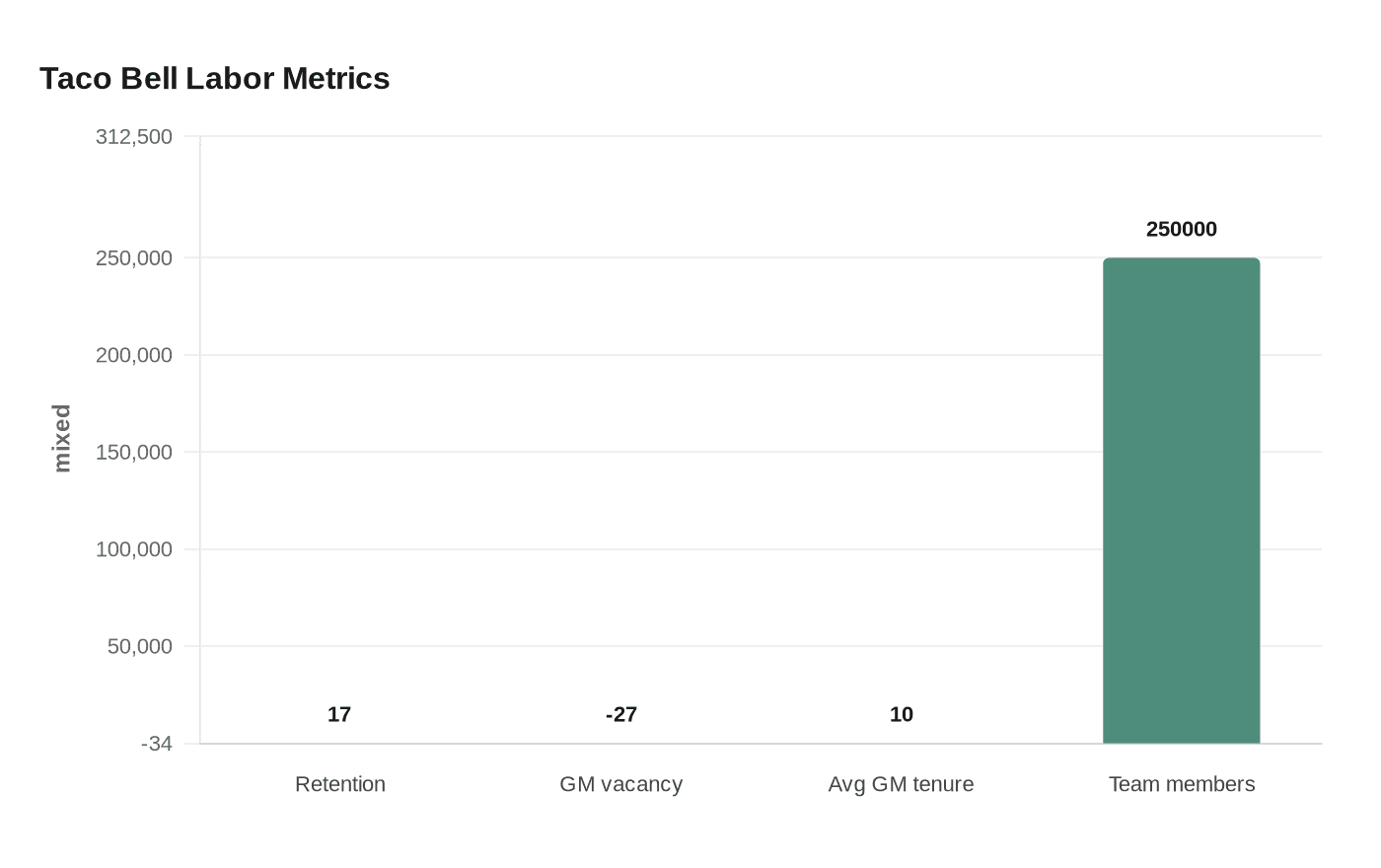
Taco Bell has been pointing to some progress inside its own system. In 2025, team-member retention in company-owned restaurants improved 17% year over year, restaurant general-manager vacancy fell 27%, and the brand said average general managers had spent 10 years with Taco Bell. The company also said it has more than 250,000 U.S. team members and is expanding education benefits through its Tacos & Tuition program, including participating franchised locations. For crew and shift leaders, those numbers suggest the company knows the labor fight is won or lost in day-to-day retention, not just recruiting campaigns.
The broader restaurant picture still looks mixed. The National Restaurant Association projected 1.3% real sales growth and more than 100,000 new industry jobs in 2026, even as it warned that cooling labor conditions, persistent cost pressures, and cautious household spending would keep margins tight. BLS data showed a 5.5% job-openings rate in accommodation and food services in March 2026, while the U.S. unemployment rate was 4.4% in February 2026. Restaurants are no longer in the emergency hiring phase, but they are not in an easy one either, and Taco Bell operators who miss that shift risk building schedules that break the moment demand turns choppy.
This article was produced by Prism’s automated news system from verified source data, official records, and press releases, then run through automated quality and moderation checks before publishing. The system is built and supervised by the people who set the standards it runs under. Read our full AI policy.
Did this article answer your question?