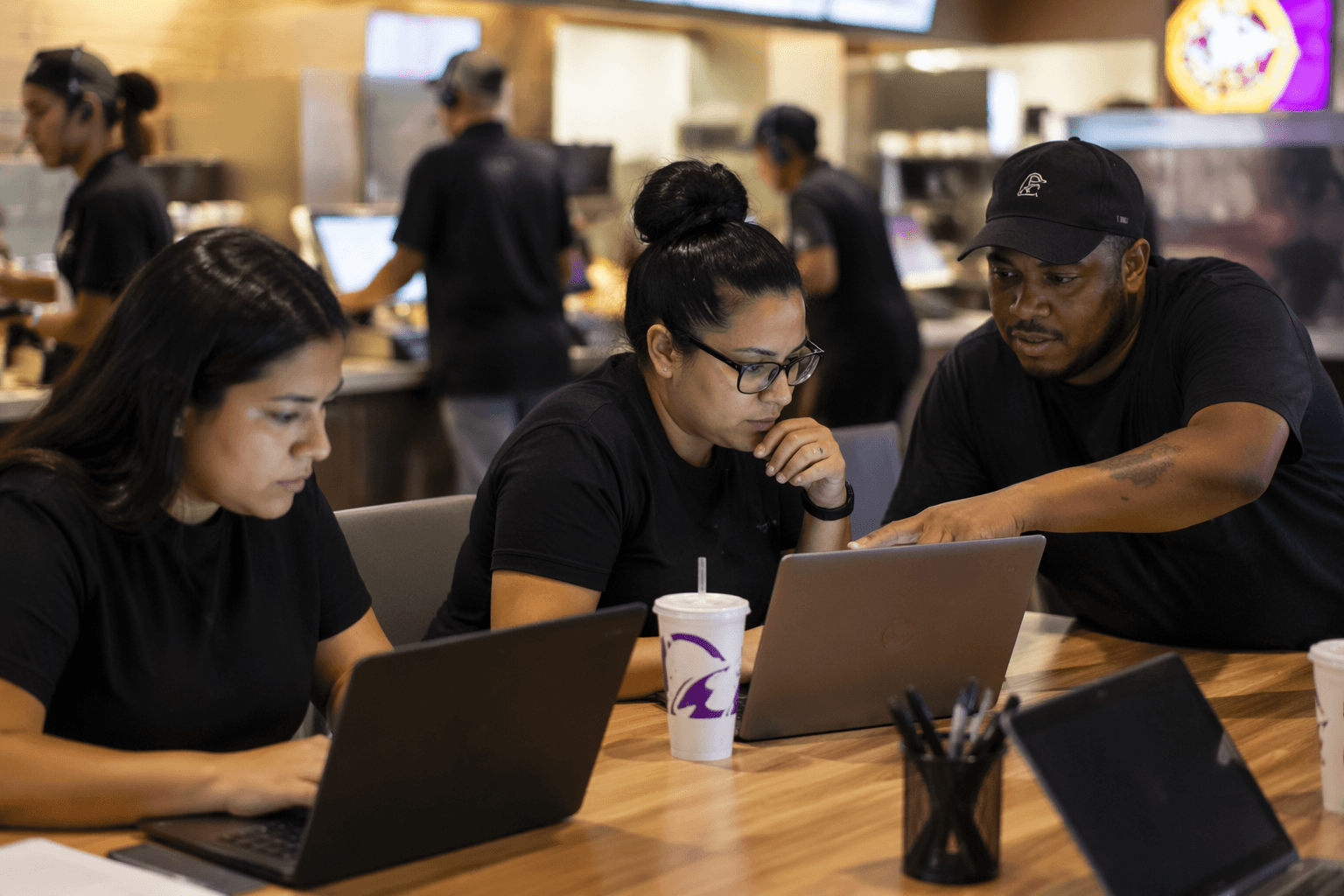
Taco Bell managers weigh automation tools for hiring, training, and labor shortages
Taco Bell's real automation win is not flash, but fewer bottlenecks: faster hiring, cleaner handoffs, and quicker drive-thrus without hollowing out crews.

The right test for automation
Taco Bell managers do not need more futuristic buzzwords. They need tools that cut low-value work, speed service, and improve accuracy without making a busy shift feel more fragile. That is the standard the National Restaurant Association pushes in its automation guide, which treats robotics and software as answers to repetitive work, bottlenecks, and tedious tasks, not as a cure-all. The association says the global food automation market is projected to reach $28 billion by 2026, and 47 percent of operators expect technology and automation to become more common as a response to labor shortages.

That framing matters because the easiest automation pitch is often the worst one in practice. A tool only earns its place if it helps a restaurant run more smoothly on a packed night, not if it adds another screen, another login, or another handoff for already stretched crew members. The best systems should give time back to the people who are still doing the hardest work: taking orders, assembling food accurately, keeping the line moving, and fixing problems before they become a bad customer experience.
Where Taco Bell is already pushing in
Taco Bell is not treating automation as a side project. On July 31, 2024, Yum! Brands said it would expand voice AI ordering across Taco Bell drive-thrus in the United States to hundreds of stores by the end of 2024. At the time, the system was already live in more than 100 Taco Bell drive-thrus across 13 states, a scale that makes this more than a pilot and less than a promise.
The company said the rollout was meant to improve back-of-house operations for team members and elevate the customer ordering experience. Yum! said the benefits included easing task load, improving order accuracy, providing a consistent friendly experience, and reducing wait times. That is the strongest argument for automation in a Taco Bell setting: if the machine absorbs some of the repetitive burden, the crew can stay focused on the parts of the job guests notice most.
The timing also matters. Restaurant Dive reported that Taco Bell tested voice AI in five California restaurants in the first quarter of 2024 before widening the rollout. That sequence, from small test to broader deployment, is a reminder that restaurant automation works best when it is proven in real service conditions, not just in a sales demo.
The jobs worth automating first
For Taco Bell managers, the most useful automation opportunities are rarely the dramatic ones. Applicant tracking systems and AI assistants can sort applications, schedule interviews, and screen for basic requirements, which is especially useful in a high-turnover business where no shift manager has time to manually chase every candidate. The same logic applies to back-office planning, labor forecasting, and other repetitive tasks that eat into the hours managers need for coaching and floor coverage.
The National Restaurant Association says its 2024 technology materials show 52 percent of operators planned to invest in back-office tech, and 76 percent believed technology gives them a competitive edge. That lines up with what works in restaurants: the tools that usually pay off are the ones that remove administrative drag, improve scheduling, and make it easier to match labor to demand.
The association’s automation guide also points to broader use cases, including hiring, training, delivery, and dish bussing. Not every Taco Bell store will use all of those functions the same way, but the principle is consistent. Start with work that is repetitive, predictable, and easy to measure. If a system helps with ordering, prep, or labor planning, it should buy back time for accuracy, friendliness, and speed.
What the numbers say about the pressure Taco Bell is under
Speed has always been part of Taco Bell’s brand, which raises the bar for any new tool. Restaurant Dive reported that Taco Bell had the fastest total average drive-thru time among major QSR brands at 278 seconds in 2023. That makes automation a competitive question as much as a labor question. If a tool slows down the lane, complicates order taking, or creates confusion for crew members, it works against one of the chain’s clearest strengths.
That is why the best way to judge new tech is simple: does it reduce friction without reducing flexibility? Managers still need enough staffing to handle rushes, cover callouts, and solve the problems a machine cannot. Automation should support the shift, not lock it into a rigid process that fails the moment orders spike or the line gets messy.
A useful manager checklist looks like this:
- Does the tool remove repetitive work instead of shifting it onto someone else?
- Does it improve order accuracy, labor planning, or training consistency?
- Does it help crew members move faster during a rush?
- Does it preserve enough staffing flexibility to handle bad weather, callouts, and peak periods?
- Does it leave morale intact, or does it make people feel watched, replaced, or slowed down?
If the answer to those questions is mostly yes, the tool has a case. If not, it is probably just adding noise.
Why Yum! is moving faster now
Taco Bell’s current automation push fits into a longer company pattern. In summer 2023, Taco Bell held its first-ever Restless Innovation Challenge, bringing in 20 volunteers from the Taco Bell Corp. Technology Department to work on ideas that could improve restaurant support. That kind of internal experimentation shows the company has been building its automation mindset from the inside, not just buying off-the-shelf technology.
The strategy broadened in 2025. In February, Yum! Brands introduced Byte by Yum!, an AI-driven SaaS platform meant to streamline operations across Taco Bell, KFC, Pizza Hut, and Habit Burger & Grill. In March, Yum! Brands announced an AI collaboration with NVIDIA and described itself as NVIDIA’s first AI restaurant partner. Put together, those moves suggest Taco Bell’s automation story is not a single feature or a short-lived test. It is part of a larger multi-brand effort to standardize tools, speed up service, and relieve some of the most repetitive work in restaurant operations.
For crews and managers, that means the real question is no longer whether automation is coming. It is whether each new system makes the job easier to run without making the people who run it feel disposable. The tools that win will be the ones that clear away low-value work and leave more room for the human parts of the shift that still matter most.
This article was produced by Prism’s automated news system from verified source data, official records, and press releases, then run through automated quality and moderation checks before publishing. The system is built and supervised by the people who set the standards it runs under. Read our full AI policy.
Did this article answer your question?