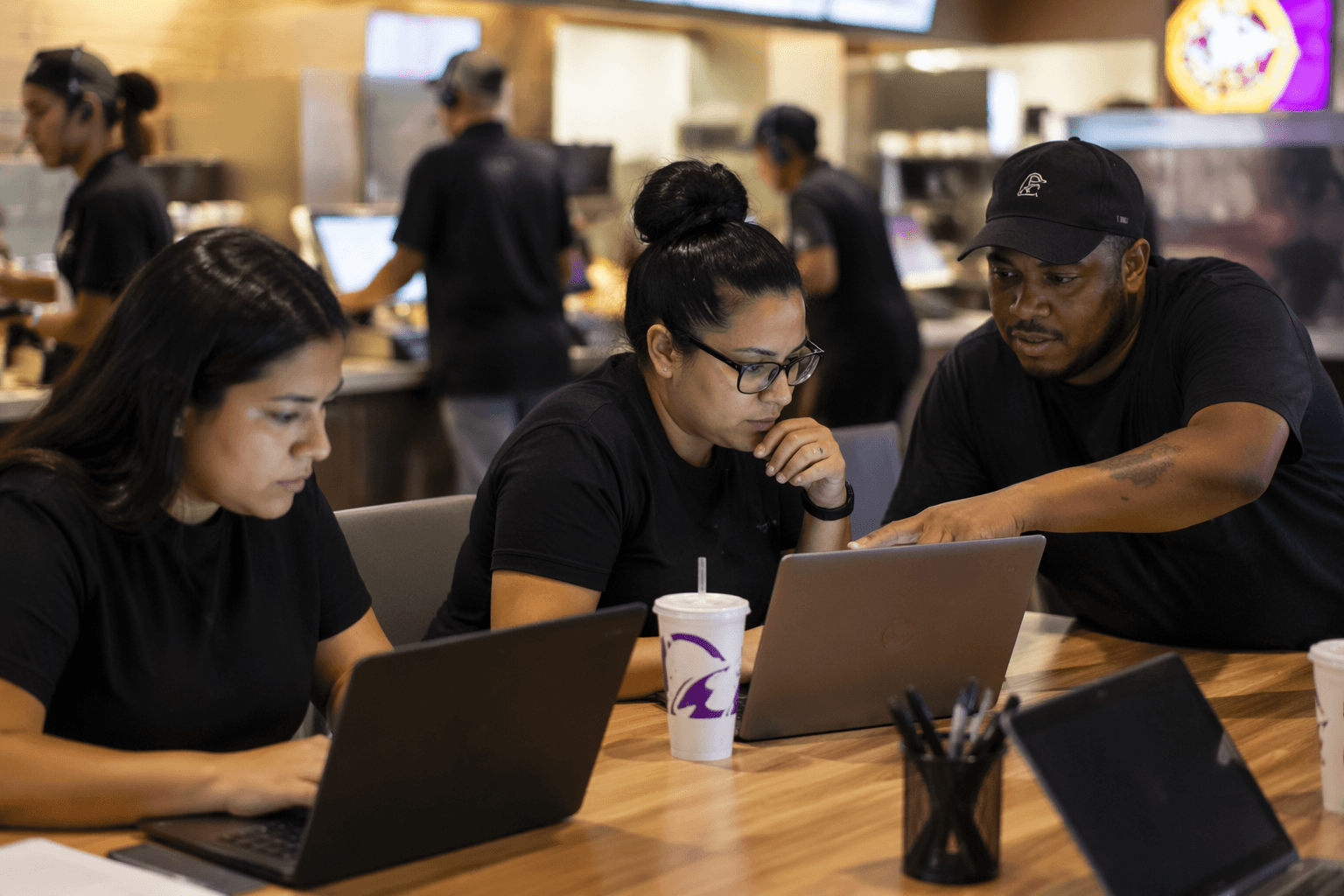
Taco Bell wage debates stay local as labor costs, tips collide
A Boulder pay fight shows Taco Bell crews cannot rely on one national wage rule. In Denver or Boulder, the city line can change base pay, tips, and scheduling fast.
Local wage rules now matter more than a national talking point
The clearest lesson for Taco Bell crews is simple: wage fights are being settled city by city, not by one rule that covers every store the same way. Brian C. Keegan’s Boulder Reporting Lab column argues that the case for slowing tipped-wage increases rests on a myth that restaurant workers are already doing well, and the numbers in Colorado show why that argument keeps landing differently from one market to the next.
For Taco Bell workers, that means the real paycheck story is often local. In some stores, the pressure is about a higher base wage and overtime calculations. In others, especially where delivery or hybrid service models blur the lines, managers have to think about tips, tip-equivalent pay, and payroll compliance at the same time. The broader restaurant debate also shapes how legislators view the industry, how franchisees budget for staffing, and how workers decide whether the business is playing fair.
What changed in Boulder, and why Taco Bell workers should care
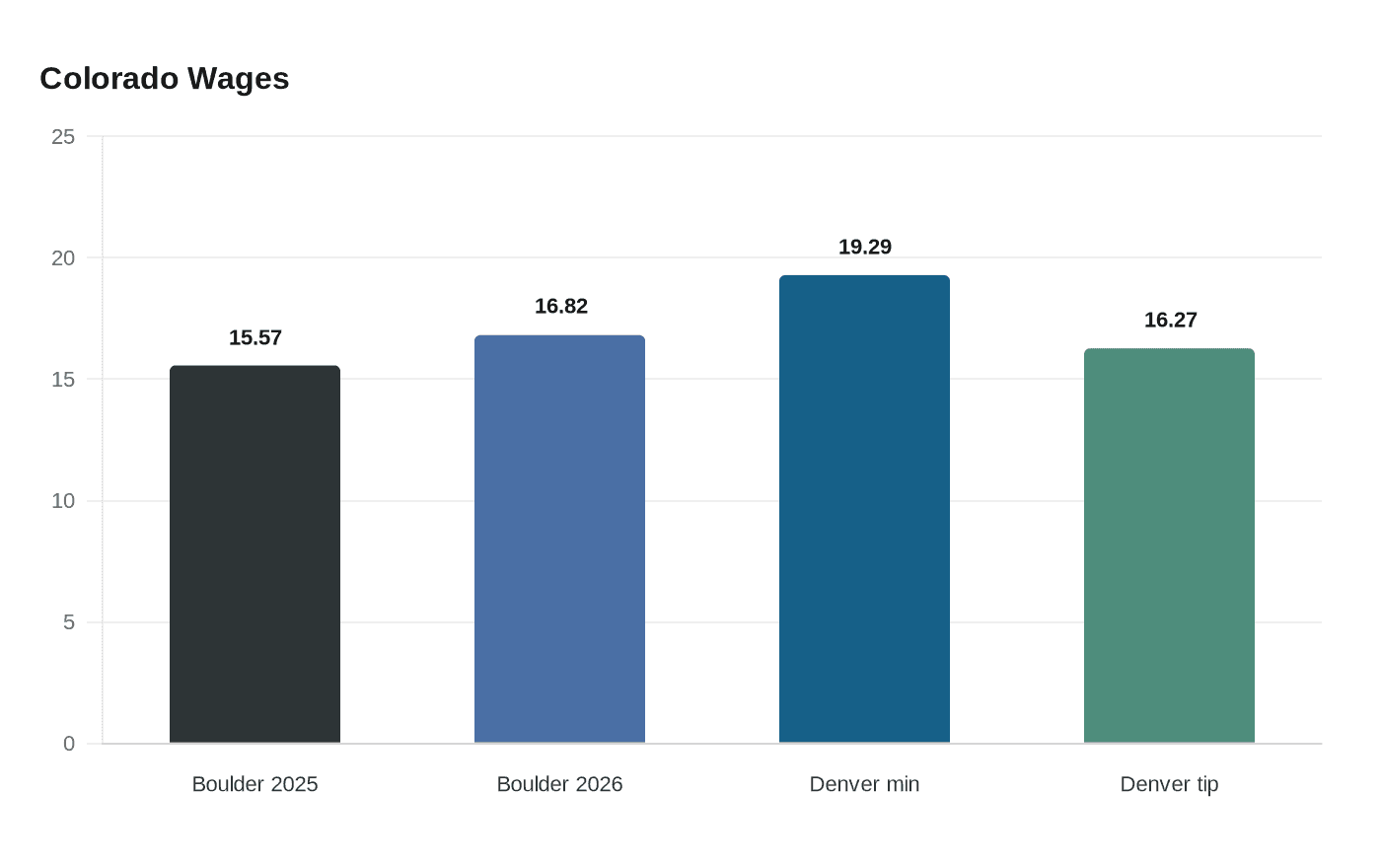
Boulder City Council approved Ordinance 8664 on Nov. 7, 2024, setting the city minimum wage at $15.57 for 2025 and $16.82 for 2026. The local rule is not static either: Boulder’s minimum wage rises 8% in 2025, 2026, and 2027, then follows CPI-U after that. For anyone on a Taco Bell schedule in Boulder, that is not a policy abstract, it is the floor that shapes every shift.
The tipped side is just as important. Boulder’s 2026 base wage for tipped employees is $13.80 because Colorado’s standard tip offset remains $3.02 unless a local government changes it. Colorado law still requires tipped workers to earn at least the full minimum wage after tips; if tips do not make up the difference, the employer has to cover it. Tips belong to the employee who receives them unless there is a valid tip pool, and mandatory charges labeled as gratuities must go only to tipped employees.
That is the kind of rule that can reach Taco Bell in ways workers may not expect. Even if a store is not built around tips the way a full-service restaurant is, wage policy still affects hiring, training, scheduling, and whether management treats every hour as a cost to be squeezed or a position to be staffed correctly.
Denver, Boulder, and the wider Colorado split
Colorado’s tipped-wage debate is local because the pay numbers are local. Denver’s 2026 minimum wage is $19.29 per hour, and its qualified tipped-worker wage is $16.27 per hour so long as workers receive $3.02 in documented tips. Boulder’s 2026 minimum wage is lower at $16.82, but the city is still pulling on the same policy lever: a city-specific wage that keeps rising faster than a lot of operators would like.
That local split is exactly why one Taco Bell franchise can face a very different labor bill than another just a few miles away. A manager looking at staffing in Denver is dealing with a different minimum wage than a manager in Boulder, and both are operating under rules that affect what a posted shift costs before a single taco is wrapped. When labor costs rise faster than menu prices or customer demand, the tension shows up first in payroll, then in scheduling, then in turnover.
Colorado’s legislature added another layer on June 3, 2025, when Gov. Jared Polis signed HB25-1208. The law allows local governments that already set higher minimum wages to consider increasing their tip offset, but not below the statewide floor. In other words, the state did not flatten the rules into one simple standard. It gave cities with their own wage systems more room to adjust, which keeps the debate local and makes compliance more complicated for chains that operate across multiple markets.
The Colorado legislative fiscal note estimated 85,000 statewide workers in tipped jobs, including about 21,000 in Denver and Boulder counties combined. That is a big enough group to explain why restaurant lobbying stays loud, but it is also a reminder that the real pressure lands at the store level, on the people clocking in and trying to keep labor aligned with demand.
How the debate hits the floor, not just the headlines
Public arguments about tipped wages do more than fill council chambers. They affect staffing expectations, payroll systems, and the level of trust between workers and managers. If owners talk as if wage increases are a threat, crews tend to hear that message in the schedule: fewer hours, tighter labor targets, or a harder push to cover more work with fewer people.
Boulder’s debate shows that the politics are not one-sided. City leaders have framed the wage policy as a response to community needs and cost of living, while restaurant advocates argue that the pace of increases is squeezing margins. In local coverage of the minimum-wage fight, Councilmember Tara Winer said a faster increase would have put too much stress on businesses coming out of the pandemic. Labor advocates and many public commenters pushed in the opposite direction, arguing that pay needs to move higher.
For Taco Bell employees, the useful takeaway is not which side won a hearing. It is that the local wage fight can affect what a job looks like next month. A higher floor can change whether a store adds a closer, splits shifts differently, or keeps more experienced workers instead of constantly rehiring.
Franchise, corporate, and the right place to raise a problem
Taco Bell’s structure matters here because pay issues do not run through one universal chainwide office. Franchise employees are directed to the franchise’s corporate office or HR team for employment issues, while Taco Bell corporate employees have a separate Speak Up Helpline. That split can decide how fast a complaint moves and who is responsible for fixing it.
For shift managers and restaurant managers, the practical response is not complicated, even if the law is. Keep wage postings current. Keep payroll records clean. Make sure schedules match the wage rules in your city, not the one a neighboring store follows. If the store operates under a local minimum wage or any tipped-wage rule, errors in hours, tips, or overtime can quickly turn into complaints, turnover, or enforcement actions.
The bigger lesson from Boulder is that workers do best when they know the actual rules in their market, not the version management repeats from memory. A Taco Bell crew member in Boulder, Denver, or elsewhere in Colorado should not assume the company’s internal shorthand is enough.
Check your city and state rule before the next schedule posts
If you work at Taco Bell, the rule to remember is straightforward: check your city and state wage law, then compare it with what your store is actually paying. Boulder’s 2026 minimum wage is $16.82, Denver’s is $19.29, and Colorado’s tipped-wage structure still depends on the $3.02 offset unless a local government changes it.
That is why the debate stays local. A federal headline may set the tone, but the paycheck is shaped by the city line, the franchise agreement, and the accuracy of the payroll system. In the restaurant business, those details are where fairness is either proven or lost.
This article was produced by Prism’s automated news system from verified source data, official records, and press releases, then run through automated quality and moderation checks before publishing. The system is built and supervised by the people who set the standards it runs under. Read our full AI policy.
Did this article answer your question?