Taco Bell workers may be misclassified, Labor Department warns on contractor status
A federal rule change and Taco Bell’s own wage cases show how a contractor label can erase overtime, records and benefits from the schedule to the payroll system.
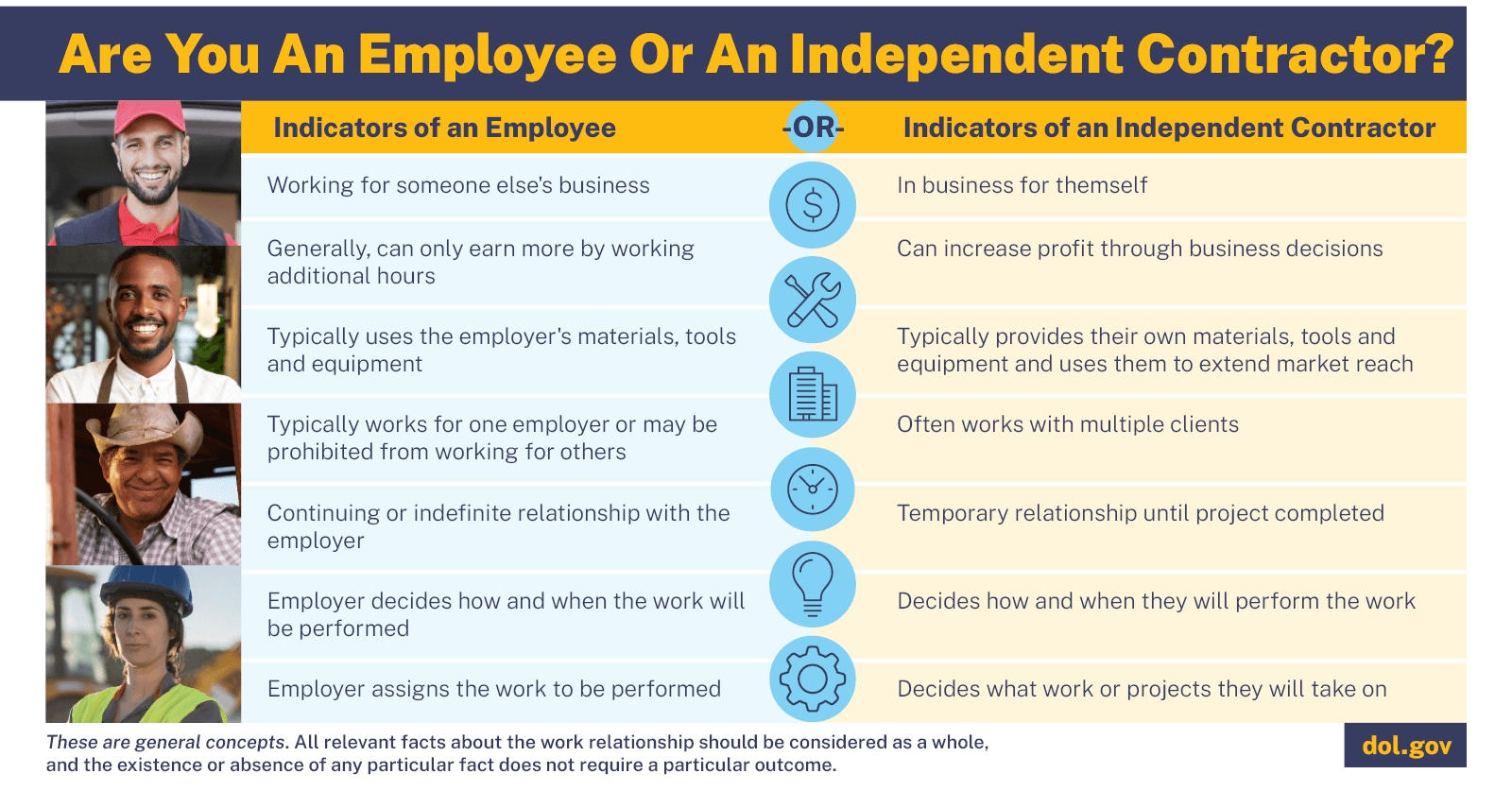
A worker who clocks in for fixed shifts, takes direction from a manager and handles core restaurant tasks is usually not acting like a freelancer, even if someone in the chain calls the job a contractor role. That label can decide whether Taco Bell payroll owes minimum wage, overtime and proper records, and the Labor Department sharpened that standard with a final rule issued on January 10, 2024, effective March 11, 2024. The Fair Labor Standards Act, enacted in 1938, generally requires covered employers to pay nonexempt employees at least minimum wage, time-and-a-half after 40 hours in a workweek, keep certain records and avoid retaliation.
At restaurant level, the problem is not abstract. Taco Bell runs on scheduled shifts, direct supervision and defined duties, which usually look nothing like an independent contractor arrangement. When a franchisee or labor vendor tries to solve a staffing problem by slapping on a contractor label, the risk can spread fast through payroll, overtime calculations, tax reporting and the chain of accountability for wage violations. For crew members, the practical signal is simple: if the job is controlled by the restaurant, not by the worker, the law may treat it as employment no matter what the paperwork says.
Taco Bell’s own cases show how expensive that mistake can get. In July 2022, the Labor Department said it recovered $56,900 for 31 assistant general managers at six North Carolina franchise locations after finding overtime violations. That investigation started in New Bern and expanded to locations in Beaufort, Havelock, James City, Morehead City and Washington. The same case also found child-labor violations involving five 15-year-old workers, and the agency assessed a $3,670 civil money penalty.
Similar disputes have followed Taco Bell far beyond North Carolina. In a 2020 Tennessee lawsuit, assistant general managers at Charter Foods-operated Taco Bell restaurants said they were treated as exempt even though they were doing nonexempt work, including housekeeping, customer service, cash handling and food preparation. They also alleged unpaid off-the-clock work that could add up to 15 hours a week. By June 2021, a Pennsylvania federal judge had conditionally certified a collective action involving about 900 assistant managers in a Taco Bell overtime case.
The issue has also reached higher courts and broader benefits fights. Robyn Morgan, an hourly worker at a Taco Bell franchise owned by Sundance, was at the center of Morgan v. Sundance, Inc., a case argued before the U.S. Supreme Court on March 21, 2022 and decided on May 23, 2022 after she said shifts were cut short on the clock and hours were shifted between weeks to avoid overtime. Separate from hourly crew disputes, a former Taco Bell recruiter alleged 25 years of work as an independent contractor and said the label cost him paid time off, health insurance and a pension plan. In restaurant work, classification is not branding. It is the line between a paystub that follows the law and a costly mistake that can turn into a wage complaint, an audit or both.
This article was produced by Prism’s automated news system from verified source data, official records, and press releases, then run through automated quality and moderation checks before publishing. The system is built and supervised by the people who set the standards it runs under. Read our full AI policy.
Did this article answer your question?