Taco Bell workers see how CEO pay dwarfs hourly wages across industry
CEO pay headlines matter when they reach Taco Bell’s floor: hours, overtime, raises and GM ladders decide the real paycheck, not the executive package.
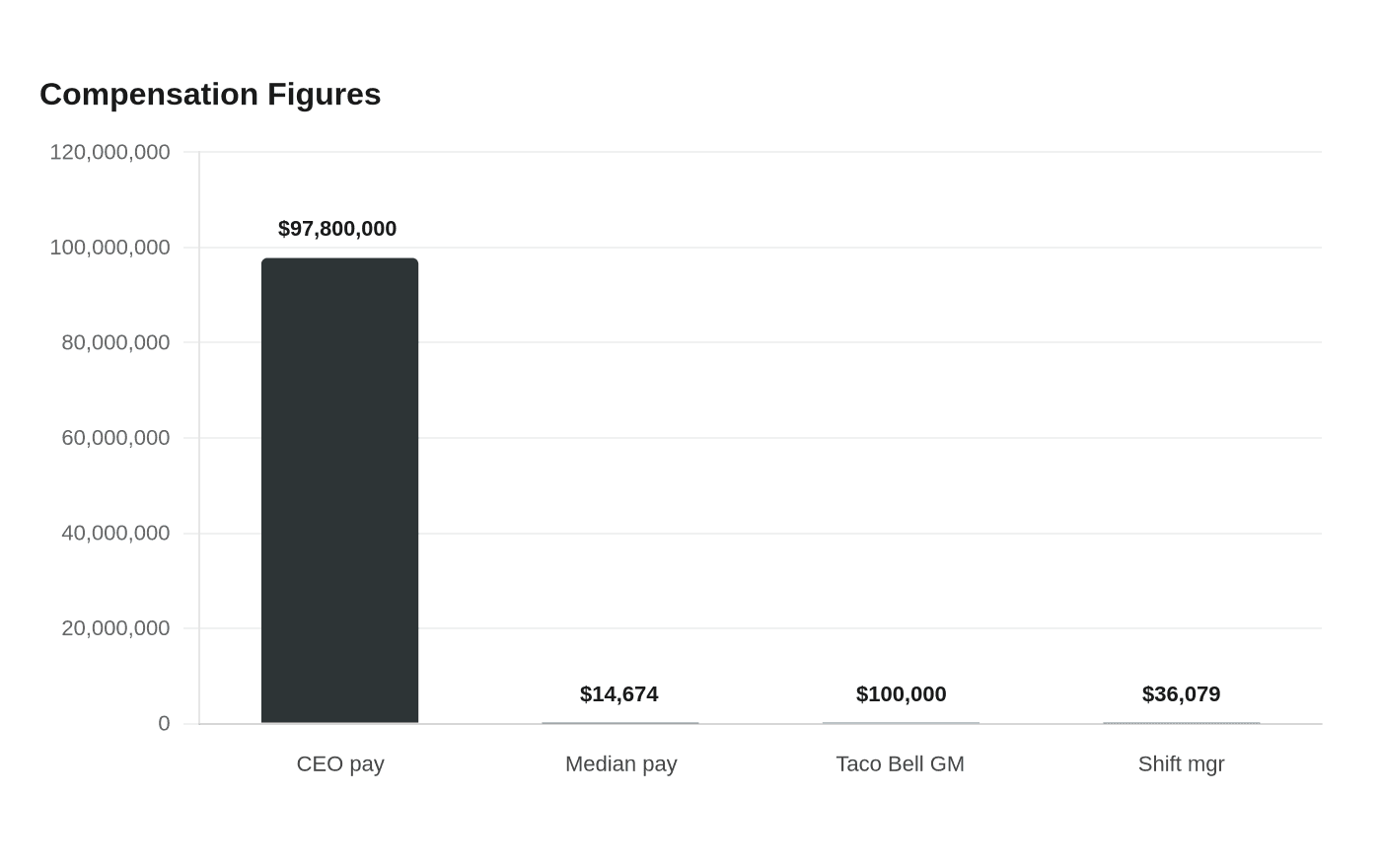
Starbucks CEO Brian Niccol’s $97.8 million compensation was measured against a median employee compensation of $14,674, a 6,666-to-1 ratio. Restaurant Dive’s comparison of 10 leading chains shows executives earning tens of millions while median compensation often lands near, and sometimes below, the poverty line. At Taco Bell, workers feel that gap in the schedule, not on a press release.
How the pay gap shows up in the workplace
Restaurant workers do not read executive pay as a curiosity. They read it as a clue to how the company values labor, how much room there is for raises, and whether the next step up the ladder is real or just a slogan.
For Taco Bell crews, the point is not envy. It is leverage. When a parent company can reward top leadership at that scale, hourly workers naturally want to know what is happening with their own base rate, how often raises arrive, and whether the store is staffed well enough to make overtime a choice instead of an accident.
What Taco Bell makes visible, and what it leaves in the dark
Taco Bell has more than 9,000 restaurants, operates in 35-plus countries and territories, and reported $18.361 billion in total system sales in its 2025 year-end earnings report. The brand can grow system sales at that level only if crew members, shift leads, assistant managers and general managers keep the line moving, the drive-thru flowing and the closing checklist clean.
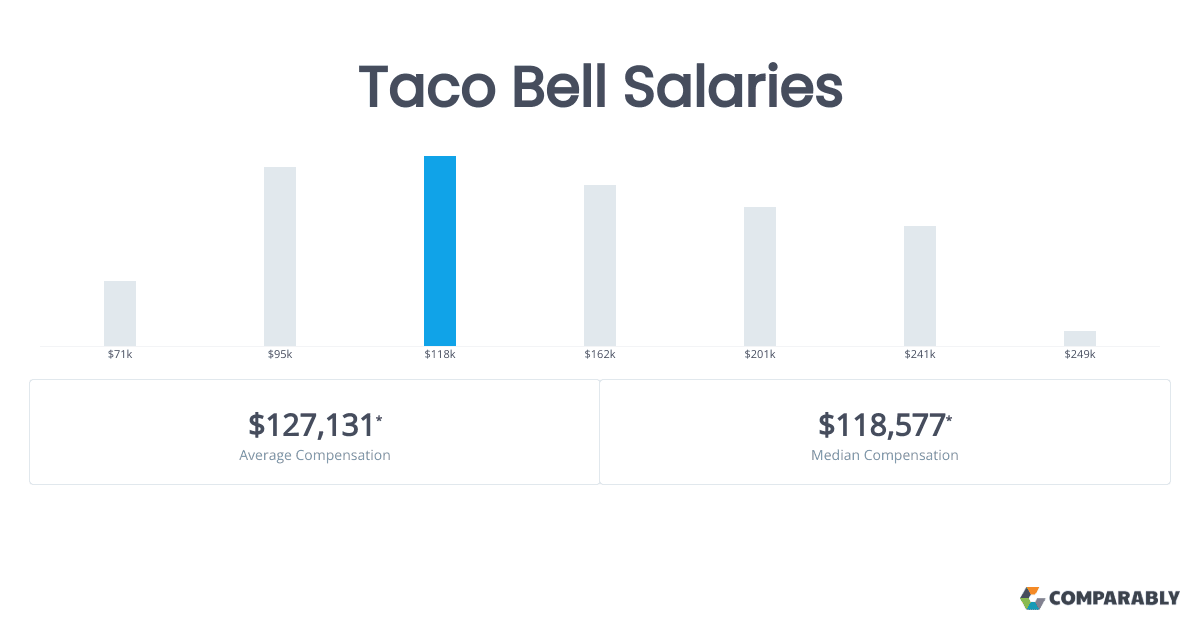
The company is far more willing to print salary bands for management than to explain the full hourly ladder. A Taco Bell restaurant general manager opening in Westborough, Massachusetts, lists $55,000 to $80,000, while another in Orem, Utah, lists $50,000 to $70,000. Some company-owned stores have advertised $100,000 annual salaries for general managers. Those numbers tell you where the ceiling sits, but they do not tell you how fast a crew member can get from first shift to shift lead, what the raise cadence looks like, or whether the bonus structure is tied to sales, labor, or speed.
The path from crew to shift lead to GM
For workers trying to move up, the practical question is whether the steps are clear enough to plan around. A Taco Bell shift manager estimate is about $36,079 a year, which sits far below the GM openings already being advertised in the $50,000 to $80,000 range.
- the starting hourly rate
- how and when raises are reviewed
- whether overtime is offered or limited
- what the company expects from a shift lead versus a crew member
- whether a management opening is at a corporate store or a franchise location
If you are on the crew and want to move into a shift lead role, you should expect a company to be clear about:
You should also expect some silence. Bonus structures are usually the least transparent part of the pay stack, especially in public job posts. Companies are often happy to publish a salary range for a GM opening, but far less willing to spell out the metrics that unlock a bonus or the labor targets that can make a manager feel pressure to run lean.
Why the franchise and corporate split matters
Taco Bell’s footprint runs through both company-owned and franchise restaurants, and that split shapes pay in a very direct way. Flynn Group added Taco Bell in 2013 with the acquisition of 76 restaurants, a reminder that the name on the building does not always tell you who actually sets the rules for hours, staffing and compensation. A corporate store and a franchise store can operate under the same brand while offering different paths to promotion, different labor budgets and different degrees of pay transparency.
If a store is trying to hold labor costs too low, the crew feels it first through shortened shifts, thin staffing and the same people getting asked to cover rushes again and again. If a franchise operator is paying differently from a corporate store nearby, workers start comparing notes fast, especially when state or local minimum wage changes shift the baseline under everyone’s feet.
What morale and retention look like from the shift schedule
High CEO-to-worker pay ratios can undermine employee morale and productivity, the AFL-CIO says. Shift managers and restaurant managers sit in the middle of the system: they are responsible for staffing, training, retention and execution, but they still have to work inside tight labor budgets. When the front line is understaffed, the gap between executive rewards and hourly reality does not stay on a spreadsheet. It shows up in late breaks, missed training, more cleanup on the clock, and fewer people willing to stay long enough to move into leadership.
If workers cannot see a clean route from crew to shift lead to GM, they are more likely to leave. If overtime is hard to get or tightly managed, the paycheck feels flatter than the job. If bonus formulas are hidden, managers may feel pushed to hit labor goals without enough staff to do the work safely or smoothly.
This article was produced by Prism’s automated news system from verified source data, official records, and press releases, then run through automated quality and moderation checks before publishing. The system is built and supervised by the people who set the standards it runs under. Read our full AI policy.
Did this article answer your question?