Yum! Brands Brings AI Forecasting, Coaching Tools to Taco Bell Managers
Byte by Yum is already in roughly 80% of Taco Bell U.S. locations; its AI coaching and labor tools now raise compliance obligations that fall entirely on franchisees.
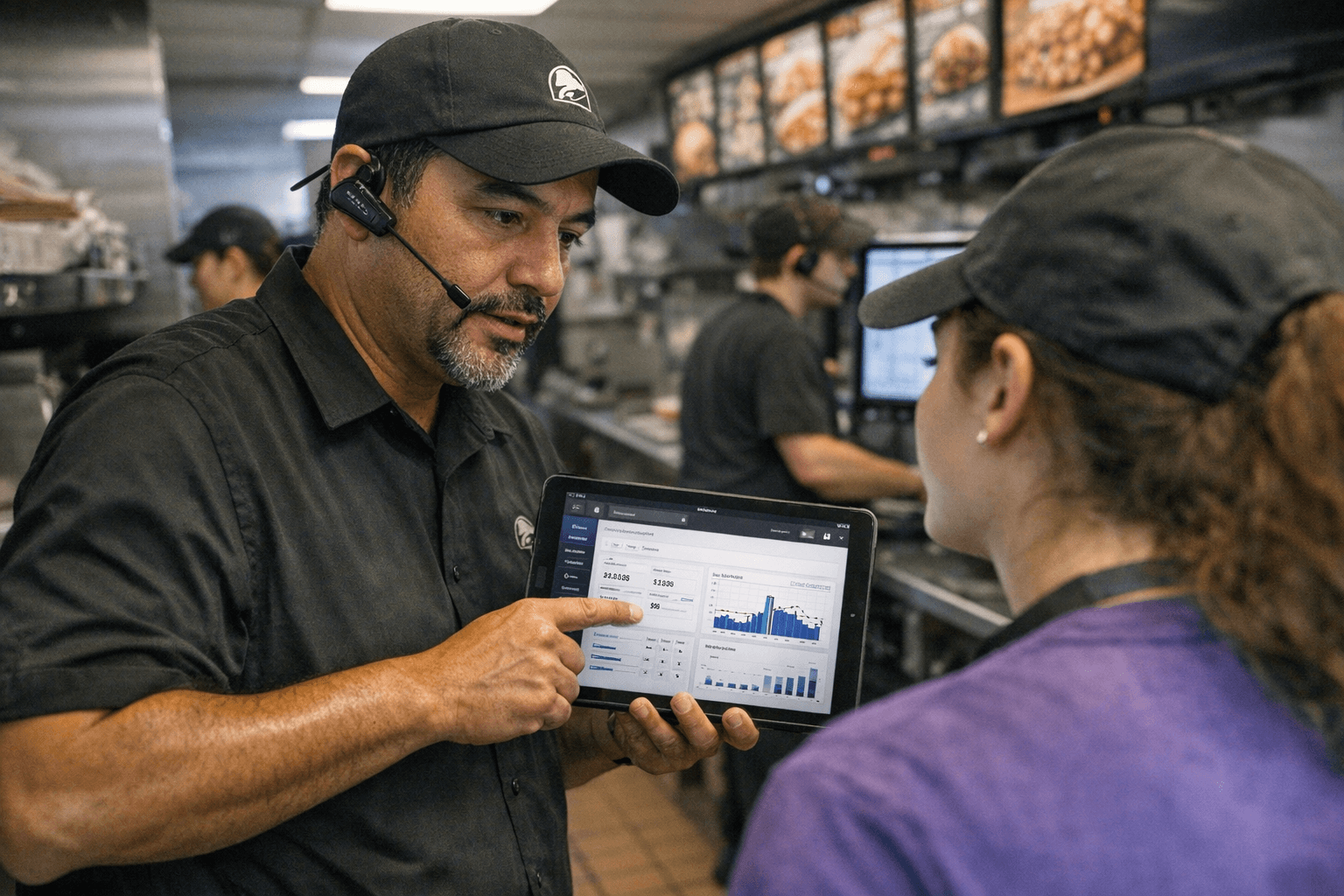
Yum! Brands has moved its AI platform past the pilot stage. Byte by Yum is now live in more than 25,000 restaurants worldwide and processing over 300 million digital transactions annually, and the company is pushing its remaining modules, labor planning, demand forecasting, and manager coaching, into Taco Bell locations that have not yet received the full suite.
The consolidation is deliberate. Rather than managing separate vendor contracts for scheduling, inventory, kitchen management, and digital ordering, franchisees and company-owned restaurants are being migrated to a single interface. Byte Inventory, which uses Yum's proprietary Crave AI engine to generate real-time ordering alerts and stock recommendations, is already deployed in roughly 80 percent of Taco Bell U.S. locations. The system is designed to recommend replenishment before a location registers it is running low and to alert nearby restaurants when a store's stock falls short so neighboring locations can supply the gap.
The next layer arriving across Taco Bell carries more direct consequences for people on the floor. Byte Coach, already deployed across nearly 30,000 KFC and Pizza Hut locations globally, pushes task checklists and performance-based prompts to managers during and after service. The back-of-house module, formerly the Tracks restaurant management system, launched in more than 1,500 Taco Bell U.S. restaurants in 2024. For shift leads, the platform converts digital sales data from mobile app and kiosk channels into specific prep guidance: which proteins to stage, which items to stock, how many drive-thru positions to cover. Discretionary forecasting tasks that experienced managers previously owned are becoming system-generated alerts requiring a confirmation.
The governance exposure that accompanies these tools is concrete. Any automated system generating labor staffing recommendations sits in direct proximity to predictive scheduling laws now active in Berkeley, Chicago, Emeryville, Los Angeles, New York City, Philadelphia, San Francisco, San Jose, and Seattle. Those ordinances typically require employers to post schedules in advance and pay premiums for last-minute changes. A Byte recommendation is not a legal shield: the franchisee or operator who acts on it still owns the compliance obligation, and central-platform origin does not transfer that liability to Yum corporate.
The wage-and-hour exposure is equally specific. Automated task flows that define when a prep or open-close procedure officially begins and ends can affect how time is tracked, particularly for crew members completing those tasks before or after a clocked shift. Any mismatch between Byte's task logs and the actual time clock record creates a gap that no platform vendor will absorb on a franchisee's behalf.
Before any new Byte module goes live on a specific restaurant's floor, the questions worth putting in writing are direct: Who has read access to the performance and coaching data Byte generates, and can that data be used in discipline or termination decisions? Can a manager override a forecasting recommendation, and is that override logged with a timestamp? What retraining is required before the coaching feature activates, and who is accountable when an automated prep call leads to waste or a missed service standard? How will automated task completion records interact with your payroll system for overtime calculations in strict-wage jurisdictions?
Standardization reduces the training friction that franchise variation creates, and Byte's reach across 25,000-plus locations gives it genuine operational credibility. But the platform's growth means the compliance clock is running. Operators who let the rollout outpace their governance paperwork will find out the hard way that the legal obligations did not wait.
This article was produced by Prism’s automated news system from verified source data, official records, and press releases, then run through automated quality and moderation checks before publishing. The system is built and supervised by the people who set the standards it runs under. Read our full AI policy.
Did this article answer your question?