Macy’s turnaround shows Target shoppers still reward better execution
Macy’s latest quarter shows shoppers still spend when stores look sharp, inventory is right, and the floor feels cared for. That is a clear lesson for Target teams focused on execution, not just traffic.

What Macy’s just proved about retail execution
Macy’s delivered a reminder that shoppers still reward a store that feels ready for them. The company said first-quarter net sales rose 1.8% to $4.7 billion, comparable sales increased 3.0%, and the quarter marked its strongest first quarter in four years. For Target teams, the message is straightforward: even in a cautious spending environment, store conditions still matter because presentation, assortment, and clarity can be the difference between a browse and a basket.

Macy’s also said it posted its fourth straight quarter of comparable sales gains, with positive comps across Macy’s, Bloomingdale’s, and Bluemercury. Bloomingdale’s stood out with a 10.2% comparable sales increase, while the company’s go-forward business comparable sales rose 3.1%. Both GAAP diluted EPS of $0.23 and adjusted diluted EPS of $0.13 came in above guidance, which gave the quarter more credibility than a simple traffic pop or a one-off holiday lift.

What better execution looks like on the floor
Tony Spring framed Macy’s rebound as a return to basics, saying the company is “reinvesting in the fundamentals,” including better staffing, assortment, and visual merchandising. That is not corporate jargon in practice. It means fewer dead spots on the sales floor, more disciplined recovery, more visible product stories, and a store team that has the time to keep categories looking intentional instead of abandoned.
That is the piece Target workers should pay attention to. When a store is easy to shop, guests notice. When the front end is organized, endcaps make sense, and key categories are signed and stocked, shoppers spend less energy hunting and more energy buying. Macy’s results suggest that clarity still converts, especially when consumers are selective and every trip has to earn a bigger share of the wallet.
Why this matters for Target teams
For Target team members, team leads, and ETLs, Macy’s quarter is less about a competitor’s stock reaction and more about the operational lesson underneath it. Shoppers are still willing to spend, but they are choosing stores that give them a reason to stay. That matters in apparel, home, beauty, and gifting, where Target has long relied on a mix of trend, convenience, and presentation to pull guests deeper into the store.
The lesson is especially relevant to store teams dealing with presentation standards, inventory flow, and guest service pressure at the same time. Better execution is not abstract. It looks like product on the shelf when the guest expects it, displays that tell a clear story, and a sales floor that feels maintained instead of reactive. Macy’s gains show that when execution improves, the customer response can improve with it.
Target is betting on the same principle
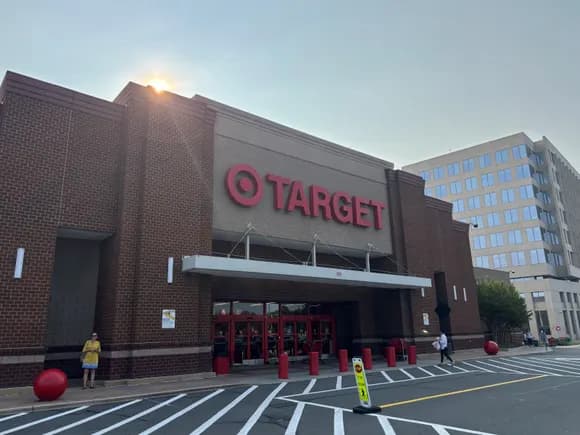
Target’s own 2026 plan makes clear that it sees store execution as a growth lever, not a side project. In March, the company said it would invest an incremental $2 billion in 2026, including more than $1 billion in additional capital expenditures and $1 billion in additional operating investments. The plan includes transforming in-store floor plans and displays, increasing payroll and training, strengthening and evolving assortment in key categories, and accelerating technology.
That is a major signal for workers because it puts labor, presentation, and merchandising at the center of the company’s strategy. Target also said it plans to open more than 30 new stores in 2026 and remodel more than 130 stores, including the opening of its 2,000th store in Fuquay-Varina, North Carolina. NBC Chicago described the effort as Target’s largest store transformation in a decade, which underscores how much the company is leaning on the physical store to drive its next phase of growth.
The workplace implications are practical, not theoretical
For store leaders, Macy’s turnaround is a reminder that guest experience is built shift by shift. Better staffing gives teams the time to zone, recover, and keep the floor shoppable. Stronger assortment gives guests a reason to come in for something specific. Sharper visual merchandising helps the store feel current, which matters when shoppers are comparing every trip against tighter household budgets.
That also means the pressure on Target teams is not just about speed. It is about consistency. If guests walk into a store that feels current, organized, and easy to navigate, they are more likely to trust the brand enough to spend, even when they are cautious elsewhere. Macy’s numbers suggest that this kind of discipline still produces results, especially when the company pairs store investment with a clearer customer promise.
The bigger read for Target
The broader takeaway is that retail is still won in the aisle, not in the abstract. Macy’s showed that a refreshed store fleet, better fundamentals, and cleaner execution can move sales even when consumers are careful. Bloomingdale’s 10.2% comparable sales gain shows the strongest stores can outperform, while Macy’s and Bluemercury both contributing positive comps shows that the improvement was broad, not isolated.
For Target, that is a useful benchmark. The company is spending heavily on remodels, labor, training, and assortment because it is trying to make stores easier to shop and worth the trip. Macy’s recent performance suggests that shoppers will still respond when those pieces come together. In a market where every visit has to count, better execution is not cosmetic, it is the sales plan.
This article was produced by Prism’s automated news system from verified source data, official records, and press releases, then run through automated quality and moderation checks before publishing. The system is built and supervised by the people who set the standards it runs under. Read our full AI policy.
Did this article answer your question?