Target faces tougher replenishment as U.S. container imports fall 5.5 percent
U.S. container imports fell to 2,277,965 TEUs in April, a drop that can hit Target stores first as backrooms tighten and shelves wait longer.

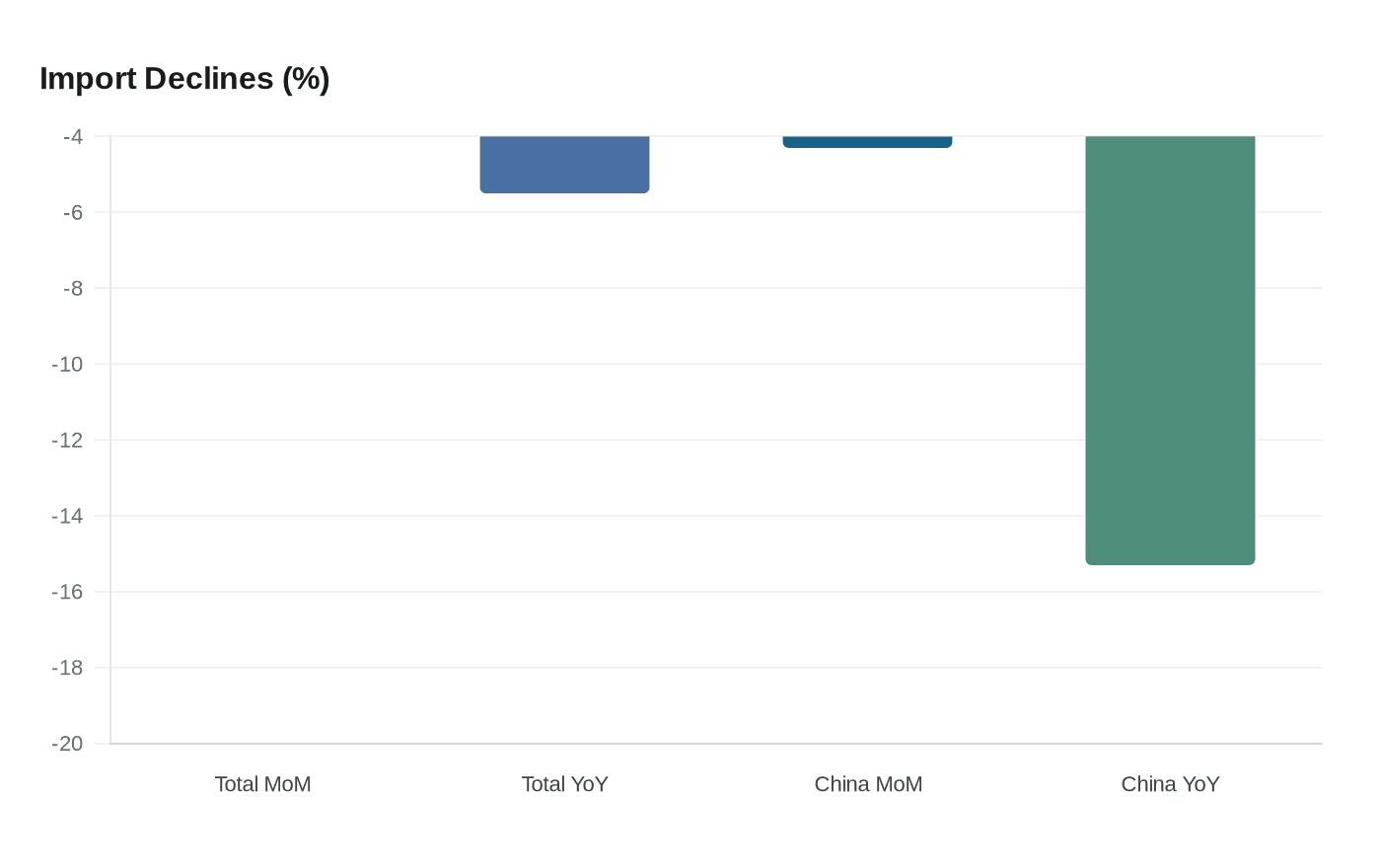
A 5.5 percent drop in U.S. container imports does not stay on the water for long at Target. It can show up as a late toy pallet, a half-built seasonal display, or a fulfillment team having to substitute when the exact item is not on hand. Descartes said April 2026 imports totaled 2,277,965 TEUs, down 3.2 percent from March and 5.5 percent from April 2025, with China-origin imports falling 4.3 percent month over month and 15.3 percent year over year.
The strain lands first in the parts of the operation that live closest to freight. In stores, uneven inbound flow makes backroom organization and presentation more important, because teams cannot rely on a smooth, predictable cadence of replenishment. On the receiving side and in distribution, leaders have to decide what moves first and where the bottlenecks are likely to form. On the merchandising side, a softer import environment makes it harder to chase seasonal and trend-driven goods with confidence. For store leaders, the payoff comes in guest conversations when a wanted item is delayed or unavailable.
Target has already framed 2026 around stronger in-stocks, fast fulfillment, improved product availability and presentation, and more investment in training and support for teams. Its annual report also says the company has at times made alternative arrangements to keep inventory flowing during supply chain disruptions in the United States and other countries. That matters because a less predictable import pipeline widens the gap between vendor ordering and shelf availability, and every extra day in that gap creates more work for store teams trying to keep the floor full.
The pressure comes as Target is planning more than $2 billion in incremental investments across the business, including more than $1 billion in capital expenditures and another $1 billion in operating investments. That spending underscores how much the company is tying guest experience to inventory reliability. The National Retail Federation has warned that tariff volatility and higher fuel costs can ripple through retail supply chains and eventually affect customers, while West Coast ports regained the market-share lead in April and transit delays improved broadly over March.
The broader risk is not just a slower flow of boxes. When imports soften, the work shifts onto the people who have to convert less predictable freight into a clean selling floor, faster fulfillment, and fewer misses at the shelf. For Target teams, that is where supply chain volatility becomes a daily labor issue.
This article was produced by Prism’s automated news system from verified source data, official records, and press releases, then run through automated quality and moderation checks before publishing. The system is built and supervised by the people who set the standards it runs under. Read our full AI policy.
Did this article answer your question?